Archive for month: November, 2015

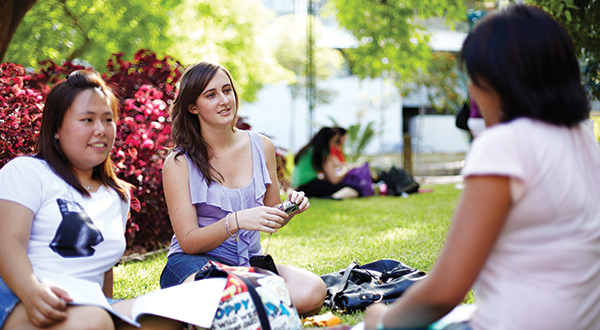
Image of university students sitting on lawn and talking

RUN welcomes changes to Youth Allowance to help regional students

The Regional Universities Network (RUN) welcomes changes to Youth Allowance which will make it easier for rural and regional students to go to university.

The changes, passed by the Federal Parliament on November 12, will result in all dependent children being taken into consideration in the assessment for Youth Allowance eligibility, softening the reductions in support as family income increases.

The Chair of RUN, Professor Jan Thomas, said the changes mean that more regional students will qualify for Youth Allowance to help them go to university.

“Far fewer regional Australians attend university compared to people in capital cities. The changes to Youth Allowance are great news and will encourage more people from the regions to pursue higher education,” Professor Thomas said. Regional Australians who receive an offer to go to university are more than twice as likely to defer, due to financial pressures, compared to metropolitan Australians. Providing more regional students access to Youth Allowance will help. It is critical to grow the proportion of educated professionals working in the regions, if regional Australia is to fully be part of an innovative economy in the national interest. Students who attend university in regional Australia stay and work the regions. Living costs in regional Australian towns are well below that in capitals, and offer an attractive option for students.”

Contact: Dr Caroline Perkins
Executive Director, Regional Universities Network, 0408 482 736

Find out more about the Regional Universities Network at www.run.edu.au Follow us on: Twitter: @RegUniNet Facebook: www.facebook.com/RegionalUniversitiesNetwork

Issued by: Diana Streak, RUN Media Adviser, 0422 536 064
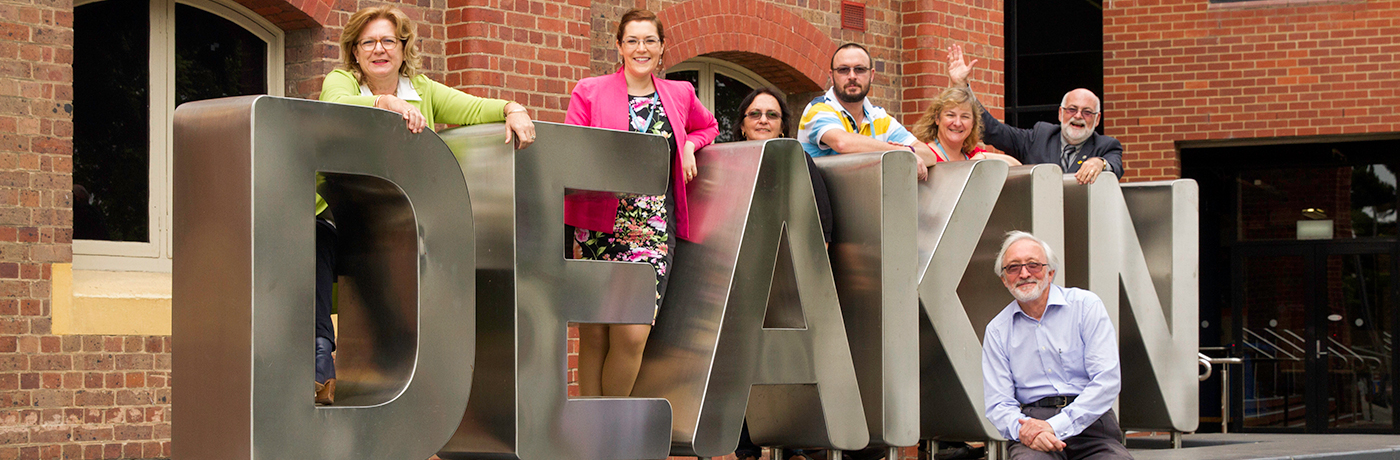
Image of seven of the SPERA Executive members standing in and around the Deakin University sign

Thank You Deakin

Since the first SPERA National Conference was held 31 years ago, a great deal has been achieved, many innovative practices have been celebrated and ground-breaking research around the provision of education in rural areas has been published. All of these achievements have been designed to prepare teachers to undertake careers in these areas and to provide rural students with a smorgasbord of opportunities to open doors for them.

The recent 31st National SPERA Conference continued the fine tradition of linking people who have a diverse range of interests but with the unifying desire to improve the educational and training opportunities for those living in the bush. The conference organising team, efficiently and effectively led by Dr Jodie Kline, put together an exciting program that included presentations by Australian Rural Health Education Network Chair Professor Sabina Knight, Charles Darwin University Centre for School Leadership Director Mr Gary Fry, Department of Education and Training (Queensland) Director-General Dr Jim Watterson, Charles Sturt University Professor of Education Jo-Anne Reid and Victoria University College of Education Professor Marie Brennan.

In recognising the innovative practices relating to rural education in educational institutions, we awarded the Australian Rural Education Awards at the conference. We received 16 high quality applications for AREAs in 2015. It is heartening to know that there are so many innovative projects taking place and that these will improve the opportunities of so many children. Special thanks to Dr Susan Ledger and Mr John Borserio for their work with organising the AREAs for us this year, and our sincerest congratulations to this year’s category 1 and 2 winners: Karratha Senior High School and the In2Uni Regional Outreach Program (Bega and Batemans Bay) at the University of Wollongong.

A special program that SPERA administers each year is the awarding of sponsorships to pre-service teachers to allow them to attend our conference. The sponsorships enable students who are on the thresholds of their teaching careers to network with leaders in rural education and hear about the innovative practices that are taking place. Such sponsorships would not be possible without the generous support of the Department of Education and Training (Queensland), Teachers’ Mutual Bank, the Diocese of Toowoomba’s Catholic Education Office, Lodestone, Wykari of Clare, and the Isolated Children’s Parents’ Associations in Queensland and the Northern Territory.

We received 14 high quality applications this year, which is exciting, but did make the task of the selection panel lead by Dr Paula Jervis-Tracey, difficult. Special thanks to Paula, Mrs Louise Martin and Ms Andi Bracey for their work in this area, and congratulations to our eight pre-service teachers: Adelaide Ford, Baylee Hardwick, Kylie Cochrane, Lauren Schuller, Megan Barlow, Megan Knights, Rory Quirk and Tess Madeley.

It takes the combined efforts of a dedicated group of people to organise and run a conference, and the SPERA Executive would like to thank the following people and organisations for their generous support:

  • Deakin University Professor Jill Blackmore, for her assistance with securing the conference venue and funding the welcome reception;
  • Ms Sarah Nailer, Ms Christine Schultz, Ms Sri Soejatminah, Ms Kymelise Wilson, Ms Leissa Kelly and Ms Emma King for their work as Conference Ambassadors;
  • Geelong High School students and the Deadly Dancers, for their various performances;
  • Aunty Lynn McInnes for her Welcome to Country;
  • Ms Donna Squire and Ms Beate Behrendt for photography;
  • the Waterfront Kitchen team for the catering and conference dinner;
  • Curtin University, Deakin University, The University of Western Australia, CQUniversity Australia, and the University of Southern Queensland, for their contributions to the conference satchels; and
  • the Centre for Research in Educational Futures and Innovation (CREFI) at Deakin University, the National Centre for Student Equity in Higher Education (NCSEHE) at Curtin University, Teachers Mutual Bank, the Diocese of Toowoomba Catholic Education Office, Lodestone, the Northern Territory and Queensland branches of the Isolated Children’s Parents’ Association, and Oxford University Press Australia & New Zealand for the various sponsorships.

The 2016 SPERA Conference will be held at CQUniversity Australia’s Mackay campus in Queensland. We look forward to seeing you there!

Improving mathematics and science education in rural Australia: A practice report

Robert Whannell, Steve Tobias

There has been a steady decline in the number of secondary and tertiary students studying mathematics and science. Rural schools also report a shortage of qualified teachers in these disciplines. This paper describes the steps taken at the University of New England (UNE) to improve the provision of mathematics and science education (MS) in rural Australia. Initiatives such as the use of an online interactive digital classroom by rural NSW schools presenting MS contexts based on a SMART (sustainable, management, and accessible rural technologies) Farm will be presented. Research to improve teacher confidence and competence in these areas will be discussed along with the steps being taken to develop a Higher Education Research Facility (HERF) which will support research and engagement in the STEM domain.

Download pages 91-99 Improving mathematics and science education in rural Australia: A practice report

Using virtual worlds in rural and regional educational institutions

Sue Gregory, Lisa Jacka, Mathew Hillier, Scott Grant

This paper presents four case studies from two regional and two metropolitan Australian universities, showcasing how 3D virtual world platforms have been used to connect, engage and motivate students in both co-located and non-co-located contexts. The case studies provide practical examples of how virtual worlds and associated applications have been operationalised in real teaching and learning contexts involving a range of different disciplines. For rural educators looking for innovative ways to enrich the student learning experience, the case studies offer first hand insights into the potential and the problems of using virtual worlds for educational purposes.

Download pages 73-90 Using virtual worlds in rural and regional educational institutions

Comparing rural and urban education contexts for GLBTIQ students

Tiffany Jones

This paper considers the different experiences for gay, lesbian, bisexual, transgender, intersex and queer (GLBTIQ) students from rural and urban education contexts. It draws on data from three studies of GLBTIQ students I have conducted since 2010, including a 2010 online survey of 3,134 GLBTIQ students in which one fifth came from rural areas; a 2012 study of transgender people and a 2013 study of transgender and intersex students. The different studies repeatedly showed that GLBTIQ students from rural and remote towns experienced isolation, social discrimination and a lack of appropriate services and support. They were less likely to feel safe at school, at social occasions and on the internet than their urban peers. Many aspired to leave their rural and regional homes to become the person they wanted to be in an urban environment. The paper concludes by recommending specific training, resources and contacts to improve rural education services for these students.

Download pages 44-55 Comparing rural and urban education contexts for GLBTIQ students

Learning opportunities in the ‘Golden Years’ in a regional city

Bronwyn Ellis

Several projects relating to older learners have been conducted over the past decade or so, some involving the University of the Third Age (U3A) Whyalla, as well as other groups composed of older citizens. Here a wide range of learning activities, as revealed by survey data, publicly available information, and participant observation, are described. Some provide examples of engagement with the local university campus; others have this potential. Together with long-running group activities, new activities – a men’s shed and a music learning activity – have potential outcomes for participants’ health and wellbeing. Such opportunities help meet non-metropolitan lifelong learning needs. Maximising information sharing and cooperation can lead to mutual benefits, including for educational institutions. Increasing social inclusion benefits the whole community.

Download pages 28-43 Learning opportunities in the ‘Golden Years’ in a regional city

Preparing pre-service teachers for rural appointments

Kathy Jenkins, Linley Cornish

Pre-service teachers need to be prepared to teach in both rural and urban contexts. Preparation to teach multi-grade classes in rural schools is excellent preparation for teaching any class, including urban single-grade classes. Based on our previous research and experience, we designed a unit to prepare our pre-service teachers for the issues they may face in their employment and especially in rural schools, including multi-grade teaching, coping with isolation, working as a casual teacher, and communicating with parents and caregivers. There are significant issues that are distinct in rural and urban contexts, including how metrocentric departmental policies can emphasise the rural/urban divide.

Download pages 14-27 Preparing pre-service teachers for rural appointments

Learner agency and assessment for learning in a regional New Zealand high school

Jennifer Charteris

Assessment for Learning (AfL) pedagogies can have a significant impact on student learning and achievement. This paper reports on data from a study of four teachers and 48 student participants within a regional high school. An inquiry approach to teacher professional learning is explored through an AfL lens, in particular, how teacher feedback for professional learning can be nuanced and dialogic. The research draws from one reflective dialogue interview where a teacher explores student voice data to consider her learners’ perceptions of how they learn and of the classroom learning practices of feedback, feedforward and self-assessment. The paper addresses learner agency as an important aspect of curriculum implementation for teachers and assessment for learning for students.

Download pages 2-13 Learner agency and assessment for learning in a regional New Zealand high schooll

A partnership aimed at improving Health and Physical Education at a rural school: Impacts on pupils, university students, teachers and academics.

Judith Miller, John Haynes, Jim Pennington

Challenges and benefits arose when a rural school and a neighbouring university formed a partnership with the aim of improving the school’s Health and Physical Education (HPE) program. The HPE programs were enhanced through two joint research projects. The first research project had two facets, including an evidence-based curriculum for Physical Education in the school, and a remediation program for children identified through the coordination testing process. The second research project was designed to investigate students’ Health Education knowledge and explore any behavioural changes in and around nutritional choices. Both the projects were conducted as mutually productive partnerships within the school, resulting in beneficial changes for the school, the university and for the multiple participants. For the school, the Physical Education curriculum and pedagogies were modified and for students identified as requiring remediation, a multi-partnered intervention program was implemented. Students, teachers, parents and pre-service teacher education students benefited from the movement intervention program. The health education curriculum was enhanced when the school developed a social marketing approach to facilitate health-related decisions for pupils, teachers and ancillary staff. The university changed their pre-service teacher education curriculum, teaching methods, and achieved stronger research based outcomes by partnering with the school across both projects.

Download pages 56-72 A partnership aimed at improving Health and Physical Education at a rural school: Impacts on pupils, university students, teachers and academics.

Editorial

Sue Ledger, Aaron Drummond

Welcome to the second edition of the Australian and International Journal of Rural Education (AIJRE) for 2015. We are pleased to offer our readers a range of articles to stimulate discussion and creative thinking around the issues facing rural and remote learners, educators and institutions broadly grouped into areas related to relationships, overcoming isolation and curriculum.

Download page 1 Editorial

Rural Voices Gather in the City

A prominent K-12 Queensland school principal and a number of leading academics will this week attend a conference at Deakin University’s Geelong Waterfront campus to discuss the future of rural education policy in Australia.

Calen District State College and Society for the Provision of Education in Rural Australia (SPERA) President, Mr Brian O’Neill, will be one of several notable and passionate educators and leaders to address the two-and-a-half day SPERA conference in Geelong.

“Australia is a large country, and much of it is considered rural, regional or remote,” said Mr O’Neill.

“While significant numbers of Australians tend to live in and around capital cities and that’s where the bulk of service delivery including education occurs, there remain communities of people who live in small country towns; people who have families and need access to health care, education, the internet and so on.”

“The annual SPERA conference is an opportunity for people who are passionate about education and our rural and remote communities to come together to discuss the challenges, opportunities and innovations inherent in our day-to-day lives.”

Titled Mapping Education Policy Landscapes: Rurality and Rural Futures, conference keynote speakers will include Australian Rural Health Education Network Chair Professor Sabina Knight, Charles Darwin University Centre for School Leadership Director Mr Gary Fry, Department of Education and Training (Queensland) Director-General Dr Jim Watterson, Charles Sturt University Professor of Education Jo-Anne Reid and Victoria University College of Education Professor Marie Brennan.

The 2015 SPERA conference is supported by the Centre for Research in Educational Futures and Innovation at Deakin University, the National Centre for Student Equity in Higher Education at Curtin University, the Department of Education and Training (Queensland), Teachers Mutual Bank, Regional Express (Rex), the Diocese of Toowoomba Catholic Education Office, Faculty Magazine, the Isolated Children’s Parents’ Associations (NT and QLD) and Oxford University Press Australia & New Zealand.

“Through our keynotes, our book launches and paper presentations, we will share new research, ideas and perspectives and discuss some of the more recent policy announcements and potential implications for education for those of us who don’t live in a capital city,” said Mr O’Neill.

“I look forward to the national discussion that this year’s conference will initiate.”

ENDS.

Notes to the Editor:

The Society for the Provision of Education in Rural Australia (SPERA) links people with a diverse range of interests and training to promote the development of rural and remote education and training in rural and remote communities. SPERA emerged from a New South Wales in-service activity organised by Marie Dale in 1984 and has members in all Australian states and territories. The society holds a conference each year and produces regular newsletters and the Australian & International Journal of Rural Education for its members.

Media Contacts:

Mr Brian O’Neill, SPERA President – Mob: 0428 540 236, E: president@spera.asn.au

Dr Susan Ledger, SPERA Vice President – Mob: 0408 080 051, E: s.ledger@murdoch.edu.au