Archive for month: April, 2016

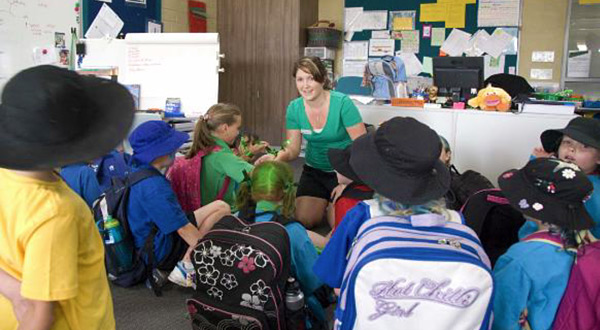
AREA 2012 Kingston Primary School

Pre-service Teacher Sponsorship 2016

Apply today!

Sponsorships are available for pre-service educators to attend the 32nd National SPERA Conference, 28 to 30 September 2016, Mackay, Queensland.

If you are a pre-service teacher and thinking about a career in rural, regional or remote education, you could receive:

• complimentary attendance at the upcoming SPERA conference, being held this year at CQUniversity Australia’s Ooralea Campus in Mackay, including attendance at all social events

• your travel and accommodation costs paid

• complimentary one-year SPERA membership, to enable you to benefit from the connections you will make as a result of attending the conference.

To apply, please write a brief statement (max. 2 pages) registering your interest:

• Tell us why you are interested in teaching in a rural, regional or remote community

• Tell us how you think attending the 2016 SPERA conference would assist your learning

• Include your most recent Professional Experience Report or a reference from your supervisor or principal

• Include a copy of your resume (max. 2 pages), including details of any previous experience you have had in rural, regional and/or remote schools.

Applications close Friday 17 June 2016.

Email admin@spera.asn.au

2016 SPERA Pre-Service Sponsorship Flyer (325 KB)

Brian O'Neill presents 2015 AREA Award to Jennifer McMahon Karratha Senior HIgh

Australian Rural Education Awards 2016

Call for Nominations

Since 1994, the Australian Rural Education Award (AREA) has been awarded annually to an institution, organisation or industry to recognise excellence in rural education in Australia.

Category 1
Existing projects that demonstrate a proven link between a rural, regional and/or remote school or learning context and the local community, and benefiting a defined group.

Category 2
Future projects that support new and creative thinking in professional practice aimed at improving student outcomes in a rural, regional and/or remote setting.

Category 3
Pre-service teachers or institutions recognising demonstrated excellence in professional learning practice in rural, regional and/or remote settings.

Category 4
Projects based in, or benefiting, rural, regional and/or remote international settings. Nominees may be based in Australia or overseas.

Category winners will receive a prize of AUD$500, complementary 2016 conference registration for one delegate and a trophy. Runners up will receive a citation recognising their achievement.

But hurry! Nominations Now close Friday 17th June 2016

How to Nominate

To nominate, please email admin@spera.asn.au with the subject line 2016 AREA Nomination, Category (Insert Number), and provide the following information:

  • Name of school / organisation / learning context / pre-service teacher
  • Postal address
  • Principal / Chief Administrator
  • Institution name / Details of sponsoring school
  • Name, telephone number and email address for the person who would accept the award
  • Category you are entering, ie. Category 1, 2, 3 or 4
  • 300 words describing the nature of the project / learning practice being recognised
  • Any additional materials to support your nomination, ie. graphics, photos, videos, details of previous awards, etc.

AREA-AWARDS-2016 (497 KB)

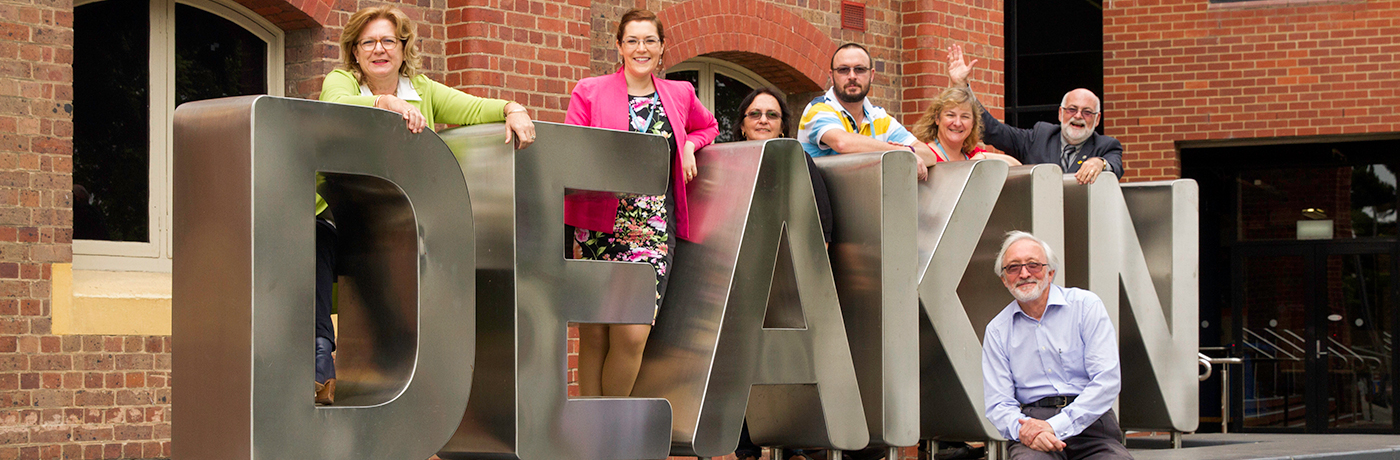
2016 SPERA Executive in front of Deakin University sign

SPERA Annual General Meeting 2015 Minutes

SPERA Annual General Meeting 2015 was held at Deakin University Geelong, Waterfront Campus on Thursday 5th November 2015.

The following were nominated and accepted for Executive.

  • Don Boyd
  • John Borserio
  • Louisa Bowman
  • Philip Roberts
  • Dorothy Donovan
  • Paula Jervis-Tracey
  • Jodie Kline
  • Sue Ledger
  • Louise Martin
  • Brian O’Neill
  • Sue Trinidad
  • Charles Bradley – Public Officer

Following the AGM a special Executive meeting was held on Friday 3 October where the following were nominated and appointed:

  • Brian O’Neill – President
  • Sue Ledger – Vice President
  • Louisa Bowman – Treasurer

Minutes from the AGM are available as a PDF file: Unconfirmed Minutes_SPERA AGM_05 November 2015 Package (179Kb)

Five new frameworks that can drive teacher education reform

Written by Professor John Fischetti for The Conversation

There have been more than 100 reports critiquing teacher education in Australia since the 1970s.

These reports led to new tests and more accountability standards and measures of teacher behaviours.

Today we have a regulated profession that has not changed the content of what is taught as much as developed a tick box compliance process.

We need a major revamp of teacher education from the inside out that actually changes the model to provide all children with the education that is right for them.

The implications for schooling, teaching and teacher education

When I was in school in the 1960s and 1970s, teachers had one lesson plan, one textbook, one chalkboard, one pedagogical approach, one style of desk and one discipline strategy for the whole class.

My classmates and I were expected to adjust to the teacher and the plan.

“Differentiation” at that time meant that the taller students typically sat in the back of the classroom while those who had trouble seeing the chalkboard were moved closer to the front. Those students caught being “naughty” sat next to the teacher’s desk.

This was assembly-line education. Many of us did quite well. Some of us dropped in. Some of us dropped out. It was understood that if you worked hard after you left school, even if you dropped out, you could anticipate a pretty good job in the mill, the mine or the plant.

Teacher education grew out of these assumptions of “training” for the assembly line in a two dimensional (2D -“sit and git”) education world.

But for too long schools have been places young people go to watch their teachers work.

They have relied on a deficit model of learning and teaching. They have emphasised conformity rather than personalisation. And today, in many parts of the world, they still mirror factories while the 3D printer is replacing the assembly line.

Scientists are now aware of at least ten dimensions that we must comprehend in a very dynamic, collaborative, global innovation age.

Although many of us performed well in the 2D model, those who were unable to adapt to it have very little to do today.

Many jobs available in the past for those who did not finish school have been outsourced or automated, and more will be in the near future.

We cannot afford economically or morally to continue a 2D mentality for schooling.

Five new frameworks to drive the reframing of teacher education

Current standards across Australia and the world are remarkably the same. They are really organisers of evidence that new teachers and their programs must assemble inside these agreed-upon categories.

Unfortunately they are built on and support a model of learning and teaching that is nearly obsolete.

We actually have very little evidence that graduates of teacher education programs use what is taught to them three years into their teaching. This has to change.

In response, academics and educators across Australia, New Zealand, Hong Kong, South Africa, Canada, the UK and US have devised five new guiding questions or frameworks for teacher education. They help create a global conversation to benchmark teacher education internationally rather than in individual states or nations.

Where do children live?

The context and environment in which children live is paramount to their success as learners in formal school settings. Mostly middle class new teachers often lack deep understandings of culture, family, diversity and community dynamics. The most innovative teacher preparation programs embed direct community and family involvement early into their education.

Continue reading…

Image of map of far north Queensland Australia

32nd National SPERA Conference 2016

Rural Education: Place, Pedagogies, Partnerships and Possibilities

Hosted by CQUniversity Australia’s Ooralea Campus and supported by the University of Tasmania, the 2016 conference will bring together a range of national and international teachers, school administrators, teacher educators, academics, pre-service teachers, community members and parents who are passionate about rural education.

Where: CQUniversity Australia: Ooralea Campus (Mackay)

When: 28-30 September 2016

Download the full flyer here: 2016 SPERA-ISFIRE Conference Flyer (2Mb)

Early Bird Registrations are now open!

Sub Themes

While this conference invites a wide range of submissions that address the general theme, we encourage submissions that speak to one or more of the following sub-themes:

  • Community and Development
  • Place and Space
  • Social Justice
  • Environment
  • Indigenous Perspectives
  • Diversity
  • Leadership
  • Curriculum and Pedagogy
  • Initial Teacher Education
  • Rural Futures

Confirmed speakers and guests include

  • Details coming soon!

Submission of Abstracts

SPERA, with the SiMERR National Research Centre at the University of New England, invites you to submit abstracts for the 32nd National SPERA Conference and 4th International Symposium for Innovation in Rural Education.

To submit an abstract, please download, complete and return the proposal template below.

2016 SPERA Conference Abstract Proposal Template (52Kb)

Submission of Abstracts

Abstracts are to be written in plain English and include clear information about the aims, nature and content of the paper and, where applicable, a brief statement of results and implications. All abstracts should be linked to the conference theme or sub-themes.

Evaluation of Abstracts

Abstracts are subject to blind-review by members of the program committee. Notification of whether the abstract has been accepted for presentation will be sent to the presenter/s on or before Thursday 19 May 2016. Successful presenters will be asked for their audio visual requirements at this time and instructed to confirm their attendance via paid registration no later than Friday 3 June 2016.

Please Note

Presenter/s must be paid registrants of the conference in order to present a paper. Registrations must be paid no later than Friday 10 June 2016. No refunds will be issued for any reason after Friday 19 August 2016.

Call for Submission Deadline: Extended to 13 May 2016

Notification of Acceptance of Abstracts: 24 May 2016

Presenter Registration & Acceptance: Extended to 17 June 2016

2016 Conference Date: 28 – 30 September 2016

For those attending, information on travel, accommodation and dining in and around the Mackay region will be available here soon.

SPERA would like to acknowledge the traditional owners of the land on which the CQUniversity Ooralea Campus is situated and pay respects to Elders past, present and emerging.