Photograph of a canola field in Katanning.

2021 Rural Education Research Portal

Launched at the 2021 National Conference for Regional, Rural & Remote Education (NCRRRE) Webinar, this resource combines 58 rural education abstracts and author contacts, recordings of the Rural Education Webinar and video resources previewed, Heywire vids and 2021 Australian Rural Education Award winning projects.

2021 Rural Education Webinar Monday 24 May 2021 – Recording

Heywire Videos – Inspirational Regional Voices
Brielle: “Going deaf is not a burden”
Zurack: “I knew I needed to step up my game”

International School Leadership Project Documentary
International Rural Schools share their learnings during COVID

NCEHE – National Centre for Equity in Higher Education Research – Regional Rural and Remote

AIJRE – the Australian & International Journal of Rural Education.

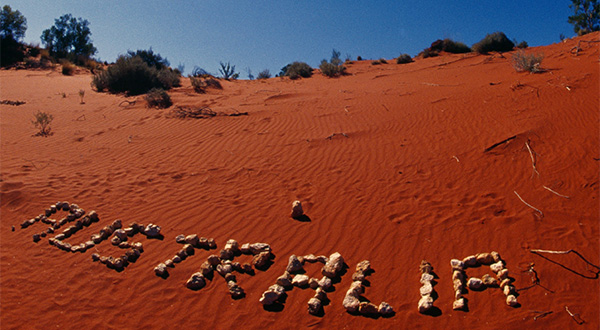
Image of the word Australia written in red dirt and rocks

Attracting Teachers to Schools in Rural and Remote Areas in Australia

Image of the word Australia written in red dirt and rocks

Region-related disparities are among the main factors that explain differences in access and equity in education (Lee, 2001). Schools in remote and rural areas often have difficulty in recruiting and retaining staff with certain qualifications and experience, and preparing them to address the educational complexity in these areas, such as multi-grade settings and specific student groups (OECD, 2018). The challenge of attracting teachers with experience is particularly severe in Australia, where the proportion of secondary teachers with five years or less of teaching experience in areas of 15 000 people or fewer is the second highest among countries participating in TALIS – 26% compared to an average of 18%. (OECD, 2014). In the Australian context, as distance from metropolitan centres increased, student performance as measured by PISA decreased, with students from metropolitan schools achieving significantly higher than those from provincial or remote schools (Thomson, De Bortoli and Underwood, 2016). Importantly, the terms rural and remote need to be understood as they relate to a specific context. For example, rural areas close to cities and remote rural areas can show different trends in the share of population, and very particular ways of capitalising on natural environments and strategic economic sectors (OECD, 2017).

Read more: http://www.oecdteacherready.org/promising-practice/attracting-teachers-to-schools-in-rural-and-remote-areas-in-australia/

Illustrations of Practice – Graduate Level – SPERA

As visual representations of what teacher practice could look like in a range of contexts, Illustrations of Practice help teachers to situate their own practice within the Australian Professional Standards for Teachers.

They are an impression of aspects of teacher practice within a particular career stage of the Standards and aim to assist teachers to interpret the meaning of the elements of the Standards. Accordingly, the illustrations demonstrate practice in a range of learning environments and across the spectrum of student cohorts.

The illustrations are short videos, often supported with resources including student work samples and teacher planning documents, captured in schools across Australia. They can be used to support teacher self-evaluation/reflection and professional learning.

SPERA’s Partnership with CEPWA and AITSL

In mid 2012 SPERA was successful with its Request for Proposal to the Australian Institute for Teaching and School Leadership (AITSL) to produce four illustrations of practice. SPERA joined forces with the newly formed Country Education Partnership WA (CEPWA) who were also contracted to produce four Illustrations to support the implementation of the new Australian National Professional Standards for Teachers.

The Australian Professional Standards for Teachers comprise seven standards outlining what teachers should know and be able to do. The seven standards are grouped under the three domains of Professional Knowledge, Professional Practice, and Professional Engagement.

The Illustrations of Practice are a resource for teachers and designed to bring the Standards to life. As a resource the illustrations:

  • demonstrate what teacher practice could look like in a range of contexts to help teachers situate their own practice within the National Professional Standards for Teachers.
  • are an impression of the qualities of teacher practice within a particular career stage of the Standards. The four career stages are designated as Graduate, Proficient, Highly Accomplished, and Lead.

Seven Illustrations produced by SPERA and CEPWA depicted the Graduate level and in the rural and regional context. With the exception of three Illustrations, interns from the Western Australian Combined Universities Training Schools Project (WACUTS) volunteered their time and experience to enable the production to take place.

The interns and schools that made the project possible were: Annaliese Dawson (Murdoch University), Elizabeth Corp (Murdoch University), and Alexandra Gilbert (Edith Cowan University) who are all interns at O’Connor Primary School in Kalgoorlie; Laura Wilson (University of Western Australia) at Harvey Primary School; Natalie Donkin (Murdoch University) at Harvey Senior High School; Alana Reid (Curtin University) at York District High School and; Tanya Cox (Murdoch University) at Kellerberrin District High School.

Others who were not involved in the WACUTS internship program and providing Illustrations were; Tanith Dent, Natalie Perott and Libby Owen. Natalie, a graduated from Edith Cowan, had recently taken up an appointment at O’Connor Primary School (Kalgoorlie) after enjoying the opportunity to complete a practicum at the school in 2011. Tanith also completed a practicum at O’Connor in 2011 and had recently returned to the school to fill a vacancy after completing her teacher education training at Edith Cowan University. Libby was in her first year of teaching at Toodyay District High School after graduation from Notre Dame University.

Each of the graduates involved in the project are exceptional teachers with a passion for rural education. It was a great privilege for SPERA and CEPWA to be involved in the project and to work alongside teachers early in their careers and committed to the provision of quality education beyond metropolitan Australia.

The Illustrations produced by SPERA and CEPWA are published on the AITSL website:

www.aitsl.edu.au

Renewing Rural and Regional Teacher Education Curriculum

This resource has been developed to support teacher educators to prepare future graduates for the challenges and opportunities of teaching in rural/regional communities.

The materials can be readily embedded into lectures, tutorials, workshops and professional learning experiences to provide teaching and learning environments that comprehensively consider the needs of rural and regional students, their families, schools and communities.

The website can be navigated in various ways to suit individual teacher educators’ needs. Underpinning the curriculum module design is a conceptual framework and links to key readings in rural teacher education and other related fields. To find out more about using this website, click on the tab ‘How to use this site‘.

Our aim is to inspire all teacher educators to produce quality teachers for regional and rural Australia.

RRRTEC has established a Rural (Teacher) Education Facebook community – find us at https://www.facebook.com/rrrtec

It’s a growing community aimed at building national and international research and scholarly work and connections. It also links continually to the RRRTEC website to keep the resources fresh and updated for people to access and use. New PD materials have also been created in the website www.rrrtec.net.au for teacher educators to use at their home campuses.

Pre-service Framework Teacher Guides

This resource package has been produced for the Tertiary Educators Rural, Remote and Regional Network (TERRRN) as part of an Office for Learning and Teaching (formally the Australian Learning and Teaching Council (ALTC) project titled Developing Strategies at the Pre-service Level to Address Critical Teacher Attraction and Retention Issues in Australian Rural, Regional and Remote Schools.

The TERRRN team consists of: Professor Sue Trinidad (Dean of Teaching and Learning, Curtin University), Associate Professor Graeme Lock, Director, Learning and Teaching, Edith Cowan University, Assistant Professor Elaine Sharplin (Associate Dean, Teaching and Learning, University of Western Australia), Dr Tania Broadley (Flexible Learning and Academic Development, Curtin Business School), Susan Ledger (Director of School Experience, Murdoch University), Emmy Terry (President, Society for the Provision of Education for Rural Australia [SPERA]) and Don Boyd (Executive Member, SPERA).

The following Pre-service Framework Teacher Guides are provided for you. These can be used as a package or as individual modules:

The Teacher Guides are made available under the creative commons license.

Support for these publications has been provided by the Australian Government Office for Learning and Teaching. The views expressed in this publication do not necessarily reflect the views of the Australian Government Office for Learning and Teaching.

Training Framework Diagram

It is with pleasure that the Network is able to present the deliverables/outcomes of their endeavour encapsulated in the Training Framework for Producing Quality Graduates to Work in Rural, Regional and Remote Australia.

The Training Framework diagram highlights the process undertaken and the production of support materials to form the Training Framework for both pre-service teachers and their lecturers that together have three significant expected outcomes. Firstly, as a result of applying the Framework it is expected that pre-service teachers will have a greater knowledge of rural, regional and remote education and what it means to be a quality teacher in those demanding locations. Secondly, as a result of having access to authentic knowledge about rural, regional and remote Australia, it is expected that more pre-service teachers will apply to work in non-metropolitan locations on graduation. Thirdly, it is expected that the processes and support materials inherent in the Training Framework will improve the quality of Graduate teachers who take up the challenge of living and working in rural, regional, and remote Australia.

The fact that the Training Framework is grounded in the National Professional Standards for Teachers (Graduate Level) provides the quality assurance foundation in that “they define the work of teachers and make explicit the elements of high-quality, effective teaching in the 21stcentury schools that will improve educational outcomes for students” (AITSL, 2011).

Download the Training Framework Overview: Training Framework.pdf

The Training Framework Overview is made available under the creative commons license.

Support for this publication has been provided by the Australian Government Office for Learning and Teaching. The views expressed in this publication do not necessarily reflect the views of the Australian Government Office for Learning and Teaching.

The National Professional Standards for Teachers

On 1 January 2010, and in the early stages of the TERRR Network project the Australian Institute for Teaching and School Learning (AITSL) came into being. One of AITSL’s first tasks was to assume responsibility for validating and finalising the National Professional Standards for Teachers (NPST) which had commenced by the National Standards Sub-group of the Australian Education, Early Childhood Development and Youth Affairs Senior Officials Committee (AEEYSOC) in 2009. AISTL completed the development of the NPST during 2010 and were endorsed by MCEECDYA in December of that year.  The NPST are a major milestone for teaching and learning in Australia as the Standards that articulate a national approach to what teachers are expected to know and be able to do at four career stages: Graduate, Proficient, Highly Accomplished and Lead (AITSL, 2011). The TERRR Network acknowledged this important major initiative in Australian education by focusing the Training Framework and the Teacher Guides around the Standards.

The TERRR Network was also aware that AITSL is keen to develop supporting documentation for the NPST for the context of teaching in rural, regional and remote schools.  Therefore, in addition to modelling the use of the Standards in the development of pre-service curriculum, the TERRR Network is supporting and supplementing the work of AITSL in providing documents that will assist graduates and proficient teachers to apply the Standards to their work in the rural, regional and remote context.

Download the National Professional Standards for Teachers – Graduate Level for the Rural, Regional and Remote Context: National Professional Standards.pdf

The National Professional Standards is made available under the creative commons license.

Support for this publication has been provided by the Australian Government Office for Learning and Teaching. The views expressed in this publication do not necessarily reflect the views of the Australian Government Office for Learning and Teaching.

Pre-service Framework

In 2009 a group of tertiary educators from four universities in Western Australia with an interest and experience in rural, regional, and remote education, and especially in improving the attraction and retention of quality teachers to non-metropolitan locations, formed the Tertiary Educators Rural, Regional and Remote Network (TERRR Network). In 2010 the TERRR Network was successful in obtaining a grant from the Australian Council of Teaching and Learning (ALTC) now the Office for Learning and Teaching (OLT) to undertake a project titled: Developing Strategies at the Pre-service Level to Address Critical Teacher Attraction and Retention Issues in Australian Rural, Regional and Remote Schools.

The project started with the following broad outcomes and deliverables:

  • Develop pre-service courses rural, regional and remote studies curriculum modules across four universities that can be used by other universities;
  • Develop models of rural, regional or remote experiences for pre-service teachers who may be teaching in a variety of different locations such as a small rural farming community; a regional mining community; or a remote Indigenous community;
  • Link theoretical and practical teaching and learning processes: e.g. practical field experiences into the curriculum and reflective journals;
  • Document ways in which the participation rates of regional students and especially Indigenous Western Australians in teacher education programs can be increased;
  • Develop tools to assist with the implementation of the institution based and field learning experiences, such as a practicum placement tool, modelled on the Queensland Rural and Remote Educators Network rural placement data base and in conjunction with the Society for the Provision of Education for Rural Australia (SPERA), an online networking tool to link pre-service teachers with an interest in rural experiences;
  • Embed collaborative strategies between rural, regional and remote teacher educators across four universities in Western Australia;
  • Improve communication between teacher educators and regional authorities;
  • Provide opportunities for school students in rural, regional and remote locations to improve their knowledge about teacher education programs and becoming a member of the teaching profession;
  • Expand the research associated with rural, regional and remote education;
  • Provide an interim report, including a financial and progress summary at the end of year one; and
  • Provide the final project report following the Australian Learning and Teaching Council Grants Scheme Guidelines.

The outcomes have been made available on the SPERA website and in electronic format on a CD. The report reviewing the project outcomes and the development of the Training Framework for Producing Quality Graduates to Work in Rural, Regional and Remote Australia contains seven chapters.

Support for this publication has been provided by the Australian Government Office for Learning and Teaching. The views expressed in this publication do not necessarily reflect the views of the Australian Government Office for Learning and Teaching.

The project team also put forward the following four recommendations. These recommendations were first put forward at the Summit 2011- Rural Futures Matter- A Sustainable Australia held at Flinders in September 2011. The project team were well represented at the Summit and believe the four recommendations are highly relevant to the continuation of the work started by this and other project.

Recommendations

  1. That the Australian Government makes resources available comparable to that which occurs in medicine to prepare rural GP and other health professionals, so pre-service teacher education students have the option of taking a fully funded semester length rural/remote/regional professional placement and appropriate resourcing is allocated to support teacher educators to properly prepare, support and debrief teacher education students who take a rural/remote/ regional placement.
  2. That pre-service and early career Country Teaching Scholarships be available to all candidates willing to do a practicum or internship in non-metropolitan locations.
  3. That the Australian Government makes available resources to RRRTEC, the TERRR Network and other similar projects for the development of rural, regional and remote curriculum materials to be used by universities in their teacher education courses.
  4. That the Australian Government encourages all universities to incorporate in their teacher education programs an understanding of the importance of the rural, remote and regional context especially for the development of strategies to engage with parents/care givers, local businesses and local communities.