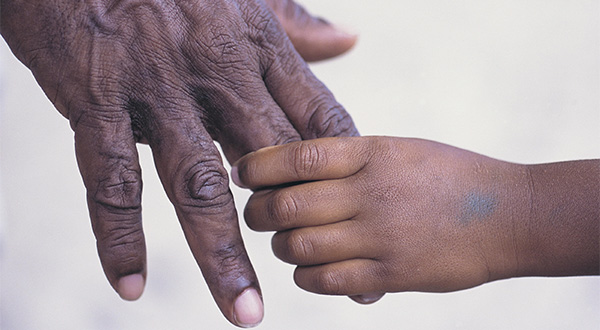
Image of a child's hand holding an adult's hand

‘Shaping the Future: Learning from Indigenous Higher Education Research in the Northern Territory’

Image of a child's hand holding an adult's hand


A presentation on research projects related to ‘Better understanding and responding to the needs of regional and remote Indigenous Higher education students in the NT’

These research projects were recently awarded a 2018 Australian Rural Education Award by the Society for the Provision of Rural Education in Australia (SPERA) for five intersecting Indigenous higher education related research projects emanating out of the Office of Pro Vice-Chancellor Indigenous Leadership CDU, over the past three years.

The award is for existing projects that demonstrate a proven link between a rural, regional and/or remote school or learning context and the local community, and benefiting a defined group.

These projects have included partnerships with BIITE, CQU and SUT and various funding bodies.

read more: https://www.cdu.edu.au/indigenous-leadership 

AIJRE Special Issue Proposals Invited

We are calling for a Special Issue topic and special editor.  If you are interested please, identify the theme of the proposal and highlight the significance for the advancement of rural education research Include the following:

  • Name of Special Issue Editor/Editors
    An outline of the proposal highlighting the theme and discussion why it is important for the advancement of rural education research.
    A list of authors et topics and abstracts. OR   A list of proposed authors and possible topics.
    Proposed date of Submission: August 2019; March 2020; August 2020; March 2021; August 2021; March 2022 or August 2022.
  • Role of Special Issue Editors:
    Responsible for identifying, coordinating and supporting authors in preparation of manuscripts in a timely manner.
    Responsible for working with AIJRE administration to manage submissions, blind review and copyediting.
    Responsible for submitting an editorial for the special edition
  • Submission Criteria:
    Suitability to AIJRE Journal remit.
    Importance and significance of theme.
    Capability and Diversity of Authors

Contact AIJRE via journal@spera.asn.au

Rural Education on the Global Stage

AIJRE Vol 29 No 1 (2019): Rural Aboriginal and Torres Strait Islander Education

Why the need for a special edition on First Nations ruraleducation? Surprisingly,there is almost no literature within Australia that discusses the significance of ruralityin First Nations education.Many research articles describe the significance of remotenessin First Nations education. Much of the extant research is built on a premise that remoteness goes hand in hand with disadvantage and outcomes often described as ‘poor’ and ‘failing’. The lack of literature on First Nations ‘rural’ education coupled with the deficit language discourse surrounding First Nations ‘remote’ education triggered a global investigation into the topic

Hay bales in paddock

2018 AREA Winners

Congratulations 2018 AREA winners

Since 1994, the Australian Rural Education Award (AREA) has been awarded annually to an institution, organisation or industry to ecognise excellence in rural education in Australia. At the 2018 SPERA Conference three AREAs were presented to:

Back Track Youth Works

Indigenous Leadership Research and Evaluation Network – Charles Darwin University

Lighthouse Virtual Reality Outreach – Macquarie University

Developing a Rural Compass: Recalibrating for Success An overview of rural education policy in Australia

Dr Susan Ledger’s recent article featured in spanish magazine ‘Guix – Aula d innovacion educativia’.

Although home to over 32% of the nation, regional Australia is often overlooked in terms of research, planning and investment. This is a call to recalibrate the rural compass for policy decisions in Australia. It is timely as the OECD launches Learning Compass 2030, its new ‘Global Competence Framework’ and ‘global competence’ PISA measure. It is also timely given the soon to be released Australian Independent Review into Regional, Rural and Remote Education (424)

Continue Reading: Rural Article – Guix – Aula d innovacion educativa2 (003)

Independent Review into Regional, Rural and Remote Education

In 2017, the Australian Government commissioned an Independent Review into Regional, Rural and Remote Education (IRRRRE). The Review was part of the Australian Government’s commitment to improve the education of country students so they can reach their full potential and participate in Australia’s economy.

Emeritus Professor John Halsey from Flinders University conducted the review to examine the challenges faced by these students and find innovative solutions to help them succeed at school and beyond. Read the IRRRRE’s Terms of Reference and Discussion Paper. The Discussion Paper was supported by a Literature Review.

Continue Reading …


Image of the word Australia written in red dirt and rocks

The educational needs in non-metropolitan areas have been explored in a recent report.

In 2018 the Federal Government released the Independent Review into Regional, Rural and Remote Education, commissioned in 2017 and led by Emeritus Professor John Halsey of Flinders University. Experts respond in MCERA:

Continue Reading …MCERA_Independent Review into Regional Rural and Remote Education5

Image of a microphone at a conference

SPERA wants to hear from you.

SPERA is conducting a survey of members and supporters.  The survey is aimed at helping SPERA revise its mission and aims, help shape its future work, and draft a submission to the Independent Review into Regional, Rural and Remote Education.

The questions are a mix of open text response, multiple choice and ranking exercises and should take approximately 10 minutes.

We would greatly appreciate it if you could complete this survey and share with your colleagues and networks.

Please find the link to the SPERA survey here.


Image of Parliament House in Canberra Australian Capital Territory

Australian Rural Education Awards 2017

Call for Nominations

Since 1994, the Australian Rural Education Award (AREA) has been awarded annually to an institution, organisation or industry to recognise excellence in rural education in Australia.

Category 1
Existing projects that demonstrate a proven link between a rural, regional and/or remote school or learning context and the local community, and benefiting a defined group.

Category 2
Future projects that support new and creative thinking in professional practice aimed at improving student outcomes in a rural, regional and/or remote setting.

Category 3
Pre-service teachers or institutions recognising demonstrated excellence in professional learning practice in rural, regional and/or remote settings.

Category 4
Projects based in, or benefiting, rural, regional and/or remote international settings. Nominees may be based in Australia or overseas.

Category winners will receive complementary 2017 conference registration for one delegate and a trophy. Runners up will receive a citation recognising their achievement.

But hurry! Nominations Now close Friday 7th July 2017

How to Nominate

To nominate, please email admin@spera.asn.au with the subject line 2017 AREA Nomination, Category (Insert Number), and provide the following information:

  • Name of school / organisation / learning context / pre-service teacher
  • Postal address
  • Principal / Chief Administrator
  • Institution name / Details of sponsoring school
  • Name, telephone number and email address for the person who would accept the award
  • Category you are entering, ie. Category 1, 2, 3 or 4
  • 300 words describing the nature of the project / learning practice being recognised
  • Any additional materials to support your nomination, ie. graphics, photos, videos, details of previous awards, etc.

AREA-AWARDS-2017 (344 KB)

Talbingo Clean Green Energy Park 2008

Country school principals take leadership challenge

An Article in Adelaide’s Independent News

Country education and regional schools around Australia are benefiting from the ‘first crop’ of rural Masters graduates, with Flinders University calling for enrollments for the second program from mid-2017.

The new Master of Education (Leadership and Management) degree offers valuable career and professional advancement to current and aspiring educational leaders from country schools as far away as outback Queensland, to rural Victoria, to South Australia’s Riverland and the South-East.

Rural education is a vast undertaking, says course coordinator Professor John Halsey.

More than 4,000 Australian schools are located in rural, regional and remote locations, and educate almost 30% of all students.

Continue reading …

Congratulations! 2016 Australian Rural Education Awards (AREA) & ISFIRE Award Recipients

Since 1994 SPERA has awarded, the Australian Rural Education Awards to an institution, organisation or industry, in recognition of excellence to Australia’s Rural Education sector . It was the first national award recognising both excellence in rural education and promoting creative ways of meeting the educational needs of rural families and their communities.
At the recent 32nd Annual SPERA Conference, held in MacKay, five awards were presented to projects which clearly demonstrated an initiative that expands education opportunities for rural Australian communities.

It is with great pleasure that SPERA awarded these projects in the following categories:

Category 1 Existing projects that demonstrate a proven link between a rural, regional and/or remote school or learning context and the local community, and benefiting a defined group.

Winner: Whole of Community Engagement Initiative, Charles Darwin University in partnership with the North Australian Indigenous Land and Sea Management Alliance, Batchelor Institute of Indigenous Tertiary Education and the Northern Territory Department of Education. It has involved building the aspiration, expectation and capacity of six very remote Indigenous communities in the Northern Territory to participate in further education. A place-based approach adopted through the WCE initiative has emerged as an innovative model to guide the ways in which Australian universities can engage with remote Indigenous communities about further education pathways.

Category 2 Future projects that support new and creative thinking in professional practice aimed at improving student outcomes in a rural, regional and/or remote setting.

Winner: ASPIRE, University of New South Wales. ASPIRE’s regional program currently targets 30 primary, central and secondary schools in areas of significant disadvantage in NSW. It’s aim is to bring a university education within the reach of students in remote and regional NSW through a variety of experiences and academic support so that students and their communities can overcome the barriers to access and succeed in a university education.

Category 3 Pre-service teachers or institutions recognising demonstrated excellence in professional learning practice in rural, regional and/or remote settings.

Winner: Rural Clinic Placement, a joint project between CQUniversity and Rockhampton Catholic Education. Over the past two years this program has enabled third year Bachelor of Oral Health students from CQUniversity to complete a voluntary rural placement in their mid‐term break. The students educate school children about oral health and treat patients in Central Queensland. The placement co‐ordinator, Associate Professor Leonie Short, has worked with Ross Jones, Assistant Director Schools: Western Region from the Catholic Education Office Diocese of Rockhampton, to organise the placement of students. The CQUniversity students plan and deliver oral health education classes in the Catholic primary schools, located in Emerald, Springsure and Clermont.  In addition the Oral Health students visit and work in the dental clinics at Springsure and Emerald hospitals. The students examine teeth and perform restorations (fillings) for the child patients. They also visit a number of dental practices in Emerald and work with the staff in those centres.

Category 4 Projects based in, or benefiting, rural, regional and/or remote international settings.

Winner: German LOTE program – Calen District State College. The Calen District State College is a small rural P-12 school with a total enrolment of 230 students. German is the LOTE taught at the school to students from years 5 to 12. One of the problems facing students of languages other than English (LOTE) in rural communities is often the lack of the opportunity to engage in conversations with native born speakers of that language.  Another problem is that rural students often have limited experience of the world beyond their communities. This project aims to overcome these problems establishing relationships with schools in Germany. Establishing email pen-pal relationship wiht students in Germany and offering Calen students the opportunity to visit Germany, experience another culture, visit larger communities and speak with native born speakers in their native tongue. The students from urban communities in Germany get to experience life in a rural community in Australia and to attend a small rural school.

An AREA Commendation was also given to the KITES (Kids in Town Engaged in School) School, Alice Springs for their project ‘Re-Engaging Kids with School’ – KITES. A whole-school program developed and driven by educator Jenny Buckley to provide a space for accessible, safe and consistent provision of learning & teaching. KITES addresses social and educational needs of children from remote areas of the Northern Territory and other states, who are ‘visiting’ Alice Springs. 

ISFIRE Award

SPERA in conjunction with SiMERR National Research Centre at the University of New England this year also presented the International Symposium for Innovation in Rural Education (ISFIRE) Award. This award was awarded in recognition of ‘Innovative strategies for improving equity in rural education in international settings’. This was awarded to the Pacific Education and Development Team, University of New England for the Nauru Teacher Education Project. In 2013, the University of New England won a tender to develop an innovative program to train local teachers in Nauru in partnership with the Republic of Nauru and Department of Foreign Affairs and Trade (DFAT) Australia. The program aims to address the heavy reliance on expatriate teachers, resulting from increasing gaps in the supply of quality local teachers proficient in subject, content and pedagogy. This is achieved whilst meeting the requirements of the Nauru Education Act (2011) that requires a two‐year teaching qualification and delivers a quality higher education experience that is contextualised to the Pacific.Notable

Notable Nominations for the 2016 Awards included:

  • Unichoice , Edith Cowan University
  • LEAP – Links (Virtual Classrooms), Macquarie University
  • The Tertiary Enabling Program, La Trobe University
  • RuralBiz Training, Kreate Pty Ltd
  • Supported Pathways to Education and Employment: Rural and Regional Program, University of Wollongong
  • LEAP – Links (Digital Literacy), Macquarie University

Winners received complimentary SPERA Conference registration, during which they had an opportunity to showcase their successful projects. Winners also received a trophy and prize of $500 each to further their endeavors.

Image of australia

THE FUTURE OF WORK: SETTING KIDS UP FOR SUCCESS

Making sense of the competing messages surrounding the future of work can be a daunting and difficult task, particularly for parents and friends wanting to ensure their children’s success.

In response, nbn and the Regional Australia Institute have partnered to build a set of practical online resources for parents and children to use today to build the skills and attributes they will need for the future.

These include a ‘Future of Work’ research report, six case studies (see below) and an online toolkit.

The Regional Australia Institute’s The Future of Work – Setting Kids up for Success’ report reveals that to remain competitive in the 2030 job market, one in two Australians will need skills in programming and software development, as well as an ability to build digital technology.

Continue reading….

Call for Editors: The Australian and International Journal of Rural Education

The Australian and International Journal of Rural Education (AIJRE) is seeking enthusiastic members of the rural education community to join its editorial board. The Australian and International Journal of Rural Education is the Journal of the Society for the Provision of Education in Rural Australia (SPERA). It serves as an international medium for educators and researchers with an interest in the provision of education in rural contexts. The Australian and International Journal of Rural Education publishes papers which may be scholarly accounts of educational research relevant to rural education, feature articles, research reports or integrative reviews.

In this instance we are seeking a number of Consulting Editors and two Chief Editors Production and Dissemination. The role descriptions for each position are below.

We invite interested parties to email journaleditor@spera.asn.au outlining their interest in joining the editorial team, their relevant experience, and an overview of their work in the field. New scholars to the field, and research students, are encouraged to apply. Please note which position you are expressing interest in.

For enquiries please contact Philip Roberts at the email address noted above.

Role descriptions:

Consulting Editors
Consulting Editors are members of the rural education research community. This may include both academics in the field, practitioners (i.e. teachers, departmental officials, research students) and other interested parties with expertise in matters pertaining to rural education. Consulting editors contribute to the overall development of the journal by reviewing publications and providing ongoing feedback about the journals direction. Consulting Editors do not need to attend editorial meetings.

Chief Editor/s Production and Dissemination
The’ Chief Editors Production and Dissemination’ are responsible for the output of the journal and the management of journal platform. Specific responsibilities include:
? (Following decision by the ‘Chief Editors Review’) Checking manuscripts for general editing, formatting and referencing.
? Ensuring the editorial is completed and included.
? Uploading final manuscripts to the journal portal.
? Publishing manuscripts on the journal portal.
? Managing necessary revisions of published articles, ensuring version control.
? Ensuring website meta-data is updated and accurate.
? Compiling each edition for lodging with INFORMIT, and lodging each edition with INFORMIT.
? Overseeing post-production dissemination, including social media dissemination.
? Attending editorial meetings.
? The Chief Editor/s Production need not be an academic in the field of rural education.

Consulting Editors
? Consulting Editors are members of the rural education research community. This may include both academics in the field, practitioners (i.e. teachers, departmental officials, research students) and other interested parties with expertise in matters pertaining to rural education. Consulting editors contribute to the overall development of the journal by reviewing publications and providing ongoing feedback about the journals direction. Consulting Editors do not need to attend editorial meetings.

Improving teaching in rural schools – we need to stop borrowing approaches from overseas

Simon White wrote in The Conversation on 6th September 2016

While statistics might show Australia has an oversupply of teachers, this masks the reality that many rural schools find it increasingly difficult to recruit and retain teachers.

This has dire consequences for the life opportunities for rural students, and contributes to the widening gap in educational results and pathways for young people born in rural communities compared to their urban counterparts.

While some policymakers might tend to look to countries such as England and the US for solutions, such models require further investigation before being adopted in to the Australian context.

Stop borrowing approaches from overseas

Australia needs a new approach to solve the rural staffing churn, and a solution might lie closer to home in investing in teacher educators’ professional learning rather than borrowing approaches from overseas.

Fast track teacher “training” programs such as Teach First in England and Teach for America seem like an appealing solution to solve the rural (and indeed remote) staffing crisis. But the logic is somewhat flawed.

The model presupposes that some people need less preparation time before being placed in the hardest to staff schools. It also only requires these people to stay for a maximum period of two years.

Continue Reading….

Grants and Opportunities – 2017 Science and Innovation Awards


Applications for the Department of Agriculture and Water Resources 2017 Science and Innovation Awards are now open.

If you are aged 18 to 35, and focused on Agriculture, Fisheries and/or Forestry by way of research, innovation or science, you are invited to nominate for a grant of up to $22,000 to fund a project aimed at benefiting Australia’s primary industries.

There are 11 industry Science Award categories to which you can you nominate, including:

  • Cotton
  • Dairy
  • Emerging, new and established rural industries
  • Fisheries and aquaculture
  • Grains
  • Health and biosecurity
  • Meat and livestock
  • Pork
  • Red meat processing
  • Viticulture and oenology, and
  • Wool.

Winners in any category will subsequently be invited to apply for the Minister for Agriculture and Water Resources Award, which will provide additional funding for further research.

For more information, including details on how to nominate, please visit the Department of Agriculture and Water Resources website.

La Trobe Accelerator Program

On 29 August, the Victoria State Government committed $1 million through its LaunchVic initiative to fund an entrepreneur development program through La Trobe University. La Trobe, in partnership with Deakin University and Federation University Australia, will invite emerging entrepreneurs in regional Victoria to participate in what has been named the La Trobe Accelerator Program (LTAP).

LTAP will operate from each of La Trobe Uni’s campuses – in Bendigo, Shepparton and Albury-Wodonga – helping to overcome geographical barriers faced by fledgeling entrepreneurs. The program will commence in 2017, with the selection of 10 start-up companies that will be awarded funding of $20,000 in addition to mentoring and networking opportunities, industry experience and office space, to help new entrepreneurs to innovate and grow jobs in regional areas of Victoria.

Image of map of far north Queensland Australia

Call for Abstracts: 2016 SPERA/ISFIRE Conference

Rural Education: Place, Pedagogies, Partnerships and Possibilities

SPERA, in partnership with the SiMERR National Research Centre at the University of New England, invites you to submit abstracts for the 32nd National SPERA Conference and 4th International Symposium for Innovation in Rural Education.

Hosted by CQUniversity Australia and supported by the University of Tasmania, the 2016 conference will bring together a range of national and international teachers, school administrators, teacher educators, academics, pre-service teachers, community members and parents who are passionate about rural education. The conference will be held at CQUniversity Australia’s Ooralea Campus in Mackay, Queensland between Wednesday 28 and Friday 30 September 2016. Early-bird conference registrations will open soon.

To submit an abstract, please download, complete and return the proposal template below.

Abstracts are to be written in plain English and include clear information about the aims, nature and content of the paper and, where applicable, a brief statement of results and implications. All abstracts should be linked to the conference theme or sub-themes.

Evaluation of Abstracts

Abstracts are subject to blind-review by members of the program committee. Notification of whether the abstract has been accepted for presentation will be sent to the presenter/s on or before Thursday 19 May 2016. Successful presenters will be asked for their audio visual requirements at this time and instructed to confirm their attendance via paid registration no later than Friday 3 June 2016.

Please Note

Presenter/s must be paid registrants of the conference in order to present a paper. Registrations must be paid no later than Friday 17 June 2016. No refunds will be issued for any reason after Friday 19 August 2016.

Important Dates

Call for Submission Deadline: Extended to 13 May 2016

Notification of Acceptance of Abstracts: 24 May 2016

Presenter Registration & Acceptance: 17 June 2016

2016 Conference Date: 28 – 30 September 2016

Queries or Concerns
Please email admin@spera.asn.au with any queries or concerns you may have about your abstract submission and a member of the SPERA/ISFIRE conference team will get back to you.

2016 SPERA Conference Abstract Proposal Template (52Kb)

2016 SPERA-ISFIRE Conference Flyer (2Mb)

Transparency needed in teacher recruitment: The smoke may be clearing in the ATAR battle

ACER recently reported that:

In recent debates about ATARs we have lost sight of what matters most in teacher recruitment: selecting high-quality candidates to ensure a strong profession, says Lawrence Ingvarson.

NSW Minister for Education Adrian Piccoli has been accused of ‘attacking students with shameful elitism’ with his plan requiring new teachers appointed to NSW government schools to have attained a high standard of English and Mathematics at Year 12. Recent evidence suggests several of our universities might instead be accused of shameful opportunism in their teacher education offers, showing little regard for the public interest or the teaching profession.

Time to face the fact: low ATAR scores is a problem

In 2015, while 68.5 per cent of all offers for university places were made to Year 12 applicants with an Australian Tertiary Admission Rank (ATAR) of at least 70, only 42 per cent of teacher education offers were made to Year 12 applicants with an ATAR score of at least 70. The number of entrants with ATAR scores less than 50 has more than doubled over the past four years.

Similar numbers apply to students who applied post Year 12, and we should not be taken in by academics who argue that the rising numbers of non-Year 12 entrants obviates the problem. Most non-Year 12 applicants also have an ATAR score, even if universities do not use these in determining non-Year 12 applications, and the profile of their scores is even worse.

Over the past 10 years, we have reached a point where almost everyone who applies now finds a place in a teacher education program. Over the same period, Australia’s performance on international tests of student achievements has declined significantly.

Continue Reading ….

Phil Roberts standing in Front of Whiteboard

“The spatial distribution of curriculum in (rural) schools: broadening access” ACSA Webinar

Phil Roberts is part of the SPERA Executive and a lecturer at the University of Canberra.

On Thursday 2 June 2016, 7-8pm AEST Phil will be presenting an Australian Curriculum Studies Association (ACSA) Webinar to discuss:

“The spatial distribution of curriculum in (rural) NSW schools”

            This webinar explores access to the senior secondary curriculum and approaches to broadening access, particularly in rural areas.

REGISTER HERE

This webinar examines the existence of a curriculum hierarchy in the (NSW) senior secondary curriculum and examines its socio-spatial distribution.  The presentation then explores approaches to broadening access in rural areas, particularly enacting the curriculum with references to rural places.  While the initial data draws upon NSW the issues and examples are nationally relevant.

Building on previous work in Victoria by Teese and colleagues this paper extends the idea of the curriculum hierarchy to the NSW senior secondary curriculum and then moves to explicitly examine the hierarchy in non-metropolitan areas. In doing so the ideas of powerful knowledge encoded in the school curriculum and the selection of this knowledge is examined in relation to the diversity of communities and the inclusion of rural knowledges.

It extends previous work in this area by introducing spatial thinking from the social sciences to look at how this knowledge is spatially distributed, its relationship to communities and place, and the spatial influences on its selection and enactment in schools.

This webinar will be of relevance to those interested in understanding how the curriculum hierarchy favours high socioeconomic status (SES) metropolitan communities and that access to the curriculum is determined by SES and location.  Importantly approaches to place conscious pedagogies that disrupt this hierarchy, and approaches to enacting academically powerful subjects with reference to rural knowledge’s, will explored.

AITSL Australian Professional Standards for Teachers addressed in this webinar:

1.3 Students with diverse linguistic, cultural, religious and socioeconomic backgrounds
2.2 Content selection and organisation
2.3 Curriculum, assessment and reporting

REGISTER HERE

Image of Parliament House in Canberra Australian Capital Territory

The Federal Budget and Regional Australia

Article published by Regional Australia Institute

The Federal Budget 2016-17 has been released with a focus on creating long term growth and jobs. The measures have been described by commentators as modest, with big spending promises or cuts kept to a minimum in this year’s announcement. The Regional Australia Institute (RAI) takes a look at the detail and how the measures stack up for regional Australia.

Headline Initiatives – SME Tax Cuts and Youth Jobs Plan

The most important headline initiatives of the 2016-17 budget for regional economies are the small business tax package and the youth jobs plan.

Regional Australia relies heavily on small businesses for local growth and jobs, making the small business focus of the budget important for regional Australia. We also know that a small proportion of high growth small businesses typically create around 50 per cent of the new jobs in our economy.
Continue Reading …

Federal budget 2016: education experts react

Article written for The Conversation by Glenn C. Savage, Conor King, John Fischetti, Megan O’Connell & Perter Goss

The government is spruiking a focus on education to drive innovation in the 2016 budget but it has put off higher education reforms in favour of further consultation.

The higher education reforms, which included the deregulation of university fees, were announced in the 2014 budget and will now be delayed for another year.

The total spend on education in this year’s budget is A$33.7 billion. This includes an agreement to fund schools to the tune of $1.2 billion between 2018 and 2020, but is contingent on education reform from the states and territories in all sectors including literacy and numeracy, teaching and school leadership and student outcomes.

There will also be $118.2 million over two years for students with a disability, the funding targeted to schools with the greatest need.

However, there are also cuts of $152.2 million over four years to the Higher Education Participation Program, which funds universities to bring in students from the lowest socio-economic levels and $20.9 million over the next four years to the Promotion of Excellence in Learning and Teaching in Higher Education Program.

Continue Reading …

Image of a group of people sitting together in a circle holding a meeting

Call for Papers: Unsettling Place and Space.

Editors: Sarah Pinto, Shelley Hannigan, Emma Charlton and Bernadette Walker-Gibbs

This edited collection will examine the ways in which considerations of place and/or space can be unsettling. It will draw together researchers from across the disciplines in order to chart the unsettled landscapes in which we find ourselves. We invite contributions from researchers from a range of disciplinary perspectives who are interested in space and place that speak to the key theme of unsettling, broadly conceived.

For further details please see

Please send abstracts of 200-300 words, along with a short bio, to sarah.pinto@deakin.edu.au by Monday 16 May 2016.


AREA 2012 Kingston Primary School

Pre-service Teacher Sponsorship 2016

Apply today!

Sponsorships are available for pre-service educators to attend the 32nd National SPERA Conference, 28 to 30 September 2016, Mackay, Queensland.

If you are a pre-service teacher and thinking about a career in rural, regional or remote education, you could receive:

• complimentary attendance at the upcoming SPERA conference, being held this year at CQUniversity Australia’s Ooralea Campus in Mackay, including attendance at all social events

• your travel and accommodation costs paid

• complimentary one-year SPERA membership, to enable you to benefit from the connections you will make as a result of attending the conference.

To apply, please write a brief statement (max. 2 pages) registering your interest:

• Tell us why you are interested in teaching in a rural, regional or remote community

• Tell us how you think attending the 2016 SPERA conference would assist your learning

• Include your most recent Professional Experience Report or a reference from your supervisor or principal

• Include a copy of your resume (max. 2 pages), including details of any previous experience you have had in rural, regional and/or remote schools.

Applications close Friday 17 June 2016.

Email admin@spera.asn.au

2016 SPERA Pre-Service Sponsorship Flyer (325 KB)

Brian O'Neill presents 2015 AREA Award to Jennifer McMahon Karratha Senior HIgh

Australian Rural Education Awards 2016

Call for Nominations

Since 1994, the Australian Rural Education Award (AREA) has been awarded annually to an institution, organisation or industry to recognise excellence in rural education in Australia.

Category 1
Existing projects that demonstrate a proven link between a rural, regional and/or remote school or learning context and the local community, and benefiting a defined group.

Category 2
Future projects that support new and creative thinking in professional practice aimed at improving student outcomes in a rural, regional and/or remote setting.

Category 3
Pre-service teachers or institutions recognising demonstrated excellence in professional learning practice in rural, regional and/or remote settings.

Category 4
Projects based in, or benefiting, rural, regional and/or remote international settings. Nominees may be based in Australia or overseas.

Category winners will receive a prize of AUD$500, complementary 2016 conference registration for one delegate and a trophy. Runners up will receive a citation recognising their achievement.

But hurry! Nominations Now close Friday 17th June 2016

How to Nominate

To nominate, please email admin@spera.asn.au with the subject line 2016 AREA Nomination, Category (Insert Number), and provide the following information:

  • Name of school / organisation / learning context / pre-service teacher
  • Postal address
  • Principal / Chief Administrator
  • Institution name / Details of sponsoring school
  • Name, telephone number and email address for the person who would accept the award
  • Category you are entering, ie. Category 1, 2, 3 or 4
  • 300 words describing the nature of the project / learning practice being recognised
  • Any additional materials to support your nomination, ie. graphics, photos, videos, details of previous awards, etc.

AREA-AWARDS-2016 (497 KB)

Five new frameworks that can drive teacher education reform

Written by Professor John Fischetti for The Conversation

There have been more than 100 reports critiquing teacher education in Australia since the 1970s.

These reports led to new tests and more accountability standards and measures of teacher behaviours.

Today we have a regulated profession that has not changed the content of what is taught as much as developed a tick box compliance process.

We need a major revamp of teacher education from the inside out that actually changes the model to provide all children with the education that is right for them.

The implications for schooling, teaching and teacher education

When I was in school in the 1960s and 1970s, teachers had one lesson plan, one textbook, one chalkboard, one pedagogical approach, one style of desk and one discipline strategy for the whole class.

My classmates and I were expected to adjust to the teacher and the plan.

“Differentiation” at that time meant that the taller students typically sat in the back of the classroom while those who had trouble seeing the chalkboard were moved closer to the front. Those students caught being “naughty” sat next to the teacher’s desk.

This was assembly-line education. Many of us did quite well. Some of us dropped in. Some of us dropped out. It was understood that if you worked hard after you left school, even if you dropped out, you could anticipate a pretty good job in the mill, the mine or the plant.

Teacher education grew out of these assumptions of “training” for the assembly line in a two dimensional (2D -“sit and git”) education world.

But for too long schools have been places young people go to watch their teachers work.

They have relied on a deficit model of learning and teaching. They have emphasised conformity rather than personalisation. And today, in many parts of the world, they still mirror factories while the 3D printer is replacing the assembly line.

Scientists are now aware of at least ten dimensions that we must comprehend in a very dynamic, collaborative, global innovation age.

Although many of us performed well in the 2D model, those who were unable to adapt to it have very little to do today.

Many jobs available in the past for those who did not finish school have been outsourced or automated, and more will be in the near future.

We cannot afford economically or morally to continue a 2D mentality for schooling.

Five new frameworks to drive the reframing of teacher education

Current standards across Australia and the world are remarkably the same. They are really organisers of evidence that new teachers and their programs must assemble inside these agreed-upon categories.

Unfortunately they are built on and support a model of learning and teaching that is nearly obsolete.

We actually have very little evidence that graduates of teacher education programs use what is taught to them three years into their teaching. This has to change.

In response, academics and educators across Australia, New Zealand, Hong Kong, South Africa, Canada, the UK and US have devised five new guiding questions or frameworks for teacher education. They help create a global conversation to benchmark teacher education internationally rather than in individual states or nations.

Where do children live?

The context and environment in which children live is paramount to their success as learners in formal school settings. Mostly middle class new teachers often lack deep understandings of culture, family, diversity and community dynamics. The most innovative teacher preparation programs embed direct community and family involvement early into their education.

Continue reading…

young man asleep over pile of text books

What’s so hard about teaching? Words of advice for new teachers

Article written by  Misty Adoniou for The Conversation

The first term of the school year is coming to a close. For most beginning teachers the school holidays cannot come soon enough. All of them feel exhausted.

Most will be anxious about the quality of their work – have their students been learning, are their colleagues satisfied with their efforts, are the parents happy?

Many will be wondering if they can make it through the rest of the year.

Some will leave.

What is so hard about teaching?

Teaching is complex. A primary teacher manages the learning of around 25 students each day. A secondary teacher has around 100 individuals to connect with each day.

In primary school, the teacher must organise learning in all the curriculum areas – an expert in adverbial phrases at 9am, phonology at 10am, improper fractions at 11am, the respiratory system at 12pm, musical notation at 1.30 pm and the history of federation at 2.00pm. And that’s just Monday.

Knowing their “stuff” is just the beginning of the task – they have to turn it into learning that is both accessible and engaging for every student in their classroom. And when learning doesn’t happen for some, the teacher has to figure out why and come up with a new plan.

Continue Reading….

Image of the word Australia written in red dirt and rocks

2016 ACEN Student scholarships

Eight scholarships of $1,500 for remote and regional Australia

Applications are now open for scholarships to provide financial support for students undertaking a work integrated learning (WIL) placement in a regional or remote area of Australia as part of their 2016/2017 university studies.

Once again eight scholarships to the value of $1,500 each are being offered to eligible university students.

In 2015 the eight scholarships of $1,500 were awarded to students in the following degrees

  • Doctor of Medicine
  • Bachelor of Arts/Bachelor of Social Work
  • Bachelor of Clinical Exercise Physiology
  • Bachelor of Education (Primary)
  • Bachelor of Medicine and Surgery
  • Bachelor of Paramedic Science
  • Bachelor of Social Work
  • Bachelor of Veterinary Science

See student reflections on their 2015 WIL experience.

2016 applications now open

(Read carefully as the criteria has changed slightly from previous years)

Australian Collaborative Education Network (ACEN) is the professional association for practitioners and researchers from the tertiary education sector, industry, community and government who are involved in WIL in Australia.

Continue Reading…

Image of the numbers 2016 on a gold glitter background

2016 Grant Opportunities

Happy New Year!

To help you make the most of 2016, the following are some grant opportunities that may be of interest to you or your organisation.

The Foundation for Rural & Regional Renewal (FRRR) currently has four grant opportunities available, as follows:

  • Tackling Tough Times Together: Closing on Wednesday 27 January 2016, the Tackling Tough Times Together grant aims to help communities access resources to support one another through the drought. The grants on offer go up to $20,000, however the FRRR also welcomes expressions of interest for grants up to $50,000.
  • Goulburn Valley-McEwen Foundation: Closing on Monday 1 February 2016, the McEwen Foundation offers funding for charitable projects for rural communities within the Goulburn Valley district in Victoria.
  • REAPing Rewards – Round 6: Closing on Thursday 24 March 2016, the REAPing Rewards program targets educational outcomes in rural and remote communities. The funding offered goes up to $10,000 per grant and supports locally-driven projects and programs that directly benefit people up to 18 years of age and their educators.
  • Small Grants for Rural Communities – Round 29: Closing on Thursday 24 March 2016, grants of up to $5,000 are available for projects and activities that offer clear public benefit for communities in rural, regional or remote Australia with populations of 10,000 people or fewer.

Throughout the year, Country Arts WA provides a number of opportunities for young people and organisations to create and contribute to the arts in their local communities:

  • Project Fund: Closing on Friday 11 March 2016, the federally funded Project Fund enables communities or individual artists to partner with arts and cultural leaders to create high-quality arts activities that deliver long-term cultural benefits.
  • Drug Aware YCulture Regional: Open all year round, the program enables young people aged 12 to 26 to actively create, plan, manage and deliver their own arts projects focused on promoting the Drug Aware message.

The National Centre for Student Equity in Higher Education‘s (NCSEHE) 2016 Student Equity in Higher Education Research Grants Program, closing Friday 19 February 2016, offers grants of between $30,000 and $40,000 for projects focused on student equity in higher education policy and practice. A core focus for the NCSEHE is students from rural, regional and remote locations and the grants on offer provide for research in this area.

Image of SPERA President Mr Brian O'Neill

Inspiring Educators: An Interview with Mr Brian O’Neill

The Team at Faculty recently spoke with Mr Brian O’Neill, who is principal of Calen District College and President for the Society for the Provision of Education in Rural Australia (SPERA). This 45 minute conversation provides a fascinating insight into teaching in rural Australia.

Continue Reading…

Image of university students sitting on lawn and talking

RUN welcomes changes to Youth Allowance to help regional students

The Regional Universities Network (RUN) welcomes changes to Youth Allowance which will make it easier for rural and regional students to go to university.

The changes, passed by the Federal Parliament on November 12, will result in all dependent children being taken into consideration in the assessment for Youth Allowance eligibility, softening the reductions in support as family income increases.

The Chair of RUN, Professor Jan Thomas, said the changes mean that more regional students will qualify for Youth Allowance to help them go to university.

“Far fewer regional Australians attend university compared to people in capital cities. The changes to Youth Allowance are great news and will encourage more people from the regions to pursue higher education,” Professor Thomas said. Regional Australians who receive an offer to go to university are more than twice as likely to defer, due to financial pressures, compared to metropolitan Australians. Providing more regional students access to Youth Allowance will help. It is critical to grow the proportion of educated professionals working in the regions, if regional Australia is to fully be part of an innovative economy in the national interest. Students who attend university in regional Australia stay and work the regions. Living costs in regional Australian towns are well below that in capitals, and offer an attractive option for students.”

Contact: Dr Caroline Perkins
Executive Director, Regional Universities Network, 0408 482 736

Find out more about the Regional Universities Network at www.run.edu.au Follow us on: Twitter: @RegUniNet Facebook: www.facebook.com/RegionalUniversitiesNetwork

Issued by: Diana Streak, RUN Media Adviser, 0422 536 064

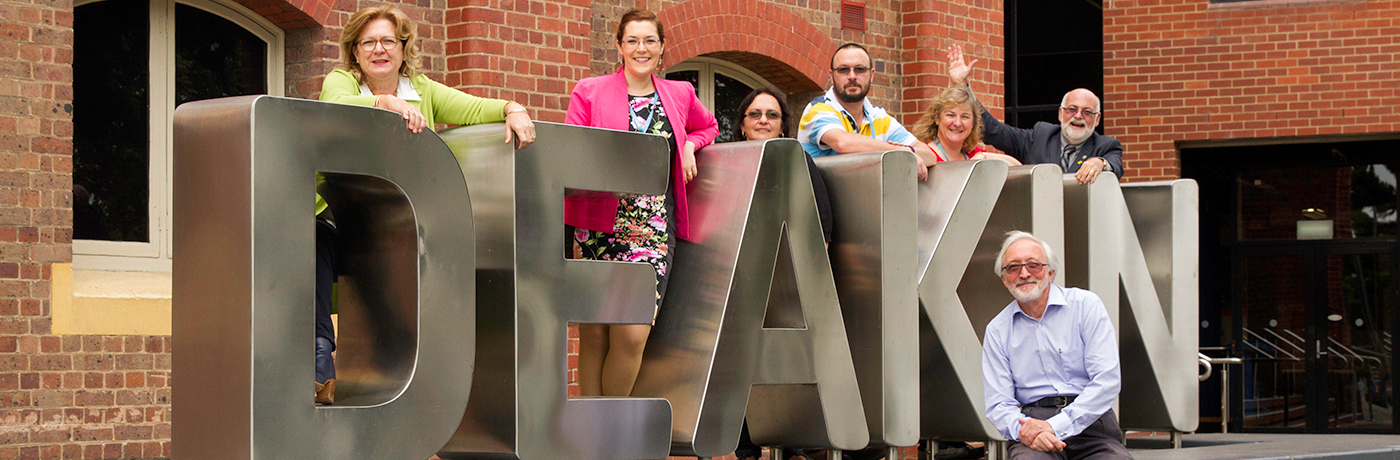
Image of seven of the SPERA Executive members standing in and around the Deakin University sign

Thank You Deakin

Since the first SPERA National Conference was held 31 years ago, a great deal has been achieved, many innovative practices have been celebrated and ground-breaking research around the provision of education in rural areas has been published. All of these achievements have been designed to prepare teachers to undertake careers in these areas and to provide rural students with a smorgasbord of opportunities to open doors for them.

The recent 31st National SPERA Conference continued the fine tradition of linking people who have a diverse range of interests but with the unifying desire to improve the educational and training opportunities for those living in the bush. The conference organising team, efficiently and effectively led by Dr Jodie Kline, put together an exciting program that included presentations by Australian Rural Health Education Network Chair Professor Sabina Knight, Charles Darwin University Centre for School Leadership Director Mr Gary Fry, Department of Education and Training (Queensland) Director-General Dr Jim Watterson, Charles Sturt University Professor of Education Jo-Anne Reid and Victoria University College of Education Professor Marie Brennan.

In recognising the innovative practices relating to rural education in educational institutions, we awarded the Australian Rural Education Awards at the conference. We received 16 high quality applications for AREAs in 2015. It is heartening to know that there are so many innovative projects taking place and that these will improve the opportunities of so many children. Special thanks to Dr Susan Ledger and Mr John Borserio for their work with organising the AREAs for us this year, and our sincerest congratulations to this year’s category 1 and 2 winners: Karratha Senior High School and the In2Uni Regional Outreach Program (Bega and Batemans Bay) at the University of Wollongong.

A special program that SPERA administers each year is the awarding of sponsorships to pre-service teachers to allow them to attend our conference. The sponsorships enable students who are on the thresholds of their teaching careers to network with leaders in rural education and hear about the innovative practices that are taking place. Such sponsorships would not be possible without the generous support of the Department of Education and Training (Queensland), Teachers’ Mutual Bank, the Diocese of Toowoomba’s Catholic Education Office, Lodestone, Wykari of Clare, and the Isolated Children’s Parents’ Associations in Queensland and the Northern Territory.

We received 14 high quality applications this year, which is exciting, but did make the task of the selection panel lead by Dr Paula Jervis-Tracey, difficult. Special thanks to Paula, Mrs Louise Martin and Ms Andi Bracey for their work in this area, and congratulations to our eight pre-service teachers: Adelaide Ford, Baylee Hardwick, Kylie Cochrane, Lauren Schuller, Megan Barlow, Megan Knights, Rory Quirk and Tess Madeley.

It takes the combined efforts of a dedicated group of people to organise and run a conference, and the SPERA Executive would like to thank the following people and organisations for their generous support:

  • Deakin University Professor Jill Blackmore, for her assistance with securing the conference venue and funding the welcome reception;
  • Ms Sarah Nailer, Ms Christine Schultz, Ms Sri Soejatminah, Ms Kymelise Wilson, Ms Leissa Kelly and Ms Emma King for their work as Conference Ambassadors;
  • Geelong High School students and the Deadly Dancers, for their various performances;
  • Aunty Lynn McInnes for her Welcome to Country;
  • Ms Donna Squire and Ms Beate Behrendt for photography;
  • the Waterfront Kitchen team for the catering and conference dinner;
  • Curtin University, Deakin University, The University of Western Australia, CQUniversity Australia, and the University of Southern Queensland, for their contributions to the conference satchels; and
  • the Centre for Research in Educational Futures and Innovation (CREFI) at Deakin University, the National Centre for Student Equity in Higher Education (NCSEHE) at Curtin University, Teachers Mutual Bank, the Diocese of Toowoomba Catholic Education Office, Lodestone, the Northern Territory and Queensland branches of the Isolated Children’s Parents’ Association, and Oxford University Press Australia & New Zealand for the various sponsorships.

The 2016 SPERA Conference will be held at CQUniversity Australia’s Mackay campus in Queensland. We look forward to seeing you there!