Archive for year: 2019

2019 EPHEA/NAEEA Conference – Enabling Excellence through Equity

In November 2019 equity practitioners and researchers gather in Wollongong to attend the biennial Equity Practitioners in Higher Education in Australasia (EPHEA) and  National Association of Enabling Educators in Australia (NAEEA). This was a key professional development forum for equity and enabling practitioners in a wide range of fields to highlight best student and staff practices in higher education. Practitioners and researchers specialising in enabling and equity across the higher education sectors in Australia, New Zealand/Pacific and internationally were invited to participate.

The theme for the 2019 conference was ‘Enabling Excellence through Equity’ with workshops and presentations exploring these sub-themes:

  • Diverse genders, sexes and sexualities
  • Aboriginal & Torres Strait Islander, Maori, Pacific Islander, First Nations and First Peoples
  • Intersectionality
  • Disability, ability, accessibility and mental health
  • First-in-Family
  • Refugee and culturally and linguistically diverse backgrounds (CALD).

The conference focused on these sub-themes through the following streams:

  • Pre-Access and Widening Participation
  • Access and Enabling: Exploring Teaching, Learning (including TEL) and Co-Curricular experiences
  • Employability
  • Leadership, organisational development and workplace diversity
  • Transition and Engagement
  • Collaboration and Partnership: Between staff and students, across the organisation, with community organisations etc.

Read more here

Rural Education International Research Alliance

Professor Simone White (Faculty of Education, Office of International and Engagement (Education) launched the new Rural Education International Research Alliance (REIRA). REIRA is the go to place to find up to date scholarly information about rural education people, places, projects, publications and partnerships. This is an international research alliance dedicated to improving the learning, teaching and wellbeing of all rural students, their families and communities (extract from website). Educators, researchers and interested key stakeholders are encouraged to engage with REIRA including membership, contribution and collaboration. For more information, please see the website link. The co-leaders and curators of this initiative are Professor Simone White (Queensland University of Technology) and Associate Professor Dr. Jayne Downey (Montana State University).

Website access: https://reira.co/

Best Practice in Regional Study Hub Symposium

Regional Study Hubs are a vital resource in supporting regional students–delivering access to campus-like facilities in regional and remote areas; educational support; technology; and most importantly, a network of fellow students. In 2019, there will be more than 23 Regional Study Hub locations across Australia. We invite the RSH community and stakeholders together to discuss best practice in this field, including: supporting students for success, governance, university partnerships and best practice case studies.   Read more

35th National Spera Conference Brisbane

National SPERA Conference Brisbane

2-4 October 2019
Queensland University of Technology
Kelvin Grove Campus Brisbane Australia

The 35th National SPERA Conference was proudly hosted by the Faculty of Education, Queensland University of Technology.

SPERA Conference Full Program

Improving Rural Education: Connectedness, Communities & Collaboration

Subthemes 

  • Building digital connections for rural communities
  • Ensuring rural communities’ well-being
  • Sharing innovations in ‘rural’ collaboration
  • Connecting the global and the rural
  • Community learning and sharing
  • Resourcing an interconnected approach

Guest Speakers
SPERA is thrilled to announce that Tony Cook, Director General of Queensland’s Department of Education has confirmed as a guest speaker of the conference.

Before joining the Queensland Department of Education in April 2018, Tony worked for the Australian public service as the Associate Secretary for Schools and Youth within the Department of Education and Training. Tony previously held several senior executive positions in the Victorian public service, including Deputy Secretary, Government and Corporate with the Department of Premier and Cabinet; Deputy Secretary, Office for Children and Portfolio Coordination; and Deputy Secretary, Office for Planning, Strategy and Coordination within the Department of Education and Early Childhood Development. He began his career with Education Queensland.

Tony is a registered primary school teacher with a major in early childhood education. He has been a deputy principal and has taught in schools and preschools in Queensland and the United Kingdom. He holds a Bachelor of Education from the Queensland University of Technology.

In October 2013 Tony was made an Honorary Fellow of the Australian Council for Education Leaders, and in January 2014, he was awarded a Public Service Medal for outstanding public service, especially in driving schools policy and funding reform in Australia.

Program:

2 October:     Emerging Rural Scholars Summit (optional 1st day) 9am to 5pm

Join us in a gathering of international rural education scholars to network, present your work, and receive valuable feedback and advice from experts in the field.  This exciting event will be held on the campus of QUT the day prior to the 2019 SPERA conference and is targeted at postgraduate research students, early career researchers, and scholars new to the field.

Emerging Rural Scholars Summit 2019 FINAL

Application Form – Emerging Rural Scholars Summit

3-4 October:  2019 Spera Conference (2 days)
Thursday 3 October: 8am registration. Program 9am to 5pm followed by cocktail reception
Friday 4 October: Program 9am to 5pm
Conference program to be released 29 August 2019


Students sitting on grass hill

2019 AREAs Announced

2019 Australian Rural Education Awards

Congratulations to all our 2019 Area winners, presented at the 2019 SPERA conference in Brisbane on 3 October 2019!

Country University Centres

The Country Universities Centre is a community owned network of regional study hubs, designed to increase access and success in higher education for regional students. The CUC centres offer campus-like facilities free of charge to any student studying at any Australian university.

Annette Morphett: Mathematics teaching and learning in middle primary schools in Yorke Peninsular

Anne’s PhD research focus centres around the mathematics teaching and learning in middle primary classrooms on Yorke Peninsula in South Australia; a context rich in diverse landscape, economies, and people, and a context where the unique identity of its people create a spirit of community of which they are very proud.

Uni4You Project, Family Action Centre, The University of Newcastle

The University of Newcastle’s (UON) Uni4You Project innovative practices are increasing the higher education engagement rate of adults in Muswellbrook.

Aboriginal Pathway Program (APP), University of South Australia

The Aboriginal Pathway Program (APP) is an open-access, fee-free enabling program connecting regional and remote students to university. For Aboriginal students studying in areas including Ceduna, Mount Gambier, Port Lincoln, Whyalla and as far afield as the APY lands and Yalata, the APP is designed to build the skills and confidence to successfully transition into undergraduate study whilst remaining within the support structures of their local communities.

ASPIRE, University of New South Wales

ASPIRE is an outreach program working in communities where the number of school students who go on to university is low. Our aim is to help students in our partner schools discover that there are more options available to them when they leave school than they thought. Going to university could be one of them.

School of Education: University of the Sunshine Coast

Through key rural and remote initiatives, the University of the Sunshine Coast (School of Education) has shown continued commitment to support and inspire the next generation of rural and remote teachers. The ‘Outback Advantage’, ‘Tim Fairfax Family Foundation Bursary’ and the ‘Coast to Country’ are a suite of initiatives built on the foundations of strong partnerships and research.

UniPrep Schools, Academic Pathway Programs, Edith Cowan University

ECU UniPrep Schools is an innovative tertiary enabling program delivered in years 11 and 12 at partner schools. Successful completion of the program allows students entrance into a wide range of University courses.


President’s Awards
Congratulations also to our 2019 President awardees:

Dr Jayne Downey, Montana State University
Professor Simone White, Queensland University of Technology
Ian McIntosh, Junior Writers Club
Taj Pabari FiftySix Creations

Photograph of a canola field in Katanning.

Australian and International Journal of Rural Education – November edition

The Australian and International Journal of Rural Education (AIJRE) [Online ISSN 1839-7387; Print ISSN 1036-0026] is an international medium for educators with an interest in the provision of education in rural contexts. The Journal is interdisciplinary and publishes  integrative reviews, scholarly accounts of educational research relevant to rural education, research reports, book reviews and feature articles likely to be of interest to the readership. The focus of the Journal is on addressing issues, challenges, developments and opportunities in rural education globally.

Image of a vineyard in the Granite Belt Wine Region in Queensland Australia

Australian Rural Education Awards 2019

Call for Nominations

Since 1994, the Australian Rural Education Award (AREA) has been awarded annually to an institution, organisation or industry to recognise excellence in rural education in Australia.

Category 1
Existing projects that demonstrate a proven link between a rural, regional and/or remote school or learning context and the local community, and benefiting a defined group.

Category 2
Future projects that support new and creative thinking in professional practice aimed at improving student outcomes in a rural, regional and/or remote setting.

Category 3
Pre-service teachers or institutions recognising demonstrated excellence in professional learning practice in rural, regional and/or remote settings.

Category 4
Projects based in, or benefiting, rural, regional and/or remote international settings. Nominees may be based in Australia or overseas.

Category winners will receive complementary 2019 conference registration for one delegate and a trophy. Runners up will receive a citation recognising their achievement.

But hurry! Nominations Now close Friday 30th August 2019

How to Nominate

To nominate, please email admin@spera.asn.au with the subject line 2019 AREA Nomination, Category (Insert Number), and provide the following information:

  • Name of school / organisation / learning context / pre-service teacher
  • Postal address
  • Principal / Chief Administrator
  • Institution name / Details of sponsoring school
  • Name, telephone number and email address for the person who would accept the award
  • Category you are entering, ie. Category 1, 2, 3 or 4
  • 300 words describing the nature of the project / learning practice being recognised
  • Any additional materials to support your nomination, ie. graphics, photos, videos, details of previous awards, etc.

AREA-AWARDS-2019

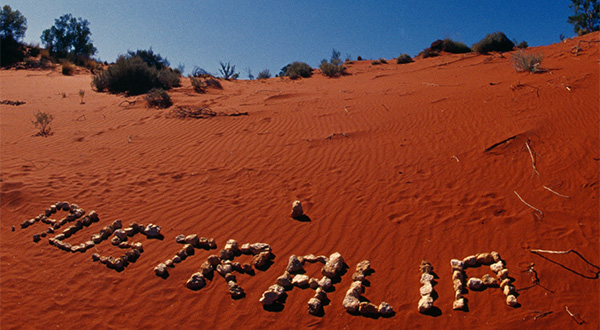
Image of the word Australia written in red dirt and rocks

Attracting Teachers to Schools in Rural and Remote Areas in Australia

Image of the word Australia written in red dirt and rocks

Region-related disparities are among the main factors that explain differences in access and equity in education (Lee, 2001). Schools in remote and rural areas often have difficulty in recruiting and retaining staff with certain qualifications and experience, and preparing them to address the educational complexity in these areas, such as multi-grade settings and specific student groups (OECD, 2018). The challenge of attracting teachers with experience is particularly severe in Australia, where the proportion of secondary teachers with five years or less of teaching experience in areas of 15 000 people or fewer is the second highest among countries participating in TALIS – 26% compared to an average of 18%. (OECD, 2014). In the Australian context, as distance from metropolitan centres increased, student performance as measured by PISA decreased, with students from metropolitan schools achieving significantly higher than those from provincial or remote schools (Thomson, De Bortoli and Underwood, 2016). Importantly, the terms rural and remote need to be understood as they relate to a specific context. For example, rural areas close to cities and remote rural areas can show different trends in the share of population, and very particular ways of capitalising on natural environments and strategic economic sectors (OECD, 2017).

Read more: http://www.oecdteacherready.org/promising-practice/attracting-teachers-to-schools-in-rural-and-remote-areas-in-australia/

Attracting Teachers to Schools in Rural and Remote Areas in Australia

Image of the word Australia written in red dirt and rocks


Region-related disparities are among the main factors that explain differences in access and equity in education (Lee, 2002). Schools in remote and rural areas often have difficulty in recruiting and retaining staff with certain qualifications and experience, and preparing them to address the educational complexity in these areas, such as multi-grade settings and specific student groups (OECD, 2018). The challenge of attracting teachers with experience is particularly severe in Australia, where the proportion of secondary teachers with five years or less of teaching experience in areas of 15 000 people or fewer is the second highest among countries participating in TALIS – 26% compared to an average of 18%. (OECD, 2014). In the Australian context, as distance from metropolitan centres increased, student performance as measured by PISA decreased, with students from metropolitan schools achieving significantly higher than those from provincial or remote schools (Thomson, De Bortoli and Underwood, 2016). Importantly, the terms rural and remote need to be understood as they relate to a specific context. For example, rural areas close to cities and remote rural areas can show different trends in the share of population, and very particular ways of capitalising on natural environments and strategic economic sectors (OECD, 2017).


Read more: http://www.oecdteacherready.org/promising-practice/attracting-teachers-to-schools-in-rural-and-remote-areas-in-australia/ 

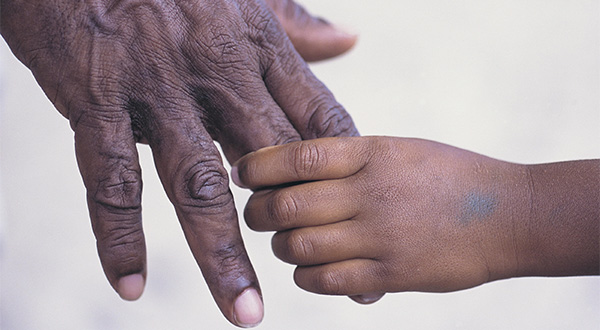
Image of a child's hand holding an adult's hand

‘Shaping the Future: Learning from Indigenous Higher Education Research in the Northern Territory’

Image of a child's hand holding an adult's hand


A presentation on research projects related to ‘Better understanding and responding to the needs of regional and remote Indigenous Higher education students in the NT’

These research projects were recently awarded a 2018 Australian Rural Education Award by the Society for the Provision of Rural Education in Australia (SPERA) for five intersecting Indigenous higher education related research projects emanating out of the Office of Pro Vice-Chancellor Indigenous Leadership CDU, over the past three years.

The award is for existing projects that demonstrate a proven link between a rural, regional and/or remote school or learning context and the local community, and benefiting a defined group.

These projects have included partnerships with BIITE, CQU and SUT and various funding bodies.

read more: https://www.cdu.edu.au/indigenous-leadership 

AIJRE Special Issue Proposals Invited

We are calling for a Special Issue topic and special editor.  If you are interested please, identify the theme of the proposal and highlight the significance for the advancement of rural education research Include the following:

  • Name of Special Issue Editor/Editors
    An outline of the proposal highlighting the theme and discussion why it is important for the advancement of rural education research.
    A list of authors et topics and abstracts. OR   A list of proposed authors and possible topics.
    Proposed date of Submission: August 2019; March 2020; August 2020; March 2021; August 2021; March 2022 or August 2022.
  • Role of Special Issue Editors:
    Responsible for identifying, coordinating and supporting authors in preparation of manuscripts in a timely manner.
    Responsible for working with AIJRE administration to manage submissions, blind review and copyediting.
    Responsible for submitting an editorial for the special edition
  • Submission Criteria:
    Suitability to AIJRE Journal remit.
    Importance and significance of theme.
    Capability and Diversity of Authors

Contact AIJRE via journal@spera.asn.au

Rural Education on the Global Stage

AIJRE Vol 29 No 1 (2019): Rural Aboriginal and Torres Strait Islander Education

Why the need for a special edition on First Nations ruraleducation? Surprisingly,there is almost no literature within Australia that discusses the significance of ruralityin First Nations education.Many research articles describe the significance of remotenessin First Nations education. Much of the extant research is built on a premise that remoteness goes hand in hand with disadvantage and outcomes often described as ‘poor’ and ‘failing’. The lack of literature on First Nations ‘rural’ education coupled with the deficit language discourse surrounding First Nations ‘remote’ education triggered a global investigation into the topic

2018 SPERA Annual General Meeting

SPERA Annual General Meeting 2018 was held at Curtin University Perth on 30th November 2018

The following were nominated and accepted for Executive.

President: Brian O’Neill

Vice President: Sue Ledger

Treasurer: Chris Reading

International Liaison: Jayne Downey

Meeting/Minutes: Bronwyn Relf

Membership and Social Media: Sonal Singh

Website: Samantha Avitaia and Jaimey Facchin

AAAE representative: Melyssa Fuqua

Journal:  Sue and Jayne

Newsletter Editor: Nina Fotinatos

SPERA-Executive-Team-Meeting-Minutes-Nov-30-2018-002.docx

Hay bales in paddock

2018 AREA Winners

Congratulations 2018 AREA winners

Since 1994, the Australian Rural Education Award (AREA) has been awarded annually to an institution, organisation or industry to ecognise excellence in rural education in Australia. At the 2018 SPERA Conference three AREAs were presented to:

Back Track Youth Works

Indigenous Leadership Research and Evaluation Network – Charles Darwin University

Lighthouse Virtual Reality Outreach – Macquarie University