Archive for year: 2016

Education in Rural Australia Vol 12, No 1 (2002)

Volume 7 1997sized

Table of Contents

Feature Articles

  • Children’s physical activity, health and physical education in isolated rural contexts: The views of parent educators in Queensland – Tony Rossi, Faculty of Education, University of Southern Queensland, Toowoomba Jan Wright, Faculty of Education, University of Wollongong, Wollongong
  • Learning partnerships in rural early childhood settings – Kennece Coombe and Joy Lubawy, Charles Sturt University

Feature Topic: Delivering Education in Rural Areas

  • Strategies for Improving Success in First­Year Accounting for Internal Students at a Regional University Campus – Janet K Sawyer, Senior Lecturer in Charge, Business and Enterprise, University of South Australia, Whyalla Campus John Medlin, Course Coordinator, Accounting, Decisions and Accountability, University of South Australia, City West Campus
  • Online support for action research in a teacher education internship in rural Australia – T W Maxwell, Jo­Anne Reid, Catherine McLoughlin, Catherine Clarke and Ruth Nicholls, University of New England
  • Regional university Access: A Case study from the South West – Robyn Eversole, Edith Cowan University
  • Working as Rural Academics – Bronwyn Ellis, Janet Sawyer and Maureen Dollard, University of South Australia Dianne Boxall, La Trobe University

From the Field

  • Teaching in Doomadgee: the Isolated Schools’ Project – Anneli Saunders, Final year Early Childhood, Bachelor of Education student, Faculty of Education, University of Southern Queensland
  • Bridging the Gap between Beginning Teachers and Isolated/Rural Communities – Luke Baills, Sherrin Bell, Bridget Greenshill, Louise Wilcox, 4 th and 3 rd Year Education Students, University of Southern Queensland

Education in Rural Australia Vol 12, No 2 (2002)

Volume 7 1997sized

Table of Contents

Feature Articles

  • Multiage Classes: what research tells us about their suitability for rural schools – Linley Lloyd, School of Education, University of New England
  • A foot in both camps: School students and workplaces – Annette Green, Charles Sturt University Erica Smith, SA Wholesale Retail & Personal Services ITAB
  • Student teacher stress and coping mechanisms – Brian Hemmings, Charles Sturt University, Wagga Wagga campus Tania Hockley, St Thomas’ Catholic Primary School, Willoughby
  • The contribution of adult males in early childhood services: What current literature implies for rural children’s services – Keiran Arthur

From the Field

  • My practical experience at Mornington Island State School – Megan Derrick, University of Southern Queensland
  • Windorah – a Western Experience – Amanda Ginnivan, University of Southern Queensland

Education in Rural Australia Vol 18, No 2 (2008)

Journal18

Table of Contents

Editorial Changes – Emmy Terry President SPERA

Meet the New Editors – Colin Boylan

Interactive distance e­Learning for isolated communities:

  • Starting and finishing the jigsaw – Stephen Crump and Colin Boylan
  • The sound and the vision: developments in interactive distance education facilitated by satellite broadcast in NSW and the NT. – Lorraine Towers and Amy Hutchinson
  • Interactive distance e­Learning for isolated communities: The policy footprint – Stephen Crump, Kylie Twyford and Margaret Littler
  • Interactive distance learning technology and connectedness – Brian Devlin, Peter Feraud and Alan Anderson
  • How are they doing? Examining student achievement in virtual schooling – Michael K. Barbour and Dennis Mulcahy
  • Distance education: Is it Art or is it Science? – Ted Munsch

(ISSN 1036­0026)

Education in Rural Australia Vol 18, No 1 (2008)

Journal18

Table of Contents

Erratum

Feature Articles

  • Using Web2.0 Applications to Close The Digital Divide In Western Australia – Sue Trinidad and Tania Broadley
  • Kindergarten Transition in a Small Rural School: From Planning to Implementation – Amy Macdonald
  • Bringing Professional Experience to the Rural University Classroom Through Community Play Sessions: Experiences of Pre­Service Teachers and Families – Laura Mcfarland and Alison Lord
  • An Exploration of Issues in the Attraction and Retention of Teachers to Non­ Metropolitan Schools in Western Australia – Sandra Frid, Melanie Smith, Len Sparrow and Sue Trinidad
  • Australian Rural Education Award
  • 2007 Australian Rural Education Award Winner
  • Australian Rural Education Award – Talbingo Public School Clean Energy Park
  • Book Reviews
  • SPERA Information
  • Membership Form
  • S.P.E.R.A. Order Form: Conference Proceedings
  • Education in Rural Australia
  • Guide to Contributors
  • Correspondence Address for Contributions

(ISSN 1036­0026)

Education in Rural Australia Vol 17, No 2 (2007)

Journal Cover Volume 17

Table of Contents

Feature Articles

  • Chasms in Students Achievement: exploring the rural­ metropolitan divide – Debra Panizzon and John Pegg
  • Life is Good for Babies: the pedagogical and management decisions enabling a teacher to be employed in rural infant ­toddler program – Lynda Ireland
  • Student perceptions of teacher­ student interpersonal behaviour and cultural factors of learning environment in metropolitan and country schools – Bruce G. Waldrip and Darrell L. Fischer
  • Academic Partnerships at a Regional University Campus: a fresh look at faculty mentoring – Joy Penman and Kerre Willsher
  • Voices from the Field Ladies and gentlemen, boys and girls, grandparents and community members: welcome to the Wowan Strate Primary School Theatre Restaurant! – Beryl Exley
  • Working Together for Children: strengthening transition pathways – Louise Collie, Felicity Willis, Crystal Paine and Corina Windsor

(ISSN 1036­0026)

Education in Rural Australia Vol 17, No 1 (2007)

Journal Cover Volume 17

Table of Contents

Guest Editorial Comments – Colin Boylan

  • The Role of Higher Education Institutions in Rural Development – John Bryden
  • Current issues in Rural Education in Newfoundland and Labrador – Dennis M. Mulchay
  • Improving Student Outcomes in Rural and Small Schools – Clark E, Gardener & Art Borgemenke
  • Local Solutions for Local Problems: Addressing Teacher Supply in Rural Communities – Russell Yates
  • The Perceptions of Stakeholders in Canada and Wales on Health Education in Rural Communities: A Comparative Study – Aniko Varalotai & Malcolm Thomas
  • The Impact of an Immersion Experience in Alaska Native Community Cultural Life on Pre­Service Teachers – Colin R Boylan & Ted R Munsch

Education in Rural Australia Vol 13, No 1 (2003)

Volume 13 (2) 2003sized

Journal Papers

Quantifying Access Disadvantage and Gathering Information in Rural and Remote Localities: The Griffith Service Access Frame

Dr. Dennis A. Griffith, Rural Education Research and Development Centre, James Cook University of North Queensland

Abstract

This paper argues that a purely geographic classification is not the best way to determine objective measures of rural disadvantage in Australia. What is required is an objective, accurate, research­based and independently validated classification that can be used to inform policy decisions and strategies to improve the lives of rural and remote Australians, especially Indigenous Australians in these areas. The Griffith Service Access Frame (GSAF) was developed by the author, specifically to quantify the service access of population centres in rural and remote areas of Australia. The model allows any population centre in the nation to be scored according to its Population Size; the Time, Cost and Distance factors associated with accessing a given level of services; and the Economic Resources that the population can apply to the task of overcoming access disadvantage.

Responding to Isolation and Educational Disadvantage

Don Squires

Abstract

A good deal of the rural education literature from the twentieth century routinely associates geographic isolation with educational disadvantage. As analyses have become more sophisticated, more attention has been given to the understanding of differences and specific needs exhibited by isolated communities and of ways of responding to these in a more focused way. This paper will provide a way of conceptualising the relationships between components of isolation (the concrete, tangible and actual, as well as the subjective, perceptual and constructed) and will examine ways in which various responses to isolation can impact on educational practices and outcomes. The paper will argue that there is, within this matrix of responses, a ‘sweet spot’ or optimal site for educational interventions that are designed to address disadvantage.

Whose School? Which Community?

Dr Andrea Allard, Faculty of Education, Deakin University Dr Von Sanderson, Aboriginal Research Institute, University of South Australia

Abstract

In this paper, we take up the theme, ‘The School as a Centre in the Community’ in light of a research project that we conducted in a remote community in South Australia in 2001. In this project, ‘Engaging Students In Education Through Community Empowerment’, we set out to explore with Aboriginal parents, Aboriginal students, teachers and representatives of the various agencies operating in the area how groups within the community understood the issues of early exiting Aboriginal students.

Where to for Place-­Based Learning?

Ivan Searston

Synopsis

What role has ‘place’ in education? School at the Center, a U.S. initiative that falls into the category of ‘place-­based education’ has demonstrated significant improvements in educational outcomes while, at the same time, contributing to rural community development. To explore the transferability of the program to Australian conditions, The Rural Education Research and Development Centre at James Cook University, assisted with Federal funds, undertook to trial the School at the Center ideas in North Queensland. The trial showed that the ideas were transferable and had significant impacts on educational outcomes and student engagement; generated a deal of public interest in the media and in local communities; and promoted closer relations between teachers, students, their schools and their communities.

Following comments from some teachers involved in the trial about the lack of introduction of beginning teachers to such effective educational strategies, consideration turned to making the results of the trial available to institutions involved in pre­service training of teachers.

But teacher training programs do not have much room for new content to be added and, for new material to be really considered, there must be a strong academic and theoretical base for the initiative as well as the evidence that ‘it works’.

School at the Center is an example of place­based education. Therefore there should be a strong academic and theoretical understanding of what ‘place’ means to education. However, while place is considered in other disciplinary areas, its meaning for education appears to be largely unexplored.


Education in Rural Australia Vol 13, No 2 (2003)

Volume 13 (2) 2003sized

Journal Papers

The Rural Population Transformation and Education in Australia

David McSwan, School of Education, James Cook University

Abstract

This paper aims to relate the Australia data on rural­-urban migration and economic change to education. It illustrates that there has been scant policy attention to the fundamental role of education in the changing nature of Australia’s rural areas. Australia’s rural policy has been firmly driven by the massive political power of the rural industries and mining lobbies; the voice of rural communities being lost to the winds. Governments should be alert to the needs or rural Australia. Issues of social justice and equity are being raised and heard as never before and ordinary Australians are increasingly aware of, and cherish, our rural communities, our rural image, and or sense of ourselves as sharing a rural heritage. Recent data show that regional Australia, in favoured areas, is prospering. A number of policy considerations are canvassed with the conclusion that leading­-edge information and communications technologies are an essential prerequisite if regional Australia is to prosper and metropolitan areas and the south­-east are to avoid undesirable crowding. Isolated rural areas are more problematic and a policy approach to a sustainable future for them is not immediately apparent to the author.

The place and meaning of physical activity, physical education, and physical culture in the lives of young people living in rural Queensland

Jessica Lee, School of Human Movement Studies, University of Queensland

Abstract

Young people living in rural and regional areas are often reported as being less physically active than are young people living elsewhere. An understanding of this phenomenon will inform policies and strategies to address this finding. One source of valuable information is a qualitative understanding of how social relations and cultural meanings influence young people’s opportunities and choices in relation to physical activity as told by young people themselves. It is envisaged that this information will inform the development of school curricula to engage young people and which will enable schools, community groups and governments to collaborate in meeting the needs of young people living in rural Queensland.

German Lutherans and the ‘English’: culture, conflict and building a one-­room school in the Wimmera 1873­1881

Peter Rushbrook, Charles Sturt University

Abstract

The paper is an edited version of a paper delivered to the ‘Country Schooling: Old Stories, New Lessons’ Conference at the University of Iowa, USA, 27­29 June 2002. It explores tensions between German and English settlers in establishing a one­room school in Murtoa, a hamlet in Victoria’s Wimmera district, between 1873­1881. The narrative reveals some broader themes of the period relating to the establishment of a state­based ‘Free, Compulsory and Secular’ education system, the challenges associated with building schools in remote rural areas, and the related hardships faced by teacher.

Partners and Pathways in Education: The Whyalla Model

Janet Sawyer, Business and Enterprise, University of South Australia Whyalla Campus Pam Zubrinich, Business and Information Services, Spencer Institute of TAFE John Carter, Business Education, Enterprise and Vocational Education, Edward John Eyre High School

Abstract

This paper describes the educational relationships that have been established between three key educational institutions within the regional city of Whyalla in South Australia. Edward John Eyre High School, Spencer Institute of TAFE and the Whyalla Campus of the University of South Australia have formed a partnership to promote the educational pathways available in the area of Business Studies. The regional educational opportunities created will assist in retaining young people who wish to study in the business field as well as encourage graduates to remain within their local communities. This important initiative embraces the rationale of successful learning communities and aims to develop skilled professional business people who will become future leaders in business and enterprise and contribute to the economic and social success of regional South Australia.


Education in Rural Australia Vol 14, No 1 (2004)

Volume 13 (2) 2003sized

Journal Papers

Some links between economic and social changes in rural area and the need for reform in rural education

John M Bryden

Abstract

This paper discussed the principal economic and social changes taking place in rural areas of the OECD countries, identifies some of the key future challenges they face, and proposes some necessary shifts in the system of education of children and young people if these challenges are to be addressed.

Consequential Learning

Jack Shelton, Program for Rural Services and Research, University of Alabama

Giving All/Reaping Rewards: An Account of a new graduate teaching in remote Indigenous community schools

Christine Trimingham Jack, University of Canberra Heather Hitchon, Kulkarriya Community School

Abstract

A number of remote Indigenous communities in Western Australia and the Northern Territory run their own independent schools. The communities are faced with a constant battle to recruit quality teachers to their schools and to attain a high level of literacy in their students. The 1996 National School English Survey reported that less than 20% of Year 3 Indigenous students met the reading standards with similar findings for Year 5 (Department of Education Science and Training, 1997). There is strong evidence that student achievement is significantly linked to committed and well­qualified teachers (Darling­Hammond, 2000). The Commonwealth Government National Indigenous English Literacy and Numeracy Strategy (NIELNS) Report 2000 stated that recruiting ‘good teachers’ who are culturally aware and who can implement ‘best teaching methods’ are key elements in raising the literacy standard of Indigenous students (Department of Education Science and Training, 2000).

Excellent teachers are in demand and teachers tend to choose urban schools and the amenities they offer rather than remote schools (Department of Education Science and Training, 2000). The problem is exacerbated by the high attrition rate of early career teachers with up to 50% choosing to leave the profession in the first three to five years of service (Manuel, 2003: 140). There is a need for research on why good teachers stay (Manuel, 2003:141) even more so in contexts which are often seen as challenging settings such as remote schools with Indigenous students.

The NIELNS has resulted in the implementation of a number of projects designed to raise the literacy levels of Indigenous students. This paper is a narrative account offering insight into the inner life, experiences and decision­making processes of a targeted new graduate (co­author Heather Hitchon) working in remote Indigenous community schools in Western Australia where one such project, the Scaffolding Literacy Program, is being used. It is a collaborative paper between the two authors, Heather and Christine who first met when Christine supervised Heather while she was completing her final professional experience subject (Teaching Internship) at the University of Canberra. The account indicates the deliate balance between an early career teacher in a remote setting wanting to rise to the challenge of teaching in a difficult setting and the ongoing tension between leaving and staying. It also illustrates the importance of a range of ongoing support as well as engagement in an effective teaching program to ensure successful teaching experiences in the early period of his or her teaching career.

Two cubed: A rationale for creating a community of professional learners at Charles Sturt University, Dubbo

Tony Loughland, School of Teacher Education, Charles Sturt University Daryl Healy, NSW Department of Education & Training

Abstract

Teacher Education needs to move beyond the limitations of existing pre­service and in­service courses. Instead, teacher education should be regarded as a career long process of professional learning ‘which takes place prior to and during pre­service, and continues through induction and in­service’ (Gore, 1995). An important step in this direction is partnerships between schools and teacher education institutions in initial teacher preparation. Many such partnerships already occur across states and institutions. This paper outlines a rationale for a teacher education course that seeks to achieve a partnership between Charles Sturt University Dubbo and the Department of Education and Training (DET) in NSW within the framework of career long professional learning for teachers.

The existing political climate with the restructuring of the DET bureaucracy as well as the proposed NSW Institute of Teachers presents a serendipitous moment for the establishment of such a course. The course would follow what the author has termed the ‘two cubed’ model of teacher education. That is, the first two years of teacher education in the university, followed by two years in school based teacher education (SBTE) with the final two years as a beginning teacher mentored by both the training and employing institutions. The initial teacher education course will be the Trojan horse that makes professional learning a formal part of the teaching profession as the interaction between the DET and Charles Sturt University creates professional learning opportunities for existing teachers. This professional learning will be linked strongly to the bioregion of the Murray­Darling Basin, thus addressing both the ecological and social sustainability issues of this region. As well, the qualification gained will be for K­10, addressing the needs of middle school students in central and high schools in the central west of New South Wales.


Education in Rural Australia Vol 14, No 2 (2004)

Volume 13 (2) 2003sized

Journal Papers

Beyond The Agricultural Paradigm in Regional and Rural Australia: Building Capacity to Create a Preferred Future

Janelle Allison, Centre for Rural and Regional Innovation, The University of Queensland Jock Douglas, Wyoming, via Roma

Abstract

Regional and rural Australia is undergoing significant change. Among the drivers for change are: (1) an emerging discourse on nature that challenges the agricultural centric view which has dominated regional and rural Australia; (2) transforming agricultural landscapes, which are increasingly multifunctional and complex; and (3) a search for a contemporary bush identity which is relevant and inclusive and which accommodates the diversity of views about rural Australia. The paper describes two illustrative initiatives: the Australian Landcare Management System (ALMS); and the Roma Bush Gardens Project (RBG). These initiatives have been developed to assist individuals and communities to learn – to develop awareness and understanding of the dimensions of change now effecting significant impact on rural landscapes. These initiatives provide examples of the basis to chart a new course, and to create and build individual and broader community capacity to enable regional communities to engage strategically with change and to consider an ‘unknown’ or new future through the promotion of environment and educational learnings.

Social Entrepreneurship and Partnerships with Regional and Remote Schools

Bernadette Walker­Gibbs, Faculty of Education and Creative Arts, Central Queensland University

Abstract

This paper explores how notions of social entrepreneurship have inspired me to engage in innovative partnerships with two small rural schools in Central Queensland, Australia. I seek to explore practical ways in which to help rural schools contribute to the transformation of their schools, considering that we are now in an information­based society operating in a postmodern world where change happens quickly and continually. The paper explores the mapping of the journeys undertaken both by the schools and by myself as a university lecturer, and analyses how the concept of social entrepreneurship is used to empower schools with these changes. I examine the two partnerships with local schools more closely in terms of helping the participants – myself included – become social entrepreneurs by deploying innovative problem solving strategies that can provide ways forward to help us to begin to revolutionise the regional and rural education ‘industry’ and in the process engage regional and rural communities.

Multilingualism and Local­Global Identities: Japanese Language Education In Rural Australia

Barbara Hartley, The University of Queensland

Abstract

The purpose of this article is to examine the value accruing to a regional area in Australia from the location of an undergraduate Japanese language education program in a university in that area. The focus is on the manner in which the inclusion of such a program enhances the sustainability of the area. Sustainability is here defined as the resilience demonstrated by social subjects in the absence of the full range of services available in more densely populated and resource advantaged areas. Such resilience implies an ongoing capacity on the part of subjects to contribute productively to social and economic networks in the area. The discussion includes two cases of graduates of the program under review. On the basis of these cases, the argument is advanced that local regional and rural area access to a tertiary sector second language program offers a unique and valuable strategic dimension to the personal and professional development of social agents in regional areas and to the sustainability of these areas generally.

Adult Literacy Teachers in Central Queensland: A Discursive Positioning of Teachers, Policies and Funding in Regional, Rural and Remote Communities

R. E. (Bobby) Harreveld, Division of Teaching and Learning Services, Central Queensland University

Abstract

The sociocultural markers of adult literacy teachers’ identities are significant for understanding the nature of teaching which is constructed through, and contingent upon, diverse geographical and systemic spaces – at once a dilemma and a strategy in promoting education in regional areas. This article reports on one aspect of the work of a cohort of 23 adult literacy teachers living in regional, rural and remote areas of Central Queensland. Discourse theory is used to frame the conceptualisation of one particular teacher’s discursive positioning of her work. The article concludes that the relationships between adults positioned as teachers and students can become a community resource with the potential for rural engagement and for transformation of social and economic capital in such communities.

Beyond the Divide: Individual, Institutional and Community Capacity Building in a Western Australian Regional Context

John Smyth, Texas State University, San Marcos Barry Down, School of Education, Murdoch University

Abstract

This paper describes the early beginnings and some preliminary theorising of the complexities involved in obtaining a clearer understanding of schooling for young adolescents in regional and rural settings. We explain how our thinking is developing around ways to approach some case study schools and their communities that are advancing on the idea of learning as a form of regional and rural engagement. The central theoretical construct is how educational ‘capacity building’ that engages young people works against the prevailing trend of increasing numbers of young people leaving school prematurely. This construct is illustrated by reference to the complex and diverse situations and needs of young people in the Kwinana/Rockingham area of the Fremantle/Peel Education District in Western Australia.

A Principal’s Perspective on Multi-­literacies in an Australian Show Community: Implications for Learning as Rural Engagement

Catherine Fullerton, Queensland School for Travelling Show Children Geoff Danaher, Faculty of Informatics and Communication, Central Queensland University Beverly Moriarty, Faculty of Education and Creative Arts, Central Queensland University Patrick Alan Danaher, Division of Teaching and Learning Services, Central Queensland University

Abstract

The mobile community that owns and operates ‘sideshow alley’ in Australia’s agricultural show circuits has traditionally been marginalised in terms of formal education provision. However, the establishment of the Queensland School for Travelling Show Children in 2000 reflected the aspirations of show people and sympathetic educators that education for mobile groups can be enacted differently. This different educational enactment is explored through the conceptual lens of a ‘multiliteracies’ framework (Cope & Kalantzis, 2000), which is used to identify and value the complex and diverse forms of sense ­making that the show people deploy. This paper focuses on the perspective of the Principal of the school, who was one of the interviewees in the research reported here and also the lead author of this paper. Analysis of these data indicates that formal learning that embraces and enhances multiliteracies is one significant strategy for promoting education productively – and potentially transformatively – in such communities.

Image of map of far north Queensland Australia

Call for Abstracts: 2016 SPERA/ISFIRE Conference

Rural Education: Place, Pedagogies, Partnerships and Possibilities

SPERA, in partnership with the SiMERR National Research Centre at the University of New England, invites you to submit abstracts for the 32nd National SPERA Conference and 4th International Symposium for Innovation in Rural Education.

Hosted by CQUniversity Australia and supported by the University of Tasmania, the 2016 conference will bring together a range of national and international teachers, school administrators, teacher educators, academics, pre-service teachers, community members and parents who are passionate about rural education. The conference will be held at CQUniversity Australia’s Ooralea Campus in Mackay, Queensland between Wednesday 28 and Friday 30 September 2016. Early-bird conference registrations will open soon.

To submit an abstract, please download, complete and return the proposal template below.

Abstracts are to be written in plain English and include clear information about the aims, nature and content of the paper and, where applicable, a brief statement of results and implications. All abstracts should be linked to the conference theme or sub-themes.

Evaluation of Abstracts

Abstracts are subject to blind-review by members of the program committee. Notification of whether the abstract has been accepted for presentation will be sent to the presenter/s on or before Thursday 19 May 2016. Successful presenters will be asked for their audio visual requirements at this time and instructed to confirm their attendance via paid registration no later than Friday 3 June 2016.

Please Note

Presenter/s must be paid registrants of the conference in order to present a paper. Registrations must be paid no later than Friday 17 June 2016. No refunds will be issued for any reason after Friday 19 August 2016.

Important Dates

Call for Submission Deadline: Extended to 13 May 2016

Notification of Acceptance of Abstracts: 24 May 2016

Presenter Registration & Acceptance: 17 June 2016

2016 Conference Date: 28 – 30 September 2016

Queries or Concerns
Please email admin@spera.asn.au with any queries or concerns you may have about your abstract submission and a member of the SPERA/ISFIRE conference team will get back to you.

2016 SPERA Conference Abstract Proposal Template (52Kb)

2016 SPERA-ISFIRE Conference Flyer (2Mb)

32nd National SPERA Conference and 4th International Symposium for Innovation in Rural Education

Early Bird Registrations are now open!

SPERA, with the SiMERR National Research Centre at the University of New England, invites you to join us for the 32nd National SPERA Conference and 4th International Symposium for Innovation in Rural Education.

Hosted by CQUniversity Australia’s Ooralea Campus and supported by the University of Tasmania, the 2016 conference will bring together a range of national and international teachers, school administrators, teacher educators, academics, pre-service teachers, community members and parents who are passionate about rural education.

Rural Education: Place, Pedagogies, Partnerships and Possibilities

Where: CQUniversity Australia: Ooralea Campus (Mackay)

When: 28-30 September 2016

Download the full flyer here: 2016 SPERA-ISFIRE Conference Flyer (2Mb)

Confirmed speakers and guests include:

  • Dr Miguel Angel Diaz Delgado – Interleader Network
  • Professor Unn-Doris Baeck – University of Tromso, Norway
  • Dr Hernan Cuervo – University of Melbourne
  • Professor John Pegg – SiMERR National Research Centre at the University of New England
  • Professor Helen Huntly – CQUniveristy
  • Dr Erica Southgate – National Centre for Student Equity Higher Education

Please Note

Presenter/s must be paid registrants of the conference in order to present a paper. Registrations must be paid no later than Friday 10 June 2016. No refunds will be issued for any reason after Friday 19 August 2016.

Presenter Registration & Acceptance: Extended to 10 June 2016

Earlybird Registration Ends: 10 June 2016

2016 Conference Date: 28 – 30 September 2016

For those attending and wanting more information,  Mackay region  is a good place to visit, for information on travel, accommodation and dining in and around the area.

During the conference there will also be special presentations made to awardees of the following:

Australian Rural Education Awards 2016                                  

Brian O'Neill presents 2015 AREA Award to Jennifer McMahon Karratha Senior HIgh


    Pre-service Teacher Sponsorship 2016

 AREA 2012 Kingston Primary School


If you or someone you know might be interested in nominating a person or project, just follow the links above.

SPERA would like to acknowledge the traditional owners of the land on which the CQUniversity Ooralea Campus is situated and pay respects to Elders past, present and emerging.

Transparency needed in teacher recruitment: The smoke may be clearing in the ATAR battle

ACER recently reported that:

In recent debates about ATARs we have lost sight of what matters most in teacher recruitment: selecting high-quality candidates to ensure a strong profession, says Lawrence Ingvarson.

NSW Minister for Education Adrian Piccoli has been accused of ‘attacking students with shameful elitism’ with his plan requiring new teachers appointed to NSW government schools to have attained a high standard of English and Mathematics at Year 12. Recent evidence suggests several of our universities might instead be accused of shameful opportunism in their teacher education offers, showing little regard for the public interest or the teaching profession.

Time to face the fact: low ATAR scores is a problem

In 2015, while 68.5 per cent of all offers for university places were made to Year 12 applicants with an Australian Tertiary Admission Rank (ATAR) of at least 70, only 42 per cent of teacher education offers were made to Year 12 applicants with an ATAR score of at least 70. The number of entrants with ATAR scores less than 50 has more than doubled over the past four years.

Similar numbers apply to students who applied post Year 12, and we should not be taken in by academics who argue that the rising numbers of non-Year 12 entrants obviates the problem. Most non-Year 12 applicants also have an ATAR score, even if universities do not use these in determining non-Year 12 applications, and the profile of their scores is even worse.

Over the past 10 years, we have reached a point where almost everyone who applies now finds a place in a teacher education program. Over the same period, Australia’s performance on international tests of student achievements has declined significantly.

Continue Reading ….

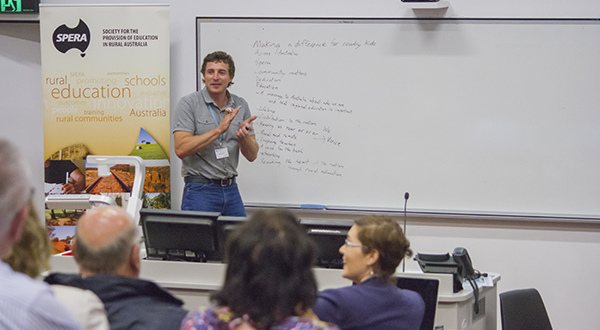
Phil Roberts standing in Front of Whiteboard

“The spatial distribution of curriculum in (rural) schools: broadening access” ACSA Webinar

Phil Roberts is part of the SPERA Executive and a lecturer at the University of Canberra.

On Thursday 2 June 2016, 7-8pm AEST Phil will be presenting an Australian Curriculum Studies Association (ACSA) Webinar to discuss:

“The spatial distribution of curriculum in (rural) NSW schools”

            This webinar explores access to the senior secondary curriculum and approaches to broadening access, particularly in rural areas.

REGISTER HERE

This webinar examines the existence of a curriculum hierarchy in the (NSW) senior secondary curriculum and examines its socio-spatial distribution.  The presentation then explores approaches to broadening access in rural areas, particularly enacting the curriculum with references to rural places.  While the initial data draws upon NSW the issues and examples are nationally relevant.

Building on previous work in Victoria by Teese and colleagues this paper extends the idea of the curriculum hierarchy to the NSW senior secondary curriculum and then moves to explicitly examine the hierarchy in non-metropolitan areas. In doing so the ideas of powerful knowledge encoded in the school curriculum and the selection of this knowledge is examined in relation to the diversity of communities and the inclusion of rural knowledges.

It extends previous work in this area by introducing spatial thinking from the social sciences to look at how this knowledge is spatially distributed, its relationship to communities and place, and the spatial influences on its selection and enactment in schools.

This webinar will be of relevance to those interested in understanding how the curriculum hierarchy favours high socioeconomic status (SES) metropolitan communities and that access to the curriculum is determined by SES and location.  Importantly approaches to place conscious pedagogies that disrupt this hierarchy, and approaches to enacting academically powerful subjects with reference to rural knowledge’s, will explored.

AITSL Australian Professional Standards for Teachers addressed in this webinar:

1.3 Students with diverse linguistic, cultural, religious and socioeconomic backgrounds
2.2 Content selection and organisation
2.3 Curriculum, assessment and reporting

REGISTER HERE

image of Science Teacher DNA

Labor will need more than scholarships to make teaching science an attractive career

Shaun Belward wrote in The Conversation on 20th May 2016

Labor has proposed to invest $400 million to ensure that all high school science, technology, engineering and maths (STEM) teachers are fully qualified.

While this education policy may look appealing, there is a distinct lack of breadth in what is on the table.

The aim of the policy is to boost STEM grades and take up of these subjects at school and university. But does research say this will help?

Why are there so few specialist teachers?

The decline in participation rates in STEM subjects in secondary school is well documented.

The number of students choosing to study advanced maths secondary school dropped from 16% in 1994 to 9% in 2012. In 1994, 38% chose to study intermediate maths, which dropped to 27% in 2012.

Similar trends have occurred in physics (falling from 21% in 1992 to 14% in 2012) and chemistry (from 23% in 1992 to 18% in 2012).

The main reasons for this include: more choice of subjects available to secondary school students; the lack of qualified teachers and the way the subjects are taught; the belief that choosing STEM subjects risks lowering the university admissions rank (ATAR) because it is difficult to get high grades in them; and the way universities prescribe prerequisites for tertiary entrance.

This has had profound implications for STEM subjects at university where participation rates are less than in comparable countries such as Germany, Ireland, New Zealand and the UK.

This decreasing pool of STEM students is strongly linked to the lack of qualified STEM teachers in schools.

In 2013, between 11% and 29% of secondary teachers in maths, physics and chemistry had not studied second year university subjects in those disciplines.

This means that they didn’t meet the graduate standards as prescribed by the accrediting body AITSL, to teach the STEM subject as their “minor” teaching area. Let alone it be their “major” teaching area.

Continue Reading …

Image of Parliament House in Canberra Australian Capital Territory

The Federal Budget and Regional Australia

Article published by Regional Australia Institute

The Federal Budget 2016-17 has been released with a focus on creating long term growth and jobs. The measures have been described by commentators as modest, with big spending promises or cuts kept to a minimum in this year’s announcement. The Regional Australia Institute (RAI) takes a look at the detail and how the measures stack up for regional Australia.

Headline Initiatives – SME Tax Cuts and Youth Jobs Plan

The most important headline initiatives of the 2016-17 budget for regional economies are the small business tax package and the youth jobs plan.

Regional Australia relies heavily on small businesses for local growth and jobs, making the small business focus of the budget important for regional Australia. We also know that a small proportion of high growth small businesses typically create around 50 per cent of the new jobs in our economy.
Continue Reading …

Federal budget 2016: education experts react

Article written for The Conversation by Glenn C. Savage, Conor King, John Fischetti, Megan O’Connell & Perter Goss

The government is spruiking a focus on education to drive innovation in the 2016 budget but it has put off higher education reforms in favour of further consultation.

The higher education reforms, which included the deregulation of university fees, were announced in the 2014 budget and will now be delayed for another year.

The total spend on education in this year’s budget is A$33.7 billion. This includes an agreement to fund schools to the tune of $1.2 billion between 2018 and 2020, but is contingent on education reform from the states and territories in all sectors including literacy and numeracy, teaching and school leadership and student outcomes.

There will also be $118.2 million over two years for students with a disability, the funding targeted to schools with the greatest need.

However, there are also cuts of $152.2 million over four years to the Higher Education Participation Program, which funds universities to bring in students from the lowest socio-economic levels and $20.9 million over the next four years to the Promotion of Excellence in Learning and Teaching in Higher Education Program.

Continue Reading …

Image of a group of people sitting together in a circle holding a meeting

Call for Papers: Unsettling Place and Space.

Editors: Sarah Pinto, Shelley Hannigan, Emma Charlton and Bernadette Walker-Gibbs

This edited collection will examine the ways in which considerations of place and/or space can be unsettling. It will draw together researchers from across the disciplines in order to chart the unsettled landscapes in which we find ourselves. We invite contributions from researchers from a range of disciplinary perspectives who are interested in space and place that speak to the key theme of unsettling, broadly conceived.

For further details please see

Please send abstracts of 200-300 words, along with a short bio, to sarah.pinto@deakin.edu.au by Monday 16 May 2016.


DEAL OR NO DEAL? BRINGING SMALL CITIES INTO THE NATIONAL CITIES AGENDA

Article published by Regional Australia Institute

Australia’s 31 small cities are a diverse, growing and highly productive network of urban areas. They are already home to 4.5 million people and contribute 15 per cent of national economic activity as well as being the services hubs for the majority of regional Australians.

Analysis of small cities’ recent performance shows that they have been catching up to our major cities in productivity terms, now achieving 88 per cent of the productivity of the big five cities. Our small cities also outperformed the economic growth rates achieved by our major cities between 2002 and 2010. This demonstrates their potential contribution to future national economic performance.

But our convoluted, fragmented and overlapping system for governing cities is challenging small city growth. The current approach of ad hoc investment in projects in these cities through the Stronger Regions Fund and Royalties for Regions does not provide a clear opportunity to drive their future development beyond baseline projections.

Australia’s small cities also have a very diverse set of challenges and opportunities.

There is no national one size fits all policy that will ensure their future progress.

To fix this situation, the Australian Government should establish a Small City Deals policy to drive the development of our regional cities as a key part of its city agenda. City Deals are a locally led, coordinated approach to city development that includes all levels of government as well as non-government actors and private sector.

Continue reading …

AREA 2012 Kingston Primary School

Pre-service Teacher Sponsorship 2016

Apply today!

Sponsorships are available for pre-service educators to attend the 32nd National SPERA Conference, 28 to 30 September 2016, Mackay, Queensland.

If you are a pre-service teacher and thinking about a career in rural, regional or remote education, you could receive:

• complimentary attendance at the upcoming SPERA conference, being held this year at CQUniversity Australia’s Ooralea Campus in Mackay, including attendance at all social events

• your travel and accommodation costs paid

• complimentary one-year SPERA membership, to enable you to benefit from the connections you will make as a result of attending the conference.

To apply, please write a brief statement (max. 2 pages) registering your interest:

• Tell us why you are interested in teaching in a rural, regional or remote community

• Tell us how you think attending the 2016 SPERA conference would assist your learning

• Include your most recent Professional Experience Report or a reference from your supervisor or principal

• Include a copy of your resume (max. 2 pages), including details of any previous experience you have had in rural, regional and/or remote schools.

Applications close Friday 17 June 2016.

Email admin@spera.asn.au

2016 SPERA Pre-Service Sponsorship Flyer (325 KB)

Brian O'Neill presents 2015 AREA Award to Jennifer McMahon Karratha Senior HIgh

Australian Rural Education Awards 2016

Call for Nominations

Since 1994, the Australian Rural Education Award (AREA) has been awarded annually to an institution, organisation or industry to recognise excellence in rural education in Australia.

Category 1
Existing projects that demonstrate a proven link between a rural, regional and/or remote school or learning context and the local community, and benefiting a defined group.

Category 2
Future projects that support new and creative thinking in professional practice aimed at improving student outcomes in a rural, regional and/or remote setting.

Category 3
Pre-service teachers or institutions recognising demonstrated excellence in professional learning practice in rural, regional and/or remote settings.

Category 4
Projects based in, or benefiting, rural, regional and/or remote international settings. Nominees may be based in Australia or overseas.

Category winners will receive a prize of AUD$500, complementary 2016 conference registration for one delegate and a trophy. Runners up will receive a citation recognising their achievement.

But hurry! Nominations Now close Friday 17th June 2016

How to Nominate

To nominate, please email admin@spera.asn.au with the subject line 2016 AREA Nomination, Category (Insert Number), and provide the following information:

  • Name of school / organisation / learning context / pre-service teacher
  • Postal address
  • Principal / Chief Administrator
  • Institution name / Details of sponsoring school
  • Name, telephone number and email address for the person who would accept the award
  • Category you are entering, ie. Category 1, 2, 3 or 4
  • 300 words describing the nature of the project / learning practice being recognised
  • Any additional materials to support your nomination, ie. graphics, photos, videos, details of previous awards, etc.

AREA-AWARDS-2016 (497 KB)

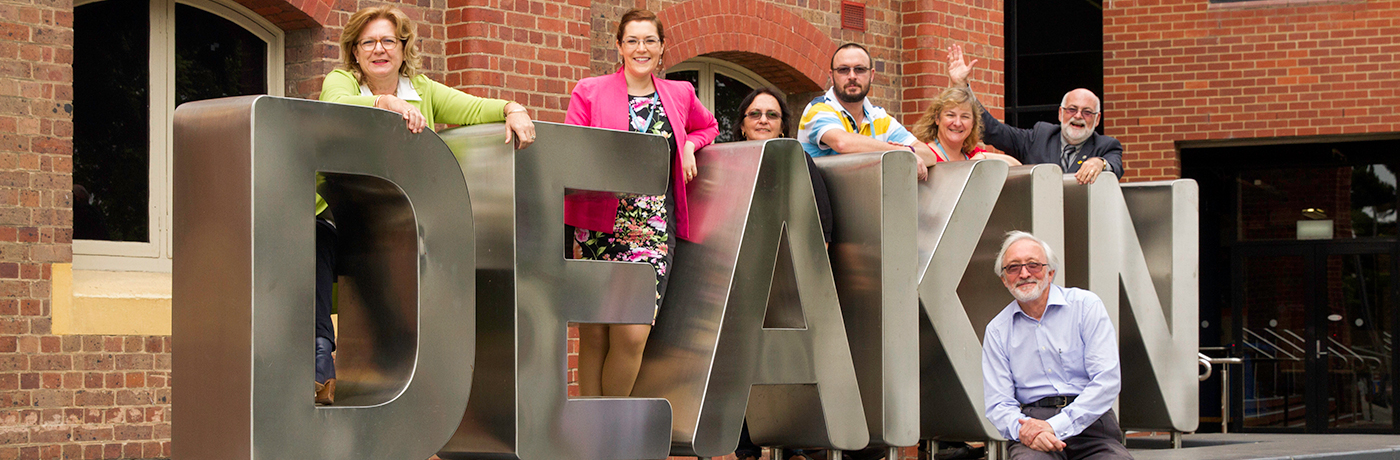
2016 SPERA Executive in front of Deakin University sign

SPERA Annual General Meeting 2015 Minutes

SPERA Annual General Meeting 2015 was held at Deakin University Geelong, Waterfront Campus on Thursday 5th November 2015.

The following were nominated and accepted for Executive.

  • Don Boyd
  • John Borserio
  • Louisa Bowman
  • Philip Roberts
  • Dorothy Donovan
  • Paula Jervis-Tracey
  • Jodie Kline
  • Sue Ledger
  • Louise Martin
  • Brian O’Neill
  • Sue Trinidad
  • Charles Bradley – Public Officer

Following the AGM a special Executive meeting was held on Friday 3 October where the following were nominated and appointed:

  • Brian O’Neill – President
  • Sue Ledger – Vice President
  • Louisa Bowman – Treasurer

Minutes from the AGM are available as a PDF file: Unconfirmed Minutes_SPERA AGM_05 November 2015 Package (179Kb)

Five new frameworks that can drive teacher education reform

Written by Professor John Fischetti for The Conversation

There have been more than 100 reports critiquing teacher education in Australia since the 1970s.

These reports led to new tests and more accountability standards and measures of teacher behaviours.

Today we have a regulated profession that has not changed the content of what is taught as much as developed a tick box compliance process.

We need a major revamp of teacher education from the inside out that actually changes the model to provide all children with the education that is right for them.

The implications for schooling, teaching and teacher education

When I was in school in the 1960s and 1970s, teachers had one lesson plan, one textbook, one chalkboard, one pedagogical approach, one style of desk and one discipline strategy for the whole class.

My classmates and I were expected to adjust to the teacher and the plan.

“Differentiation” at that time meant that the taller students typically sat in the back of the classroom while those who had trouble seeing the chalkboard were moved closer to the front. Those students caught being “naughty” sat next to the teacher’s desk.

This was assembly-line education. Many of us did quite well. Some of us dropped in. Some of us dropped out. It was understood that if you worked hard after you left school, even if you dropped out, you could anticipate a pretty good job in the mill, the mine or the plant.

Teacher education grew out of these assumptions of “training” for the assembly line in a two dimensional (2D -“sit and git”) education world.

But for too long schools have been places young people go to watch their teachers work.

They have relied on a deficit model of learning and teaching. They have emphasised conformity rather than personalisation. And today, in many parts of the world, they still mirror factories while the 3D printer is replacing the assembly line.

Scientists are now aware of at least ten dimensions that we must comprehend in a very dynamic, collaborative, global innovation age.

Although many of us performed well in the 2D model, those who were unable to adapt to it have very little to do today.

Many jobs available in the past for those who did not finish school have been outsourced or automated, and more will be in the near future.

We cannot afford economically or morally to continue a 2D mentality for schooling.

Five new frameworks to drive the reframing of teacher education

Current standards across Australia and the world are remarkably the same. They are really organisers of evidence that new teachers and their programs must assemble inside these agreed-upon categories.

Unfortunately they are built on and support a model of learning and teaching that is nearly obsolete.

We actually have very little evidence that graduates of teacher education programs use what is taught to them three years into their teaching. This has to change.

In response, academics and educators across Australia, New Zealand, Hong Kong, South Africa, Canada, the UK and US have devised five new guiding questions or frameworks for teacher education. They help create a global conversation to benchmark teacher education internationally rather than in individual states or nations.

Where do children live?

The context and environment in which children live is paramount to their success as learners in formal school settings. Mostly middle class new teachers often lack deep understandings of culture, family, diversity and community dynamics. The most innovative teacher preparation programs embed direct community and family involvement early into their education.

Continue reading…

Image of map of far north Queensland Australia

32nd National SPERA Conference 2016

Rural Education: Place, Pedagogies, Partnerships and Possibilities

Hosted by CQUniversity Australia’s Ooralea Campus and supported by the University of Tasmania, the 2016 conference will bring together a range of national and international teachers, school administrators, teacher educators, academics, pre-service teachers, community members and parents who are passionate about rural education.

Where: CQUniversity Australia: Ooralea Campus (Mackay)

When: 28-30 September 2016

Download the full flyer here: 2016 SPERA-ISFIRE Conference Flyer (2Mb)

Early Bird Registrations are now open!

Sub Themes

While this conference invites a wide range of submissions that address the general theme, we encourage submissions that speak to one or more of the following sub-themes:

  • Community and Development
  • Place and Space
  • Social Justice
  • Environment
  • Indigenous Perspectives
  • Diversity
  • Leadership
  • Curriculum and Pedagogy
  • Initial Teacher Education
  • Rural Futures

Confirmed speakers and guests include

  • Details coming soon!

Submission of Abstracts

SPERA, with the SiMERR National Research Centre at the University of New England, invites you to submit abstracts for the 32nd National SPERA Conference and 4th International Symposium for Innovation in Rural Education.

To submit an abstract, please download, complete and return the proposal template below.

2016 SPERA Conference Abstract Proposal Template (52Kb)

Submission of Abstracts

Abstracts are to be written in plain English and include clear information about the aims, nature and content of the paper and, where applicable, a brief statement of results and implications. All abstracts should be linked to the conference theme or sub-themes.

Evaluation of Abstracts

Abstracts are subject to blind-review by members of the program committee. Notification of whether the abstract has been accepted for presentation will be sent to the presenter/s on or before Thursday 19 May 2016. Successful presenters will be asked for their audio visual requirements at this time and instructed to confirm their attendance via paid registration no later than Friday 3 June 2016.

Please Note

Presenter/s must be paid registrants of the conference in order to present a paper. Registrations must be paid no later than Friday 10 June 2016. No refunds will be issued for any reason after Friday 19 August 2016.

Call for Submission Deadline: Extended to 13 May 2016

Notification of Acceptance of Abstracts: 24 May 2016

Presenter Registration & Acceptance: Extended to 17 June 2016

2016 Conference Date: 28 – 30 September 2016

For those attending, information on travel, accommodation and dining in and around the Mackay region will be available here soon.

SPERA would like to acknowledge the traditional owners of the land on which the CQUniversity Ooralea Campus is situated and pay respects to Elders past, present and emerging.

young man asleep over pile of text books

What’s so hard about teaching? Words of advice for new teachers

Article written by  Misty Adoniou for The Conversation

The first term of the school year is coming to a close. For most beginning teachers the school holidays cannot come soon enough. All of them feel exhausted.

Most will be anxious about the quality of their work – have their students been learning, are their colleagues satisfied with their efforts, are the parents happy?

Many will be wondering if they can make it through the rest of the year.

Some will leave.

What is so hard about teaching?

Teaching is complex. A primary teacher manages the learning of around 25 students each day. A secondary teacher has around 100 individuals to connect with each day.

In primary school, the teacher must organise learning in all the curriculum areas – an expert in adverbial phrases at 9am, phonology at 10am, improper fractions at 11am, the respiratory system at 12pm, musical notation at 1.30 pm and the history of federation at 2.00pm. And that’s just Monday.

Knowing their “stuff” is just the beginning of the task – they have to turn it into learning that is both accessible and engaging for every student in their classroom. And when learning doesn’t happen for some, the teacher has to figure out why and come up with a new plan.

Continue Reading….

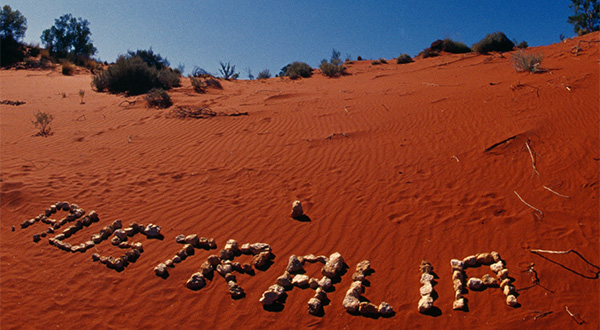
Image of the word Australia written in red dirt and rocks

2016 ACEN Student scholarships

Eight scholarships of $1,500 for remote and regional Australia

Applications are now open for scholarships to provide financial support for students undertaking a work integrated learning (WIL) placement in a regional or remote area of Australia as part of their 2016/2017 university studies.

Once again eight scholarships to the value of $1,500 each are being offered to eligible university students.

In 2015 the eight scholarships of $1,500 were awarded to students in the following degrees

  • Doctor of Medicine
  • Bachelor of Arts/Bachelor of Social Work
  • Bachelor of Clinical Exercise Physiology
  • Bachelor of Education (Primary)
  • Bachelor of Medicine and Surgery
  • Bachelor of Paramedic Science
  • Bachelor of Social Work
  • Bachelor of Veterinary Science

See student reflections on their 2015 WIL experience.

2016 applications now open

(Read carefully as the criteria has changed slightly from previous years)

Australian Collaborative Education Network (ACEN) is the professional association for practitioners and researchers from the tertiary education sector, industry, community and government who are involved in WIL in Australia.

Continue Reading…

Innovation Watch

Innovation Watch is a national network of regional Australians that have come together to share ideas about successful community-led development.

It is a platform to exchange ideas and learn from the experiences of others about what works in regional development. Discussions focus on practical initiatives that are driven by the local community.

Regional Australia is innovative and thriving. Much of this innovation is driven from within by locals who are passionate about the area, understand the opportunities and can mobilise the wider community. By sharing real success stories we hope to inspire other communities to implement locally-led initiatives in their area.

Join us as we celebrate the success our regional communities have achieved and promote a positive image of regional Australia.

IWATCHERS

We are also looking for supporters to help us find different community-led initiatives. If you are passionate about helping regional Australia grow and want to help spread the message, become an iWatcher. Contact us to find out how you can be involved.

INNOVATION WATCH BETA PHASE CAMPAIGNS

The Regional Australia Institute is showcasing local initiatives helping to attract new people to regional Australia. Share your story and get involved in the #makethemove Innovation Watch beta campaign.

Innovation Watch
Class photo 1933 class at Newcastle East Public School

Julia Gillard to attend as Australia’s oldest continually running school in Newcastle celebrates 200 years

Article written by Jackson Vernon for ABC News

A 1933 class at Newcastle East Public School

PHOTO: A 1933 class at Newcastle East Public School, which is preparing to celebrate its 200th birthday.(Suppled: Newcastle East Primary School)

Former prime minister Julia Gillard will be part of the upcoming bicentenary celebrations for Australia’s oldest continually running school.

In February, Newcastle East Primary School will mark 200 years since it was opened in 1816.

Back then 16 students made up the first class, including a mix of children from convict and free-settler parents.

Principal John Beach has been heading the bicentenary preparations and said it was an important milestone for the nation.

“Very significant for the history of education in Australia because our school has roots going back to the early days of the settlement in Australia’s second oldest city,” he said.

“The history of the school is very fertile, reflects the history of the Hunter and the changing nature of industry and employment in the Hunter as well.

“Many of our children had seafaring parents, so quite a few of our parents and students achieved fame and fortune at sea.”

One of those is New South Wales senator Arthur Sinodinos, whose father worked as a seaman.

The cabinet secretary reflected on his time at the school as an important stepping stone on his path to Canberra.

“Having been brought up only speaking Greek at home, I only really started speaking English when I went to school,” Senator Sinodinos said.

“So that was my first experience of learning English.

Continue Reading …

Remote Education Systems

Ninti One CRC Remote Economic Participation

Ninti Graphic

About the project

The Remote Education Systems (RES) project aims to find out how remote Aboriginal and Torres Strait Islander communities can get the best benefit from the teaching and learning happening in and out of schools. It is doing this by engaging with members of communities, schools, government agencies and other end users who want to find ways of improving outcomes for students in remote Australia. To date we’ve engaged directly with more than 1200 remote education stakeholders across the country. The project will conclude in June 2016. Previous project updates can be found on the Remote Education Systems pages http://crc-rep.com/remote-education-systems.

Ninti Graphic

Continue Reading…

Image of australia

Closing the ‘digital divide’ for disadvantaged students

Thursday 21 January 2016
Joint Media Release from The Department of Education and Training
SPERA Conference 2009
  • Minister for Education and Training
  • Minister for Industry, Innovation and Science
  • Leader of the House


Australian students from rural, remote, disadvantaged and Indigenous schools stand to benefit from a $6.9 million Turnbull Government initiative to improve digital technologies training for teachers.

Minister for Industry, Innovation and Science, Christopher Pyne and Minister for Education and Training, Senator Simon Birmingham announced the additional funding would provide access to a unique University of Adelaide online course for teachers of some of the most vulnerable Australians and equip them with the skills and confidence needed to better embrace the use of new technologies.

Minister Pyne said today’s announcement is part of nearly $16 million to ensure vulnerable Australians can take advantage of the National Innovation and Science agenda.

“Today’s announcement under the National Innovation and Science Agenda goes to the Turnbull Government’s vision of creating a modern, dynamic 21st century economy for Australia,” Minister Pyne said.

“This $6.9 million commitment allows the University of Adelaide to expand a program that is having a real impact on the skills of teachers in disadvantaged and Indigenous schools to implement digital technologies in their everyday teaching.

“As a key pillar of the National Innovation and Science Agenda, this funding means teachers can take advantage of cutting-edge professional development sessions that the University has developed in collaboration with international partners including Google.”

Minister Birmingham said the expansion of the University of Adelaide course came on top of a $7.9 million commitment for schools in disadvantaged areas to access specialist ICT teachers and $1 million that would see computer science summer schools target Year 9 and 10 students from low socio-economic areas.

Continue Reading….