2024 National Conference for Regional, Rural and Remote Education

We are excited to announce the Call for Submission and Registration for the 2024 National Conference for Regional, Rural and Remote Education (NCRRRE) is now open!

The Conference theme “Growth Through Equity” aims to highlight strength-based models for regional, rural and remote education, whereby education providers recognise and partner with the rich knowledge, experiences, skills and diversity that local communities have, and provide opportunity to all.

This year we also celebrate the 30th year of the Australian Rural Education Awards – get your entries in!

2021 SPERA Conference

National Conference for Regional, Rural and Remote Education:
Informing a creative tomorrow, Barossa Valley April 2021

The NCRRE will bring together teachers, principals, university professional and academic staff, educational leaders, equity and widening participation practitioners, all community owned Regional Universities Centres and their boards, government departments, policy makers, not-for-profit organisations and anyone interested in RRR education and community development. or contact Conference Director Chris Ronan chris@cep.org.au

Submissions to present at this conference are now open until 30 November 2020. Three types of submissions are welcomed: Academic abstracts for presentations of research, emerging initiatives exploring innovative ideas in education, and case studies from schools, regional university centres, universities and others working in RRR education.

https://www.ncrrre.org.au/

35th National Spera Conference Brisbane

National SPERA Conference Brisbane

2-4 October 2019
Queensland University of Technology
Kelvin Grove Campus Brisbane Australia

The 35th National SPERA Conference was proudly hosted by the Faculty of Education, Queensland University of Technology.

SPERA Conference Full Program

Improving Rural Education: Connectedness, Communities & Collaboration

Subthemes 

  • Building digital connections for rural communities
  • Ensuring rural communities’ well-being
  • Sharing innovations in ‘rural’ collaboration
  • Connecting the global and the rural
  • Community learning and sharing
  • Resourcing an interconnected approach

Guest Speakers
SPERA is thrilled to announce that Tony Cook, Director General of Queensland’s Department of Education has confirmed as a guest speaker of the conference.

Before joining the Queensland Department of Education in April 2018, Tony worked for the Australian public service as the Associate Secretary for Schools and Youth within the Department of Education and Training. Tony previously held several senior executive positions in the Victorian public service, including Deputy Secretary, Government and Corporate with the Department of Premier and Cabinet; Deputy Secretary, Office for Children and Portfolio Coordination; and Deputy Secretary, Office for Planning, Strategy and Coordination within the Department of Education and Early Childhood Development. He began his career with Education Queensland.

Tony is a registered primary school teacher with a major in early childhood education. He has been a deputy principal and has taught in schools and preschools in Queensland and the United Kingdom. He holds a Bachelor of Education from the Queensland University of Technology.

In October 2013 Tony was made an Honorary Fellow of the Australian Council for Education Leaders, and in January 2014, he was awarded a Public Service Medal for outstanding public service, especially in driving schools policy and funding reform in Australia.

Program:

2 October:     Emerging Rural Scholars Summit (optional 1st day) 9am to 5pm

Join us in a gathering of international rural education scholars to network, present your work, and receive valuable feedback and advice from experts in the field.  This exciting event will be held on the campus of QUT the day prior to the 2019 SPERA conference and is targeted at postgraduate research students, early career researchers, and scholars new to the field.

Emerging Rural Scholars Summit 2019 FINAL

Application Form – Emerging Rural Scholars Summit

3-4 October:  2019 Spera Conference (2 days)
Thursday 3 October: 8am registration. Program 9am to 5pm followed by cocktail reception
Friday 4 October: Program 9am to 5pm
Conference program to be released 29 August 2019


34th National SPERA Conference, Perth

29 – 30 November 2018
Access for All: Equity Matters

SPERA, in partnership with the National Centre for Student Equity in Higher Education based at Curtin University, Perth, Western Australia held the 34th National SPERA Conference.

Subthemes based on Halsey’s 2018 Independent Review on Rural, Regional and Remote Education:

  • Global Directives [OECD & UN SDG4]
  • Asset driven place based innovations [international, national, local]
  • More than IT solutions [Creative alternatives]
  • ESL, Language and Learning [Cultural & Linguistic Competency; Aboriginal Curriculum Framework]
  • Poverty and Power [General Capabilities; Enablers; Disrupting Discourse]
  • System level equity [Showcasing WA RRR -DET, AISWA, Catholic, TAFE]


34th Conference Proceedings

Image of a vineyard in the Granite Belt Wine Region in Queensland Australia

33rd National SPERA Conference

(includes Rural Educators Day)

27- 29 September 2017

Rethinking Rurality: Writing the Rural into Policy and Practice

CLICK HERE TO REGISTER

SPERA, in partnership with the Faculty of Education, Science, Technology & Mathematics at the University of Canberra, invites you to join us for the 33rd National SPERA Conference.

Hosted by University of Canberra, the 2017 conference will bring together a range of education professionals, school administrators, teacher educators, academics, pre-service teachers, community members and parents who are passionate about rural education.

Keynote Speakers include:
Professor Tom Lowrie – University of Canberra.
Professor John Fischetti – University of Newcastle.
Professor Daniela Stehlik – Griffith University.
Professor Linda Shields – Charles Sturt University.
Associate Professor Jacki Schirmer – University of Canberra.

Conference
27-29 September 2017

Where: University of Canberra, Canberra

When: 27-29 September 2017

Download the full flyer here: 2017_spera_-conference_flyer (422kb)

Friday 29th September is Rural Educators Day

Download the full flyer here: 2017 Rural Educators Day Flyer

This year the Society for the Provision of Education in Rural Australia (SPERA) is holding a special rural educator’s day during its annual conference. The day has a specific focus on strengthening the connection between rural educators with policy stakeholders hopes to encourage and empower rural educators to have a bigger voice. The target audience is people who work in and around rural schools, including teacher educators who want to help prepare their students to work in a rural area. Certificates of Participation for professional learning requirements are available upon request.

SPERA consists of people who share a common concern and commitment to the maintenance and development of appropriate educational opportunities for rural communities in Australia. The 2017 conference will bring together a range of education professionals, school administrators, teacher educators, academics, pre-service teachers, teachers, community members and parents who are passionate about rural education. This year’s theme of ‘Rethinking Rurality: Writing the Rural into Policy and Practice’ will be explored from multiple angles including esteemed keynote speakers and a variety of sessions on the latest research in the field. Attending will provide opportunities to have your voice heard and to network with others from around Australia.

Highlights of the day include:

  • Panel Discussion- “Translating Policy into a Rural Setting”
  • Panel Discussion- “Careers Advice for Rural Students”
  • Awarding of Australian Rural Education Awards recognising excellence in rural education

Panel one: Translating policy into a rural setting

Compulsory education is currently governed by standardised policies, such as national curriculum and testing programs. However, this raises questions about how these policies affect rural schools and communities. Given the complex interplay between policy and rural social space (Reid et al., 2010), this panel discusses how standardised policy works in rural areas. How do participants see rural educators working with such policies in their schools? Is there room for the rural in such approaches? How does this translate into practice in rural schools? How does this influence rural communities?

Cost: A $200 registration fee applies to those participants attending only on the Rural Educators Day. (Full Conference attendance includes the Rural Educators Day program).


Please Note: Presenter/s must be paid registrants of the conference in order to present a paper. No refunds will be issued for any reason after Friday 18 August 2017.

SPERA would like to acknowledge the traditional owners of the land on which the University of Canberra is situated and pay respects to Elders past, present and emerging.

CLICK HERE TO REGISTER


Hay bales in paddock

33rd National SPERA Conference, Canberra

27- 29 September 2017

Rethinking Rurality: Writing the Rural into Policy and Practice

CLICK HERE TO REGISTER

SPERA, in partnership with the Faculty of Education, Science, Technology & Mathematics at the University of Canberra, invites you to join us for the 33rd National SPERA Conference.

Hosted by University of Canberra, the 2017 conference will bring together a range of education professionals, school administrators, teacher educators, academics, pre-service teachers, community members and parents who are passionate about rural education.

Keynote Speakers include:
Professor Tom Lowrie – University of Canberra.
Professor John Fischetti – University of Newcastle.
Professor Daniela Stehlik – Griffith University.
Professor Linda Shields – Charles Sturt University.
Associate Professor Jacki Schirmer – University of Canberra.

Conference
27-29 September 2017

Where: University of Canberra, Canberra

When: 27-29 September 2017

Download the full flyer here: 2017_spera_-conference_flyer (422kb)

Call for Abstracts Submission Deadline
Friday 5 May 2017 (250 word abstracts) Email your submissions to admin@spera.asn.au

Submission of Abstracts

To submit an abstract, please download, complete and return the proposal template below.

SPERA-Abstract-Proposal-Template-2017 (59Kb)

Abstracts are to be written in plain English and include clear information about the aims, nature and content of the paper and, where applicable, a brief statement of results and implications. All abstracts should be linked to the conference theme.

Notification of Acceptance of Abstracts
Abstracts are subject to blind-review by members of the program committee. Notification of whether the abstract has been accepted for presentation will be sent to the presenter/s on or before Friday 19 May 2017.

Author Confirmation of Attendance and Registration
Successful presenters will be asked for their audio visual requirements at this time and instructed to confirm their attendance via paid registration no later than Friday 7 July 2017.

Please Note: Presenter/s must be paid registrants of the conference in order to present a paper. Registrations must be paid no later than Friday 7 July 2017. No refunds will be issued for any reason after Friday 18 August 2017.

SPERA would like to acknowledge the traditional owners of the land on which the University of Canberra is situated and pay respects to Elders past, present and emerging.

CLICK HERE TO REGISTER

32nd National SPERA Conference and 4th International Symposium for Innovation in Rural Education

Early Bird Registrations are now open!

SPERA, with the SiMERR National Research Centre at the University of New England, invites you to join us for the 32nd National SPERA Conference and 4th International Symposium for Innovation in Rural Education.

Hosted by CQUniversity Australia’s Ooralea Campus and supported by the University of Tasmania, the 2016 conference will bring together a range of national and international teachers, school administrators, teacher educators, academics, pre-service teachers, community members and parents who are passionate about rural education.

Rural Education: Place, Pedagogies, Partnerships and Possibilities

Where: CQUniversity Australia: Ooralea Campus (Mackay)

When: 28-30 September 2016

Download the full flyer here: 2016 SPERA-ISFIRE Conference Flyer (2Mb)

Confirmed speakers and guests include:

  • Dr Miguel Angel Diaz Delgado – Interleader Network
  • Professor Unn-Doris Baeck – University of Tromso, Norway
  • Dr Hernan Cuervo – University of Melbourne
  • Professor John Pegg – SiMERR National Research Centre at the University of New England
  • Professor Helen Huntly – CQUniveristy
  • Dr Erica Southgate – National Centre for Student Equity Higher Education

Please Note

Presenter/s must be paid registrants of the conference in order to present a paper. Registrations must be paid no later than Friday 10 June 2016. No refunds will be issued for any reason after Friday 19 August 2016.

Presenter Registration & Acceptance: Extended to 10 June 2016

Earlybird Registration Ends: 10 June 2016

2016 Conference Date: 28 – 30 September 2016

For those attending and wanting more information,  Mackay region  is a good place to visit, for information on travel, accommodation and dining in and around the area.

During the conference there will also be special presentations made to awardees of the following:

Australian Rural Education Awards 2016                                  

Brian O'Neill presents 2015 AREA Award to Jennifer McMahon Karratha Senior HIgh


    Pre-service Teacher Sponsorship 2016

 AREA 2012 Kingston Primary School


If you or someone you know might be interested in nominating a person or project, just follow the links above.

SPERA would like to acknowledge the traditional owners of the land on which the CQUniversity Ooralea Campus is situated and pay respects to Elders past, present and emerging.

Image of map of far north Queensland Australia

32nd National SPERA Conference 2016

Rural Education: Place, Pedagogies, Partnerships and Possibilities

Hosted by CQUniversity Australia’s Ooralea Campus and supported by the University of Tasmania, the 2016 conference will bring together a range of national and international teachers, school administrators, teacher educators, academics, pre-service teachers, community members and parents who are passionate about rural education.

Where: CQUniversity Australia: Ooralea Campus (Mackay)

When: 28-30 September 2016

Download the full flyer here: 2016 SPERA-ISFIRE Conference Flyer (2Mb)

Early Bird Registrations are now open!

Sub Themes

While this conference invites a wide range of submissions that address the general theme, we encourage submissions that speak to one or more of the following sub-themes:

  • Community and Development
  • Place and Space
  • Social Justice
  • Environment
  • Indigenous Perspectives
  • Diversity
  • Leadership
  • Curriculum and Pedagogy
  • Initial Teacher Education
  • Rural Futures

Confirmed speakers and guests include

  • Details coming soon!

Submission of Abstracts

SPERA, with the SiMERR National Research Centre at the University of New England, invites you to submit abstracts for the 32nd National SPERA Conference and 4th International Symposium for Innovation in Rural Education.

To submit an abstract, please download, complete and return the proposal template below.

2016 SPERA Conference Abstract Proposal Template (52Kb)

Submission of Abstracts

Abstracts are to be written in plain English and include clear information about the aims, nature and content of the paper and, where applicable, a brief statement of results and implications. All abstracts should be linked to the conference theme or sub-themes.

Evaluation of Abstracts

Abstracts are subject to blind-review by members of the program committee. Notification of whether the abstract has been accepted for presentation will be sent to the presenter/s on or before Thursday 19 May 2016. Successful presenters will be asked for their audio visual requirements at this time and instructed to confirm their attendance via paid registration no later than Friday 3 June 2016.

Please Note

Presenter/s must be paid registrants of the conference in order to present a paper. Registrations must be paid no later than Friday 10 June 2016. No refunds will be issued for any reason after Friday 19 August 2016.

Call for Submission Deadline: Extended to 13 May 2016

Notification of Acceptance of Abstracts: 24 May 2016

Presenter Registration & Acceptance: Extended to 17 June 2016

2016 Conference Date: 28 – 30 September 2016

For those attending, information on travel, accommodation and dining in and around the Mackay region will be available here soon.

SPERA would like to acknowledge the traditional owners of the land on which the CQUniversity Ooralea Campus is situated and pay respects to Elders past, present and emerging.

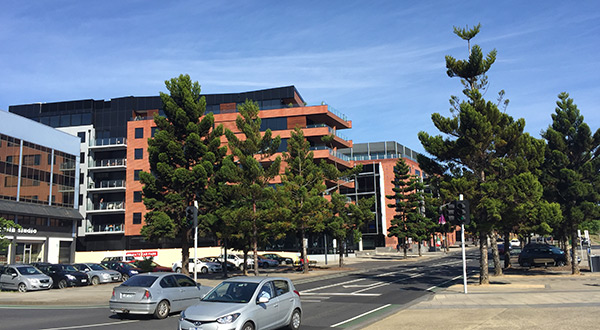
Geelong waterfront view from Deakin University

Deakin University Geelong Waterfront Campus – Travel, Accommodation and Dining

Travelling to Geelong

Geelong is a city located on Corio Bay and the Barwon River, in the state of Victoria in Australia. It is located approximately 75 kilometres south-west of the state capital, Melbourne. Geelong has all of the benefits of a sizeable city, but with the relaxed atmospher of coastal country. Geelong boasts a glorious waterfront precinct, sophisticated dining options and all kinds of entertainment on tap.

Getting there

By Air

Visitors can take flights to Melbourne’s Tullamarine Airport and drive, or take a shuttle bus or train to the Waterfront Campus.

Domestic travellers (or those connecting from Tullamarine Airport) can fly JetStar to Avalon Airport and then drive, or take a shuttle bus to the Waterfront Campus.

Driving

The Waterfront Campus is located approximately one hour’s drive from Melbourne (Tullamarine Airport). All of the major rental car companies have information desks onsite at the airport. The following Google Map shows the route from Tullamarine Airport to the Waterfront Campus.

Avalon Airport is approximately 20 kilometres away from Geelong’s central business district. Some of the major rental car companies have information desks onsite at this airport. The following Google Map shows the route from Avalon Airport to the Waterfront Campus.

Airport Shuttle Bus

From Tullamarine Airport you can use the Gull Airport Service to travel direct to Geelong. Contact, booking, price, and timetable information can be found on the Gull Airport Service website. The pick-up and drop-off point for this service closest to the Waterfront Campus is the Geelong Railway Station. From there you can take a taxi to your hotel.

From Avalon Airport you can use the Avalon Airport Shuttle to travel direct to Geelong. Contact, booking and price information can be found on the Avalon Airport Shuttle website. Please contact this company directly for information on pick up and drop off options in Geelong.

Train

The Geelong Taxi Network website has information on estimating taxi fares, booking online, etc. The contact number for booking a taxi in Geelong is 131 008.

Getting to Deakin University’s Geelong Waterfront Campus

The Geelong Waterfront Campus is located in the CBD of Geelong. SPERA would like to acknowledge that the present site of the Geelong Waterfront Campus is located on the land of the Wathaurong people. They are connected to these lands, have walked these lands, and continue to care for them and nurture them for future generations.

There are many available transport options to this campus.

By Regional Train

The Geelong Train Station is located a short 400 metres away from the Waterfront Campus. V/Line trains operate throughout the day on the Geelong line to Melbourne. The Public Transport Victoria (PTV) website features a helpful journey planner and “University travel” guides located under the “Getting around” tab.

Public bus and coach services

The centrally located Geelong Waterfront Campus is well serviced by suburban bus lines which operate across Geelong and outer regions. The main bus interchange is located in Moorabool Street, 700 metres away from campus. However, there are a number of bus stops close by, depending on your route. The Public Transport Victoria (PTV) website features a helpful journey planner and “University travel” guides located under the “Getting around” tab.

Car

There are limited paid on-street car parking spaces as well as commercial car parks located close to the campus, such as Westfield Shopping Centre on Brougham Street and Civic Centre Car Park on Gheringhap Street.

Geelong Accommodation

The list below provides links to accommodation that can be found in Geelong and located close to Deakin University’s Geelong Waterfront Campus. Please contact the accommodation providers directly for rates, availability and reservations. No recommendations are implied nor responsibility accepted for the standard of accommodation listed.

Novotel Geelong (Located 550 metres away)

Novotel Geelong is the region’s premier hotel and is conveniently located on the waterfront in central Geelong. The hotel is only a short walk to Deakin University and offers views of the bay and a vibrant waterfront location. Free wifi is available throughout the lobby and function floors. The hotel also offers a restaurant, bar, lounge, steam room, fitness centre, and indoor heated salt-water pool. For bookings, please contact the Reservations Team on (61 3) 5223 1377 (extension 1) or visit the Novotel Geelong website.

Mercure Hotels Geelong (Located 900 metres away)

Mercure Hotels Geelong is located in the heart of Geelong, close to shopping and business centres, the Eastern Beach waterfront, restaurants and major attractions. The hotel offers a wide range of business and leisure facilities and services. For more information including rates and bookings, please visit the Mercure Hotels Geelong website.

Quest Serviced Apartments Geelong (Located 950 metres away)

Quest Services Apartments Geelong offers quality 4 star serviced apartment accommodation. Ideal for those with extended stays or wishing to have self-contained accommodation, apartments are spacious and come in studio, 1 and 2 bedroom options. The 1 and 2 bedroom apartments contain a separate lounge area, fully equipped kitche, laundry facilities and balcony. For more information including rates and bookings, please visit the Quest Serviced Apartments Geelong website.


Deakin University Geelong waterfront

31st National SPERA Conference 2015

Mapping Education Policy Landscapes: Rurality and Rural Futures

In partnership with:

DEAKIN UNIVERSITY: GEELONG WATERFRONT CAMPUS

Dates: 4-6 November 2015

Download the full flyer here: Conference 2015 Abstract submission details and deadlines/dates

The 2015 conference theme is Mapping education policy landscapes: Rurality and rural futures

Sub Themes

  • Education reform
  • Student Engagement, Aspiration and Motivation
  • Pre-Service / Higher Education
  • Curriculum / Pedagogy
  • Policy / Place
  • Partnerships
  • Indigenous/ Aboriginal Education
  • Strengthening and networking rural education research

Confirmed speakers and guests include

  • Jim Watterson (Director-General, Dept. Education and Training – Qld)
  • Jo-Anne Reid (CSU)
  • Sabina Knight (Australian Rural Health Education Network)
  • Josh Arnold (Small Town Culture)
  • Bernadette Walker-Gibbs (Deakin University)
  • Marie Brennan (Victoria University), and
  • Gary Fry (Charles Darwin University).

Submission of Abstracts

Abstracts are to be written in English. The abstract should contain clear information about the aims, nature and content of the paper and, where applicable, a brief statement of results and implications. This should be linked to the conference theme or sub-themes. The author’s name, affiliation and email address should appear in the abstract of 250 words. A biographical resume and photo of the author (and all co-authors, if any) is required upon acceptance (100 words)

Evaluation of Abstracts

Abstracts are subject to blind-review by members of the program committee. Notification of whether the abstract has been accepted for presentation will be sent to the author(s) on August 7. Successful presenters will be asked for their audio visual requirements at this time.

Please note:

The submissions are simply a 250 word abstract and will be presented as a book of abstracts. A future call will go out from the AIJRE editorial team reminding people to submit full papers to the journal if they wish. The editors are extremely keen to separate the journal from the conference.

Call for abstracts submission deadline: 30 July (250 word abstracts)
Notification of acceptance of abstracts: 7 August
Author confirmation of attendance: 4 September
Conference: 4-6 November

For those attending, see travel, accommodation and dining for the Deakin University Geelong Waterfront Campus.

SPERA would like to acknowledge that the present site of the Geelong Waterfront Campus is located on the land of the Wathaurong people. They are connected to these lands, have walked these lands, and continue to care for them and nurture them for future generations.

Sponsorships for Pre-Service Student to SPERA Conference 2014

Pre-service Educator Sponsorship to attend 2014 – 30th SPERA National Conference is provided by SPERA, the Isolated Children’s Parents Association QLD, Isolated Children’s Parents  Association WA, the Catholic Education Office Toowoomba, and the Sidney Myer Chair, Rural Education and Communities (Dr J Halsey, Flinders University).

This offer of support is for thee pre service educators; one from Western Australia – a student currently enrolled at a Western Australian University and a second to a pre-service student currently enrolled at a Queensland University. The sponsorships are provided to enable participation in the 30th SPERA National Conference to be held at the University of New England, Armidale NSW, 1-3 October 2014. The sponsorship will cover registration and contribute significantly to offset transport costs to Toowoomba. The cost of the Conference dinner will be covered by SPERA.

For more information please see the following:

30th SPERA Conference 2014

30th National SPERA Conference 2014

3 Decades On: Reflections Upon Rural Education: Student Engagement, Aspirations & Motivation

Sub Themes

  • Student Engagement
  • Aspiration & Motivation
  • Pre-Service/Higher Education
  • Curriculum /Pedagogy
  • Policy/Place
  • Partnerships
  • Indigenous

Venue: University Of New England, Armidale, New South Wales

Date: 1 – 3 October 2014

Download the SPERA 2014 Conference Program

Red Dirt

Red Dirt Thinking Lecture – Alice Springs

Red Dirt Curriculum: Reimagining Remote Education

With the nationalising of curriculum, teacher standards and measures of student literacy and numeracy achievement, the value and relative success of remote community education is framed within a homogenous, metro-centric understanding of achievement and success.

Increasing and (at times) competing system pressures and policy demands have amplified pressure to pursue educational achievement in western terms, relative to the rest of the Australian population. But is this pressure achieving the desired outcomes in academic, social and political terms, or indeed from the perspective of increasingly marginalised voices of remote communities themselves?

In this lecture, remote educators pose the question, ‘What knowledge matters for young people in the APY (Anangu Pitjantjatjara Yankunytjatjara) lands in the remote northwest corner of South Australia?’ and, ‘What would a contextualised, ‘red dirt’ curriculum look like if we were to re-imagine the core elements of a remote education?’

Sidney Myer Rural Lecture 3

Wednesday 18 September 2013
7.30pm – 9.30pm | Corkwood Room, Desert Knowledge Precinct,
Business & Innovation Centre, South Stuart Highway, Alice Springs

More information:
Sidney Myer Rural Lecture 3 – Red Dirt Curriculum Reimagining Remote Education Sept 2013.pdf

Relational Leadership and Learning for Hope-full Sustainable Futures

An International Dialogue Santa Fe New Mexico 3-5 October 2013

Event details

The Inaugural International Dialogue on Relational Leadership and Learning for Hope-full and Sustainable Futures will be held in Santa Fe, New Mexico, USA, 3-5 October 2013.

Purpose

The purpose of the event is to ‘re-claim’ the primacy of relationships in learning and leadership formation. This will be done through sharing stories, practices, research, beliefs and values about becoming and being people who deeply care about hope-full and sustainable futures for all.

The International Dialogue will culminate with the launching of the International Centre for Relationships in Education (ICRE). Fundamentally, the ICRE will commence with the outcomes of the International Dialogue and contributions individuals make, and want to make into the future.

Participants

It is open to people committed to progressing a greater role, significance and place for relational leadership and learning in vocations of all kinds, in communities, in personal and professional contexts, with nature and the built environment.

http://www.flinders.edu.au/ehl/education/rural/building-communities/an-international-dialogue-santa-fe.cfm

Rural Education on the Global Stage

3rd International Symposium (ISFIRE) 2013

Rural Education on the Global Stage: Connecting for Innovation

The University of Western Australia and SPERA, invite you to the 3rd International Symposium for Innovation in Rural Education at UWA, Perth, Western Australia. This International Symposium will bring together international teachers, school administrators, teacher educators, academics, community groups and organizations and parents who are passionate about rural education. The 3rd ISFIRE symposium will be a key means of building and strengthening international rural networks, drawing together an increasing body of work focused on globally improving education outcomes for rural, regional and remote students. You will participate in a stimulating education program of presentations, hands on workshops and panel sessions. Social events will also be a feature of this three day event.

Sub Themes

  • Leadership
  • Indigenous Perspective
  • Curriculum and Pedagogy
  • Community and Inter-sectoral Networks Initial Teacher Education

Date: 13 – 15 February 2013

Venue: University of Western Australia Perth, Western Australia

Download the ISFIRE 2013 Conference Flyer

Download the ISFIRE 2013 Conference Program

Rural Futures Matter

Rural Futures Matter Summit 2011

Rural Futures Matter: A Sustainable Australia

The Sidney Myer Chair of Rural Education & Communities (SMC), Professor John Halsey, from Flinders University’s School of Education, and the Society for the Provision of Education for Rural Australia (SPERA) partnered to present the “Rural Futures Matter – A Sustainable Australia” Summit (RFMS) in September 2011. 83 delegates from Australia and 2 from North Dakota, USA, attended the three day summit and represented a variety of disciplines, including education (primary & secondary schools, TAFE colleges & universities), health, industry, business, NGO’s, government, and philanthropy.

The primary purpose of the Summit was to produce a set of recommendations for local, state and federal governments and agencies, private enterprise, relevant community associations and for wider public interest on Australia’s sustainability and the roles of education and rural communities in progressing this.

Download the Rural Futures Matter Summit 2011 Report

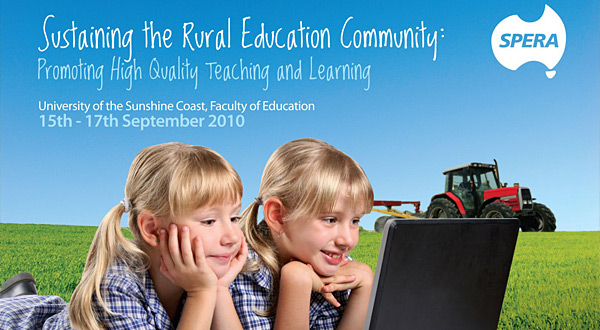
SPERA Conference 2010

26th National SPERA Conference 2010

Sustaining the Rural Education Community: Promoting High Quality Teaching and Learning

Themes

  • The Interactive Experience
  • Developing Professional Capacity
  • Pre-service Experience
  • Enriching Rural Communities
  • Sustaining Rural Communities
  • Building Opportunities
  • Dis-enfranchised Youth
  • Curriculum and Social Networking

University of the Sunshine Coast, Queensland

Dates: 15 – 17 September 2010

Download SPERA Conference 2010 Program

Download SPERA Conference 2010 Paper Abstracts


2nd International Symposium (ISFIRE) 2011

New Directions for Educational Welfare in Rural Schools

  • The Second International Symposium for Innovation in Rural Education (ISFIRE2)
  • 2011 Korea-Japan Society of Educational Administration Symposium (KJSEAS 2011)

ISFIRE2 and KJSEAS will be an international forum for sharing research findings, innovative ideas and evaluative approaches linked to positive and practical action.

The Symposium will have a particular focus on using research to influence policy aimed at delivering socially just outcomes for rural students and communities. The Symposium is organised around nine themes. Papers are encouraged that address issues, and present innovative solutions, within these themes.

  • Improving Students’ Academic Achievement
  • Enhancing Curriculum and Instruction
  • Promoting Counseling and Career Guidance
  • Responding to Special Education Needs • Nurturing Teacher Welfare
  • Fostering Teacher Collaboration
  • Broadening Cultural Experience
  • Expanding Services such as Health, Transportation, and Food • Embracing Parent and Community Participation

2011 Korea-Japan Society of Educational Administration Symposium

Date: 9 – 11 February 2011

Venue: Kongju National University Kongju, Korea

Download the ISFIRE Program 2011.pdf

Image of australia

25th National SPERA Conference 2009

Education in a Digital Present: Enriching Rural Communities

Digital information technologies are transforming the way we work, learn and communicate. In this digital revolution are new learning approaches that transform hierarchical, industrial-based models of teaching and learning.

Education in a digital present could be a comprehensive search for strategies and tools for effective online / digital teaching based on the principles of learning as a social process and engaging the advantages of new technologies to support e-learning decision-making, instructional choices, program and course planning and the delivery of curricula.

Additionally, practical advice, real-life examples, case studies and useful resources about structuring and fostering socially engaging learning in an online / digital environment could be topics for discussion.

Themes

  • Developing Professional Capacity
  • The Arts and Social Networking
  • Interactive Distance Learning
  • The Small School Experience
  • Building Pre-service Capacity
  • Impacting on Policy
  • Building Opportunities
  • Higher Education
  • The ICT Excperience

Flinders University, South Australia

Dates: 8 – 10 July 2009

Download SPERA Conference 2009 Program


SPERA Conference Proceedings 2008

The Face of Learning – Generation M: The Mobile Generation

KEYNOTE SPEAKERS

Mal Booth
Creative use of new and emerging technologies at the Australian War Memorial

Mark McCrindle
Changing generations, Emerging Trends: Understanding today’s learners

Andrew Douch
Paving the ICT Desire Paths: Redefining ‘Classroom’

Stephen Crump and Colin Boylan
Interactive Distance e-Learning for Isolated Communities: Finishing the Jigsaw

Lorraine Towers and Amy Hutchinson
The Sound and the Vision: developments in interactive distance education facilitated by satellite broadcast in NSW and the NT.

Stephen Crump, Kylie Twyford and Margaret Littler
Interactive Distance e-Learning for Isolated Communities: The Policy Footprint

Brian Devlin, Peter Feraud and Alan Anderson
Interactive distance learning technology and connectedness

REFEREED PAPERS

Don Boyd, Tania Broadley and Emmy Terry
Connecting with Hot Topics: Streaming Professional Development to Regional and Remote Western Australia

Colin Boylan and Andrew Wallace
Learnscapes: A space for place-based education

Tania Broadley and Sue Trinidad
Web Collaboration and Cybercells: Using an Innovative Approach to Connect Rural Communities

Stephen Crump and Colin Boylan
Interactive distance e-Iearning for isolated communities: Finishing the jigsaw

Brian Devlin, Peter Feraud and Alan Anderson
IDL technology and connectedness

Barry Fields
A Comparison of Behaviour Support Provisions Provided by Small Rural Schools and Large Urban Schools

Sonja Kuzich and Rosa Napolitano-Lincoln
I’m going to be a ‘real’ Teacher! Philip Roberts: Developing a place-based social justice approach to the development of rural staffing policy

Melanie Smith and Sue Trinidad
The Western Australian experience: Blogging in the bush

Len Sparrow, Sandra Frid and Melanie Smith
Interactive Whiteboards at a Remote School as a Catalyst for Teacher Professional Learning

Calvin Taylor
Rural Locality and Mobile Technology Usage: Observations from an Ethnographic Study

PANEL DISCUSSION

Mark McCrindle, Mal Booth, Sally Drummond and Nick Cross facilitated by Don Boyd
Woo Wonka and the Google Factory

NON-REFEREED PAPERS

Charles Bradley
Political process involved in achieving world-class open and distance learning schooling for the mobile generation in the bush

Phil Brown and Lesley McGregor
Victorian Rural Educators’ Network Vince Connor: Action Research: Stage 6 Mathematics and Science Lesson Study

Sally Drummond
Turning point: Engaging youth in mobile learning

Kate Haddow
Technologies Changing the Face of Distance Education – Interactive Distance Learning and Online Environments

Graeme Lock, Bill Green, Jo-Anne Reid, Maxine Cooper, Simone White and Wendy Hastings
Designing a National Research Project in Rural/Regional (Teacher) Education

Theodore Munsch
Distance Education: Is It Art or Is It Science?

Philip Roberts
Re-thinking teacher stress and satisfaction as an issue of place

Fay Rola-Rubzen, Rosa Napolitano-Lincoln and Wendy Newman
Rural women in Leadership (WiRL)

Mark Weir
Place-based Education Connections

Phillip Wells
Diving into Learning

SPERA Conference Proceedings 2007

Collaboration for Success in Rural and Remote Education and Training

KEYNOTE SPEAKERS

John Pegg
Developing a national holistic approach to addressing issues in rural and regional school education

Andrew Wallace and Colin Boylan
Reawakening education policy and practice in rural Australia

Matt Benson and Terry Waldron
Rural and Remote Education Advisory Council

REFEREED PAPERS

Colin Boylan and Ingrid Koreneff
Going up country: tree change teachers

Colin Boylan and Andrew Wallace
Reawakening education policy and practice in rural Australia

Tania Broadley
Teachers using a digital curriculum

Hernan Cuervo
Rural school principals’ perceptions of social justice in neo-liberal times: towards a pluralistic notion of rural education

Peter D’Plesse
Leadership in Australia: connecting the whispering spirits.

Sonia Ferns and Megan Ellis
Empowering regional communities – partnerships for sustainable educational programs in regional Western Australia

John Halsey
Rural-urban school partnerships and Australia’s sustainability

Peter Jones
Do it yourself DVD: a low-cost approach to supplementing print materials for distance education

Sheila King, Anne Drabble, Ros Franklin, Cathy Rodier and Alison Mander
Collaboration for success: Queensland style

Graeme Lock
The student teacher rural experience program: preparing pre-service teachers to live in regional locations

Michael Ogier
Rethinking teacher retention and rural schooling

Joy Penman and Bronwyn Ellis
Embracing technology in regional higher education

Celeste Rossetto, Jeannette Stirling and Joanne Dearlove
Providing language and academic skills support in a multi-media and distributed learning environment

Carole Steketee and Keith McNaught
Videoconferencing as a professional learning environment

Sue Trinidad
Telecommunications systems closing the digital divide in education in Western Australia

NON-REFEREED PAPERS

Charles Bradley
Political change is needed for the provision of fair and sustainable open and distance education for Australians

Denise Chalmers
Carrick Institute for Learning and Teaching in Higher Education

Simon Clarke and Helen Wildy
Initial preparation of school principals: some bucolic considerations

Eve Croeser
Explorations of how to facilitate the formation of effective on-line learning communities – strategies and challenges

Frances Herd
Values from a distance

Phil Idle
Designing schools for Indigenous communities

Tom Jamieson
Flexible learning in schools – expertise banking for on-line delivery

Gerry Keegan, Emma Morris and Adrian Parsons
OVER – HF radio, a thing of the past

Mark McLay
Right Choices

Neil Milligan and Rod Rykers
Manea College – regional cooperation and collaboration

Dennis Mulcahy
Multi-grade classrooms and multi-age pedagogy: connecting the dots for rural educators

Theodore Munsch
Cooperation, collaboration and change:ten years of rural Alaska practica

Rosa Napolitano-Lincoln
Women on the go: women in leadership (WiRL) programs

Rhonda Oliver, Joan Strikwerda-Brown, Lynelle Watts, Marilyn Palmer and David Hodgson
Examining rural youth needs in the South-West of Western Australia: implications for pedagogy

John Pegg
Developing a national holistic approach to addressing Issues in rural and regional school education

Jeff Phillips
Planning educational facilities

Heather Plester and Kerry McFarlane
Distance – no barrier for students at educational risk

Malcolm Plester and Paul Gallash
Building relationships with parents

Tanya Scobie
How can providing on-line activities improve students’ understanding of place value in the Centra environment?

Gay Tierney and Ann Galloway
Mitchell Plateau learning: responding to the needs of Aboriginal students in the isolated and distance education context

Iyleen Vickers
Home Tutor Resource DVD

SPERA Conference Proceedings 2006

Community, Diversity and Innovation in Rural and Remote Education and Training

KEYNOTE SPEAKERS

Angela Cooke, Wendy Fletcher
The why and how of provision of online extension programs forhighly able / gifted students in rural schools in Tasmania

Marietta Sansom-Gower
The benefits of online programs for gifted students from rural schools – a support teacher’s perspective

Anne Hampshire
Rural and Regional Australia: Change, Challenge and Capacity

Dennis Mulcahy
Current Issues in Rural Education in Newfoundland and Labrador

REFEREED PAPERS

Pam Bartholomaeus
Linking place and effective literacy teaching

Dianne Boxall
An Application of the Theory of Planned Behaviour in Predicting and Understanding Relocation Intentions of Regional Tertiary Students

John Halsey
Towards a Spatial Self- Help Map for Teaching and Livingin a Rural Context

Lyn Hughes and Beverly Moriarty
Evaluation of a pre-university program for senior secondary students making career choices: Implications for program designand university promotional activities

Quynh Le and Rosa McManamey
Multilevel Analysis and its implications for Rural Education Research

Ted R. Munsch and Colin R. Boylan
Beyond the Line and Closer to the Edge

Joy Penman, Bronwyn Ellis, Frances White and Gary Misan
An early glimpse of university and health careers for regional Year 10 students

Joy Penman, Valerie Gorton, Katy Darby and Karl Jones
Whyalla-Worcester connection: The value of short-term rural clinical placements

Linda Thies
What role for social capital? – Establishing a Warrnambool community education program for disengaged students

Andrew R. Wallace and Colin R Boylan
Place, schools and communities: new beginnings in rural NSW

NON-REFEREED PAPERS

Charles Bradley
Will privatisation or deregulation have most impact on the provision of distance education for rural high schools?

Don Boyd
Education and Training: ‘The Fijian Way’

Don Boyd And Emmy Terry
Inter-Sectoral Partnership and Collaboration in the Pilbara: A Reality

Colin Boylan and Dennis Mulcahy
Creating multi-age classes: Exploring the challenges, benefits and strategies

Julie Godwin and Ingrid Wijeyewardene
Connecting Students, Community and University

Sheila King and Alison Mander
Yes you can afford it! – Supporting Pre-service Teachers in theirdesire to complete a teaching experience in rural or remote Queensland

Rosemarie Koppe, Maxine Zealey, Leo Dunne
Indigenous Parent Workshops

Ted R. Munsch
One State, Five Distinct Native Cultures: Place-based Educational Efforts in Alaska

Phil Roberts
The place of social justice in rural education discourse

Russell Yates
Local Teachers: Using local people as teachers in small communities

SPERA Conference Proceedings 2005

Our Stories: Innovation and Excellence in Rural Education

KEYNOTE SPEAKERS

Steven Arndt
Creating Collaborative Communities – The Regional South Australian Experience

Michael Christie
Local versus global knowledges: Resolving a fundamental dilemma in ‘Remote Education (Refereed).

Peter Kenyon
C.R.E.A.T.E. – Creating Rural Entrepreneurial Attitudes through Education

Tony Richards
IDL – Interactive Distance Learning in the Northern Territory

REFEREED PAPERS

Colin R Boylan
Designing a course in rural education

Bronwyn Ellis, Digby Wilson & Janet Sawyer
Summer school at a regional university campus: just completing a course, or a rich learning experience

Ted Munsch and Colin R Boylan
Remote rural practice teaching

Joy Penman
Creative teaching solutions in difficult remote practice realities

Richard Pickersgill
Local Matters:Regions, Innovation and Vocational Education and Training in the Australian context

Peter Rushbrook, Louis Pilotto, Sandy Reid, Geraldine Duncan, Graeme Richardson, Peter Vine, Peter Reed and Helena Johnston
Bringing doctors to the bush: celebrating innovation and excellence in medical education at the University of New South Wales’ School of Rural Health

NON-REFEREED PAPERS

Neville Barnard
Diamonds form under pressure: educational evolution & revolution on the West Coast of Tasmania

Don Boyd and Emmy Terry
Bringing Educational Change across the Pilbara

Kerry Boyd
Aboriginal focus in new courses for students in the senior years of schooling course

Hernan Cuervo
Rural Schools: Argentina and Australia

Darryn Gray and Kevin O’Hara
Raising student achievement in rural schools – A school adviser’s perspective

John Halsey
Rural Teacher Education Forum mapping of pre-service country teaching programs

Craig Holland and Rosa Lincoln
The Pilbara Education District of Western Australia

Lyn Hollow
Digital Reporting in the Bush

Liz Kelly
Innovations in VET programs

Rosa Lincoln and Sue Knight
Aboriginal Literacy Strategy

Enver Malkic
Innovation with Centra Symposium: A local delivery perspective

Alan Power
Interagency Support Networking for Mental Health

Phil Roberts and Dorothy Lean
What does a successful staffing system for rural, remote and isolated schools look like?

Rebecca Tims
Teacher Orientation Package

Jenna Towers
Wakakiri

SPERA Conference Proceedings 2004

Working Together: Staying Vital

Official Opening Address by
His Excellency Lieutenant General John Sanderson, AC,
Governor of Western Australia

KEYNOTE SPEAKERS

Stephen Kemmis, Marianne Atkinson and Roslin Brennan Kemmis A.M.
Indigenous Education: A Collective Task for all Australians

Murray Lake, David Platt and Grant Draper
From Conference Resolution To Project Implementation: ABCDE – A Strategy For The Revitalisation Of A Rural Community

John Edwards and Bill Martin
Creating Magnificent Schools and Productive Futures – Ways Forward for Rural Education

REFEREED PAPERS

Colin R Boylan
The state of rural education in pre-service teacher education courses

John Bryden and Colin Boylan
Infusing pedagogy into place based education

NON-REFEREED PAPERS

Tony Beswick
My Kid Doesn’t Dob

Bill Green
Space and Equity in Rural Education (Abstract)

Enver Malkic
A Classroom Without Walls – ‘live’ e-Learning with Centra 7 ™.

Jane Marquad
Internet Safety for Rural Communities

Doug Melville
Follow the Dream – A Secondary Aspirations Strategy for Aboriginal Students

T R Munsch
What Is Rural? A Discussion with an America Rural Educator

Sarah Pendlebury and Kane Benson
Student Council Virtues Project

Kate Haddow and Salli Thomas
Linking the Technologies

Mark Weir
Nurturing Innovation in Rural Education

Matt Wren
Mentoring – All the BUZZ

Australian Rural Education Award Winner 2004
Whyalla Economic Development Board, Inc.
Youth Re-engagement through Community Partnerships

SPERA Conference Proceedings 2003

Global Focus – Local Partnerships

KEYNOTE SPEAKERS

John M Bryden
Some links between economic and social changes in rural areas and the need for reform in rural education

Jack Shelton
Consequential Learning

REFEREED PAPERS

Pam Bartholomaeus
Rural ABCs and Genres? Learning literacy in a rural school

Colin Boylan & Andrew Wallace
Curriculum organisation in a rural secondary school

Rachael Cornius-Randall & Colin Boylan
Creating and managing a caring environment:Pastoral care in action

Roger Edmonds
The SIASOTA Project: The Making Of A ‘Live’ Online Learning Community

Bronwyn Ellis & Joy Penman
From the margins to the centre: regional international education partnerships

Lyn Gorman & Bob Dengate
NSW HSC Online: A Successful Educational Partnership

Brian Hemmings & Doug Hill
A promising strategy for service delivery in rural Australia

Sue Kilpatrick, Joan Abbott-Chapman, John Williamson & Helen Bound
Identifying the characteristics of rural learning communities: implications for rural development

Jan Millwater
Captivation and perspiration: one university’s efforts to inspire city teacher education students to go rural and remote

Joy Penman, Mary Oliver & John Petkov
Where are our graduates? A retrospective study of decisions made on employment location by nursing graduates

Andrew R. Wallace, Rachael Cornius-Randall, Colin Boylan & John Brew-Bevan
Partnerships in the review of curriculum in a small rural secondary school

Des Wilsmore & David H. McKinnon
Professional development of teachers and the use of Information and Communication Technologies (ICTs) as a learning tool in rural schools

NON-REFEREED PAPERS

Adele Bradley & Kerry Weigand, presented by Juanita Healy
Progress and Challenges: A report on progress the Schools of Isolated and Distance Education (SIDE) WA has made with online learning

Chris Dolan & Ian McEgan
Effective Community Consultation in Distance Education Institutions:A Working Model

Sheila King
Progress and Challenges: A report on progress the Schools of Isolated and Distance Education (SIDE) WA has made with online learning

Jan Martin & Darryn Gray
Raising student achievement in rural schools – some New Zealand initiatives

Denese Playford, Tony Lower, Amanda Lines & Ann Larson
Effect of Allied Health Rural Placement Programme on Graduate Uptake of Employment in Rural WA

Russell Yates
It’s Good For Me, Too! Partners In Professional Development

Van Davy & Kate English
Changing the Pedagogy in Distance Education – Essential Criteria, Technologies and Professional Development

SPERA Conference Proceedings 2002

Country Class

Pam Bartholomaeus
Rural education and rural communities: Gifts for our Young People

Colin R Boylan and Andrew R Wallace
Beyond the Line: Promoting Country Schools

Gail Dobbin
From College to Cowshed: Beginning teachers in rural schools

Bronwyn Ellis, Janet Sawyer, Maureen Dollard and Dianne Boxall
Working as rural academics

Sharman Glover-Milne
From Big Sky Country USA to the Bay of Plenty, New Zealand

Glenice Hancock
Flying High in Rural Education: Educating Students in the 21st Century

Steve Hicks
Help Yourself

Harry Moate
Industrotech: School/Industry Link. An initiative of Jamestown Community School

Michael O’Meara
Youth at the centre

Peter Kenyon
Real Enterprises:An Overview

Janet Sawyer, Pam Zubrinich and John Carter
Partners in Education: The Whyalla model.

Geoff Annear and Jim Low
Redefining Directions of 6 School Cluster

SPERA Conference Proceedings 2001

Providing Quality Education and Training for Rural Australians

KEYNOTE SPEAKERS

Paul Herschell
Why aligning curriculum and assessment in new times is ultimately a pedagogy question

Mike Frost
VET in rural schools.

Faith Trent
Aliens in the classroom?

REFEREED PAPERS

Kennece Coombe and Joy Lubawy
Learning partnerships in rural early childhood settings

Roger Edmonds
Cut your teeth on online collaborative projects

Bronwyn Ellis, Nancy Cooper and Janet Sawyer
Bridging studies: An alternative pathway to university for rural Australians

Robyn Eversole
Regional university access: A case study from the south west

Annette Green and Erica Smith
A foot in both camps: School students and workplaces

Annette Green and Colin Boylan
Vocational education: Voices from the field

Tania Hockley and Brian Hemmings
A rural-based teacher education internship: Stressors and coping mechanisms

TW Maxwell, Jo-Anne Reid, Catherine McLoughlin, CatherineClarke and Ruth Nicholls
Online support for action research in a teacher education internship in rural Australia

Judith Wooller and Lesley Warner
An innovative flexible program for rural women

NON-REFEREED PAPERS

April M. Bender
Connecting the dots in the service constellation of the rural universe: An overview

Judith Duff
Learning adventures in the Gascoyne – A journey in motivating and engaging indigenous children.

Stephanie Gadeke
Using a collaborative model to improve outcomes for students at educational risk in Port Hedland School of the Air

Lyn Gorman
Online teaching and resources: The New HSC Online Project 2001

Tamara Jones
An initial exploration into a time of change: Teacher perceptions of their profession in the new millennium

Sheila King, Felicity Masson, Louise Pritchardand Sherrin Bell
Swings and roundabouts: A panel presentation on the preparation of pre-service teachers for rural schools

Sheila King
The next chapter

Rosa Lincoln
Encouraging quality student teachers to teach in rural Western Australia

Jan Martin
School governance in rural communities – The role of the Board of Trustees chairperson in small New Zealand schools

John McMillan and Harry Jones
Rotor streaming media software

David McSwan, Emma Clinch and Ron Store
Otitis media, learning and community

Don Squires
Quality VET provision in rural schools

RJ [Gus] Wenzel
VET: This is how we do it in Burra

Russell Yates
Small schools face the challenge – A case study of a group of small rural schools in New Zealand

Russell Yates
Right in your own backyard – A description of flexible learning applied to primary teacher education

SPERA Conference Proceedings 2000

Dawning of Opportunity

Luke Baills, Sherrin Bell, Bridget Greensill and Louise Willcox
Bridging the gap between beginning teachers and isolated/rural communities

Betty Baram
Workshop: Convergence of distance education and mainstream schooling – increasing opportunities for rural and isolated learners

Marg Beagley
Flexible delivery: initiatives and innovation

Hedley Beare
‘Now, Year Ones, this is your life!’ Preparing the present generation of students for a world of shrinking distances

Don Boyd
Experimenting with the development of electronic course materials

Colin R Boylan and Andrew R Wallace
An analysis of classroom interaction patterns in satellite delivered letters

Charles Bradley
The glass is only half full – a political discussion of issues in secondary distance education in rural New South Wales

Kathy Broadley and Keith Greaney
Providing Reading Support for Young Children in Rural Schools: The Case of Reading Recovery

Guy Broadley
Student Teacher Supervision by Telephone

Jim Buzacott
Teaching Reading from a Distance

Ashley Burnett
Supporting student learning through flexible delivery in distance education

Bruce Cifuentes
A Smart School for a Smart State: Brisbane SDE Cyberschool Initiatives

Jen Coad, Tom Croft, Sue Rose and Liz Nowack
Katherine School of the Air: The School of Opportunity

John Delany and Derek Wenmoth
Empowering an Indigenous Rural Community: Local Teachers for Local Schools

Kate Dibben
Sharing innovative projects – what is out there?

Chris Dolan
Roads Merge Ahead: Bringing Together Pedagogy and Technology in Distance Education

David Driver
Flexible Delivery of Mathematics

Annette Green
Abstract: School students’ learning from their paid and unpaid work

Steven Harrison
Investing in Our Rural Future – The Dover District High School Story

Irene Ioannakis
Adopt A School/Adopt A Mine Site. A School-Industry Partnership Case Study Kanowna Belle Gold Mines Ltd and Churchlands Senior High School

Susan Johns, Sue Kilpatrick, Ian Falk and Bill Mulford
Leadership from Within: Rural community revitalisation and the school-community partnership

Murray Lake
Country Roads: Pathways to Better Education and Training for Rural and Remote Western Australian 2000-2003

Rosa Lincoln
Workshop: Rural Teaching Liaison Officer – Partnerships at Work

Enver Malkic
Developing Partnerships with Rural Schools

Timothy Moes
The Winston Churchill Memorial Trust of Australia: Concise Report

Kathryn Moyle
Dawning of Opportunity: Identifying government initiatives that promote using information and communication technologies in distance education

Catherine O’Sullivan
The School at the Centre of the Community: Goondiwindi State High School Vocational Education & Training through Enterprise Partnerships

Warren Parkinson, Anne Sutton and Vicki Carr
Flexible Delivery to cater for the educational needs of indigenous students: Brisbane School of Distance Education Alternate Education Model

Glen Postle
Professional Development Online: Some Preliminary Comments

Karen L Reithmuller
The Magic of Telephone Teaching

Robin Roberts and Robyn Roberts
Learning support for literacy: resource units

Col Sutcliffe
Rural schools and their communities

Grant Wheatley, Joneen Edwards and Sonja Kenny
Collaborative Problem Solving Team